
In praise of decay
A love letter to imperfection
It’s easier than ever to replace things. I say this after having just put down my phone, where I am deluged nearly every time I open it with ads selling better versions of the the things I already have, including my face and body. How it knows when you are looking at your tired and drab old curtains thinking that it would be nice to have new ones, is beyond me. But all I do know is that it gets harder to resist the pull towards making everything perfect every day. This week i posted a little carousel on instagram about this very thing. The pull towards perfect, and why we should actively resist it. After posting, I had so many lovely messages from friends telling me about their own experiences with perfection lately. It seems that I am not alone.
When something beautiful becomes damaged, our first impulse is often to make the damage disappear. We want to repair the crack, fill the hole, replace the missing piece, polish away the evidence of age. Often the impulse is to make it look as though nothing ever happened.
But what if there is a more honest and interesting way to care for our old things? Ways that honour rather than disguise the damage?
I think this is what intuitively drew me to kintsugi repair as a practice, but I would argue this is a way to approach many things in our life. Our bodies included. In historic conservation, there’s a concept called managed decay, and I think it has something important to teach us about how to approach repair.
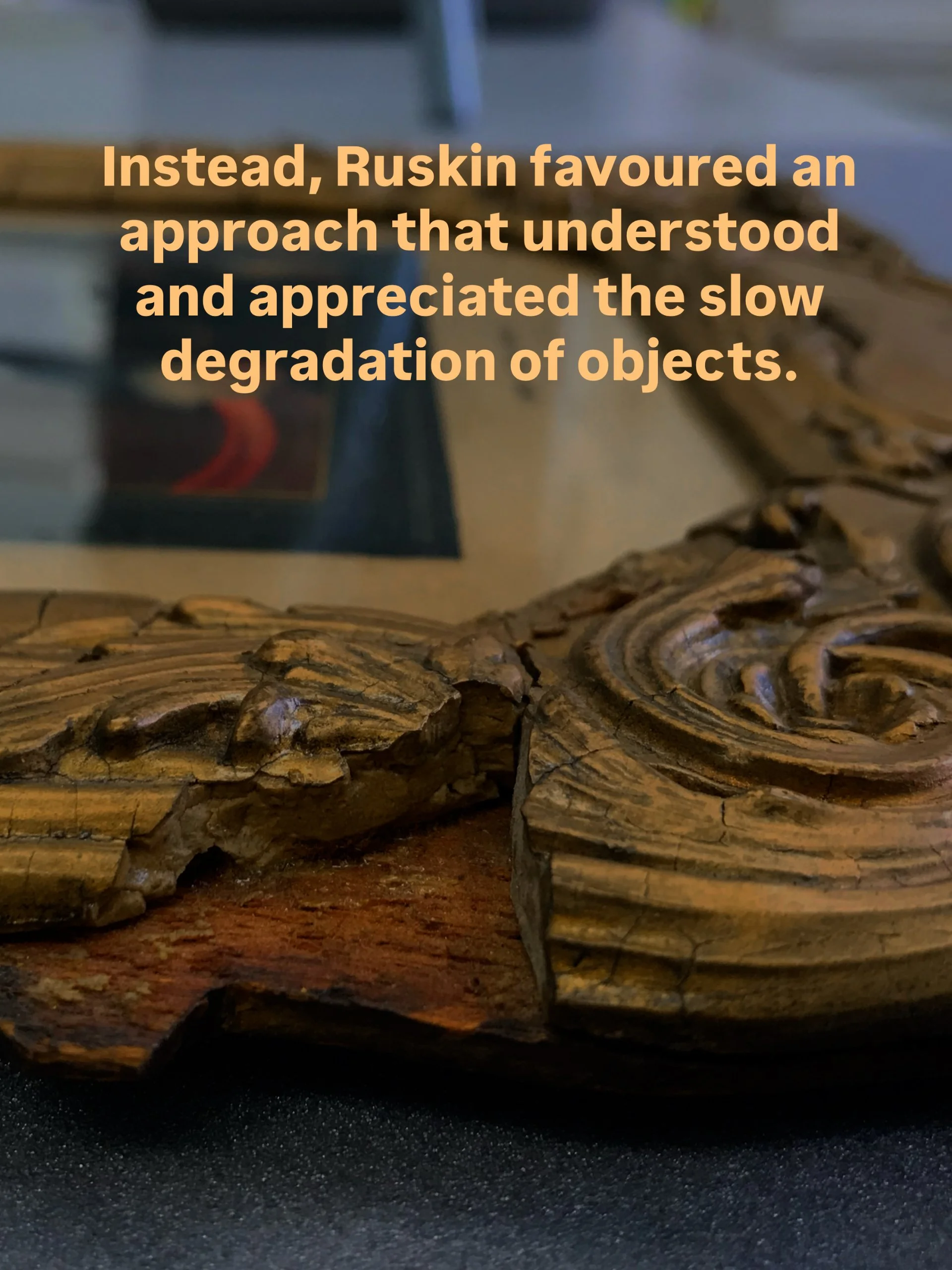
MANAGED DECAY
In the first year of my historic conservation degree, we spent quite a bit of time going over the ethics of conservation. When working with old and sometimes absolutely ancient objects, there are lots of things to consider. Not least of which, how future conservators, long after we are dust, will approach repairing, and potentially undoing work we have done. This is part of the great cycle of museum work. Things need to be maintained long after we are gone from this earth so that fresh generations can appreciate them…so don’t fuck it up. And within these sometimes practical, sometimes philosophical considerations sits the concept of managed decay. I think this is where historic ‘restoration’ and ‘conservation’ part ways.
Restoration is about making things ‘like new’ again, while conservation tends to focus on stabilisation.
In the context of conservation, managed decay isn't simply ‘let everything rot.’ It means intervening sufficiently to prevent further catastrophic damage while accepting that the object's history cannot, and in many cases should not, be erased. This can include deep research and thought into how and why things age, and why conservators tend to drive curators nuts in museums. Because it is a conservators job to run around making sure the temperature is correct in a room, or to insist that a painting be moved to limit its UV exposure over the day.
Sure its annoying now, but you’ll thank us later.
JOHN RUSKIN’S LAMP OF MEMORY
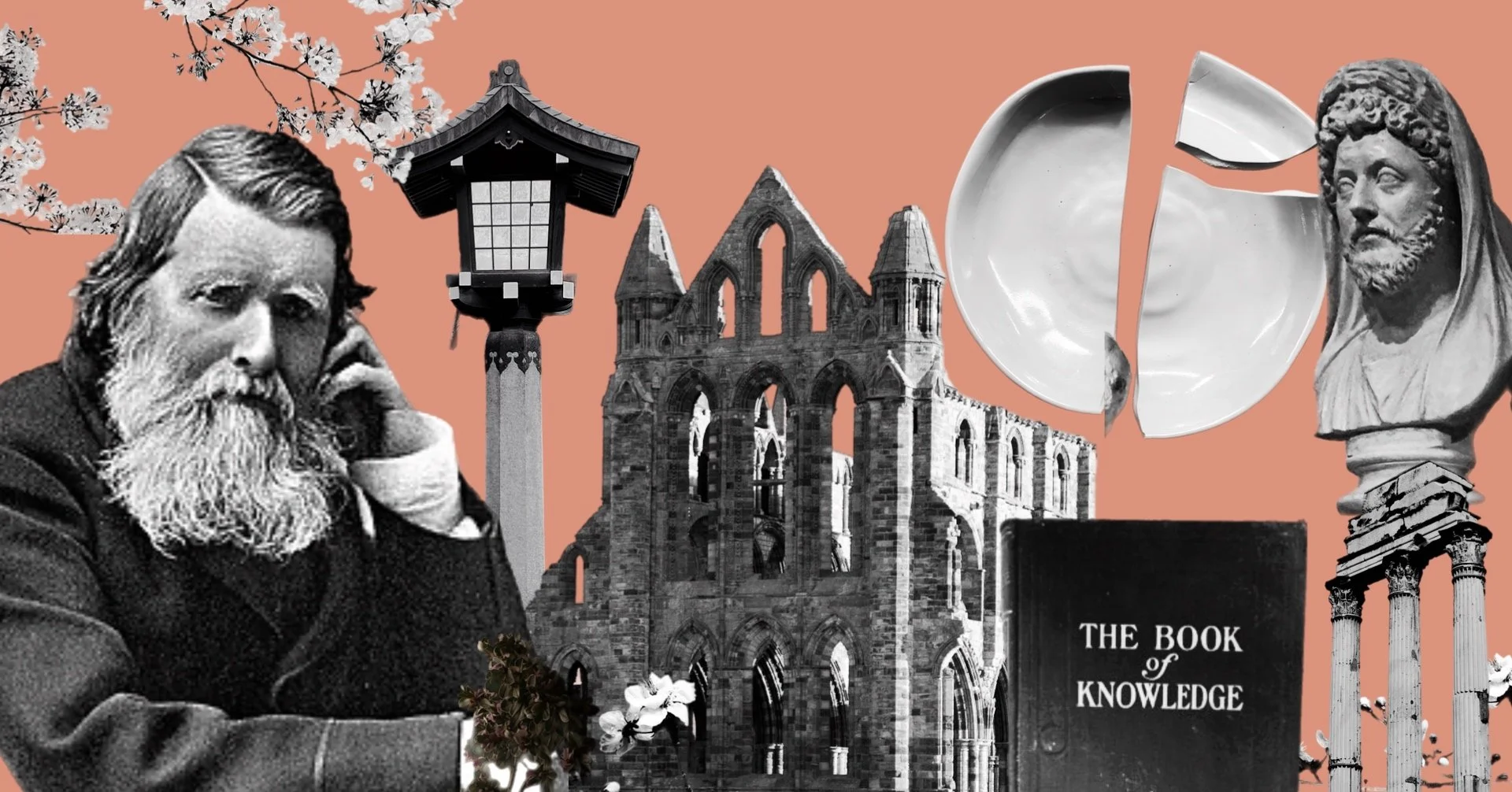
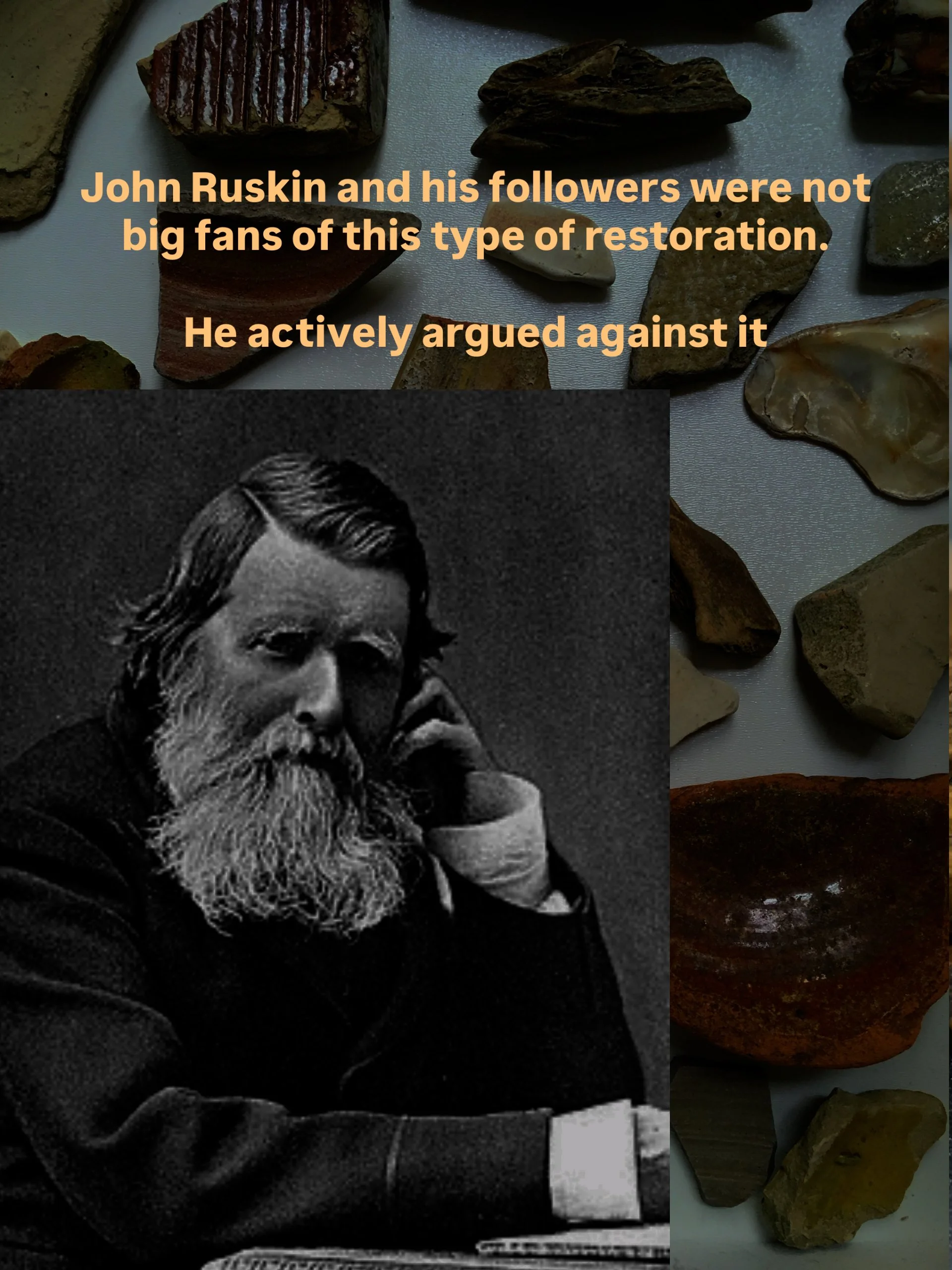
Historically, the danger of wanting things to look new and perfect again created an opening for the opposite ideas to enter the picture. Around the time a young Queen Victoria was kicking around, One of the most vocal advocates against restoration was art critic and writer John Ruskin. Famously opposed to restoration that attempted to return historic buildings to their ‘original’ state, Ruskin was deeply interested in craftsmanship, and specifically the relationship between buildings and the people who made them.
“Do not let us deceive ourselves in this important matter; it is impossible, as impossible as to raise the dead, to restore anything that has ever been great or beautiful in architecture.”
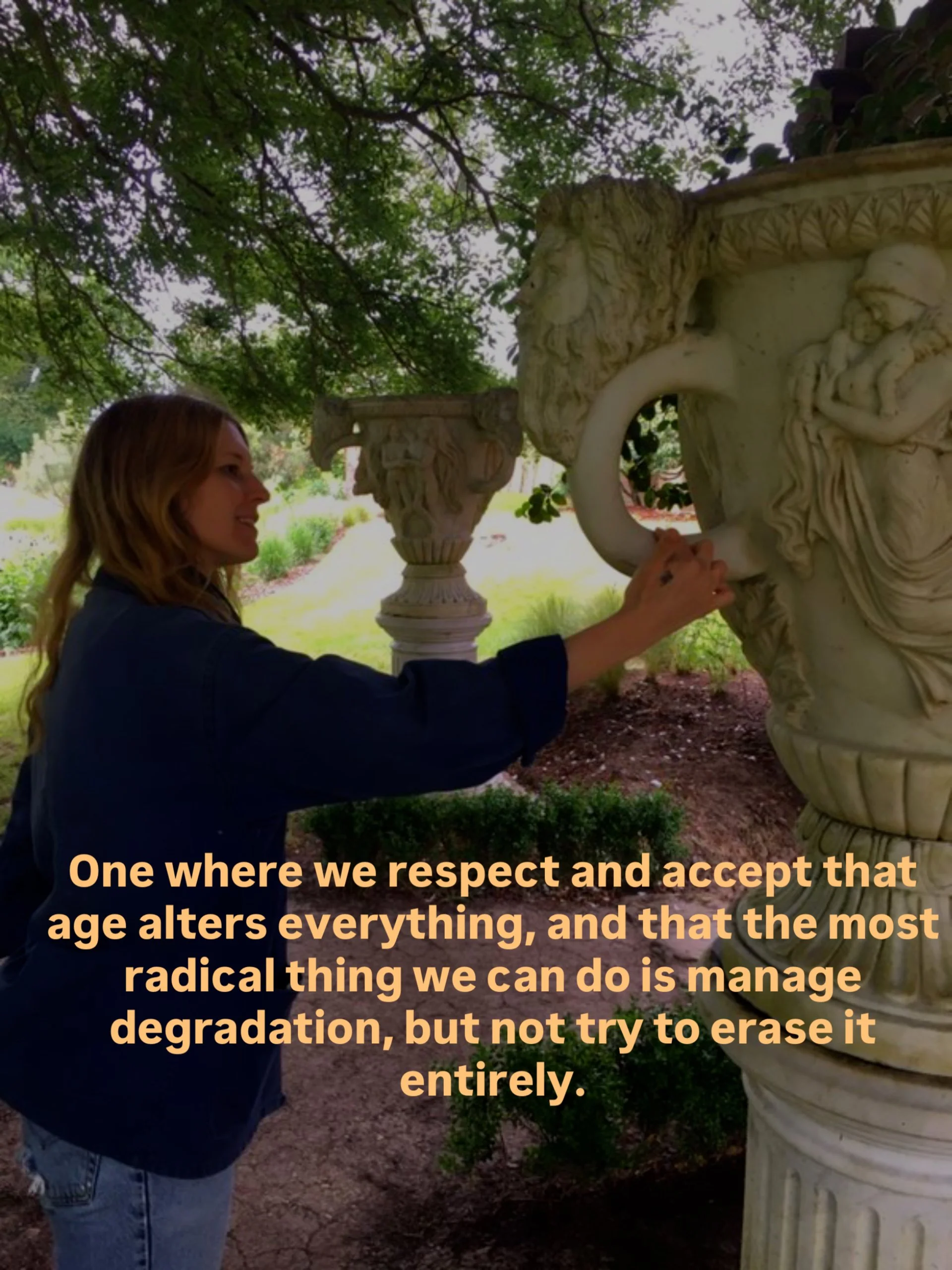
Ruskin and his friends, including father of the arts and crafts movement William Morris, felt so strongly about this principal of managed decay, that they would go on to establish SPAB, short for ‘The Society for the Protection of Ancient Buildings’ in 1877. Believing that objects and buildings hold the memory of not just their creation but the damage that they incur in their lifetime, is the philisophical backbone of conservation. And you could also argue, the principal behind traditional kintsugi repair.
Take for instance, the wear on a set of stone steps at the entrance of a home. You could see the way the stone softly curves and recedes as damage. Or you could see those wear patterns as thousands of footsteps, weather, use and time. The wear of the steps serves as a living biography of the history of that object. We could see ourselves much the same way. As vessels holding each wonderful, sad and cringey thing that has ever happened to us, all coexisting, making us the unique creatures we are. Who would want to erase all that experience?
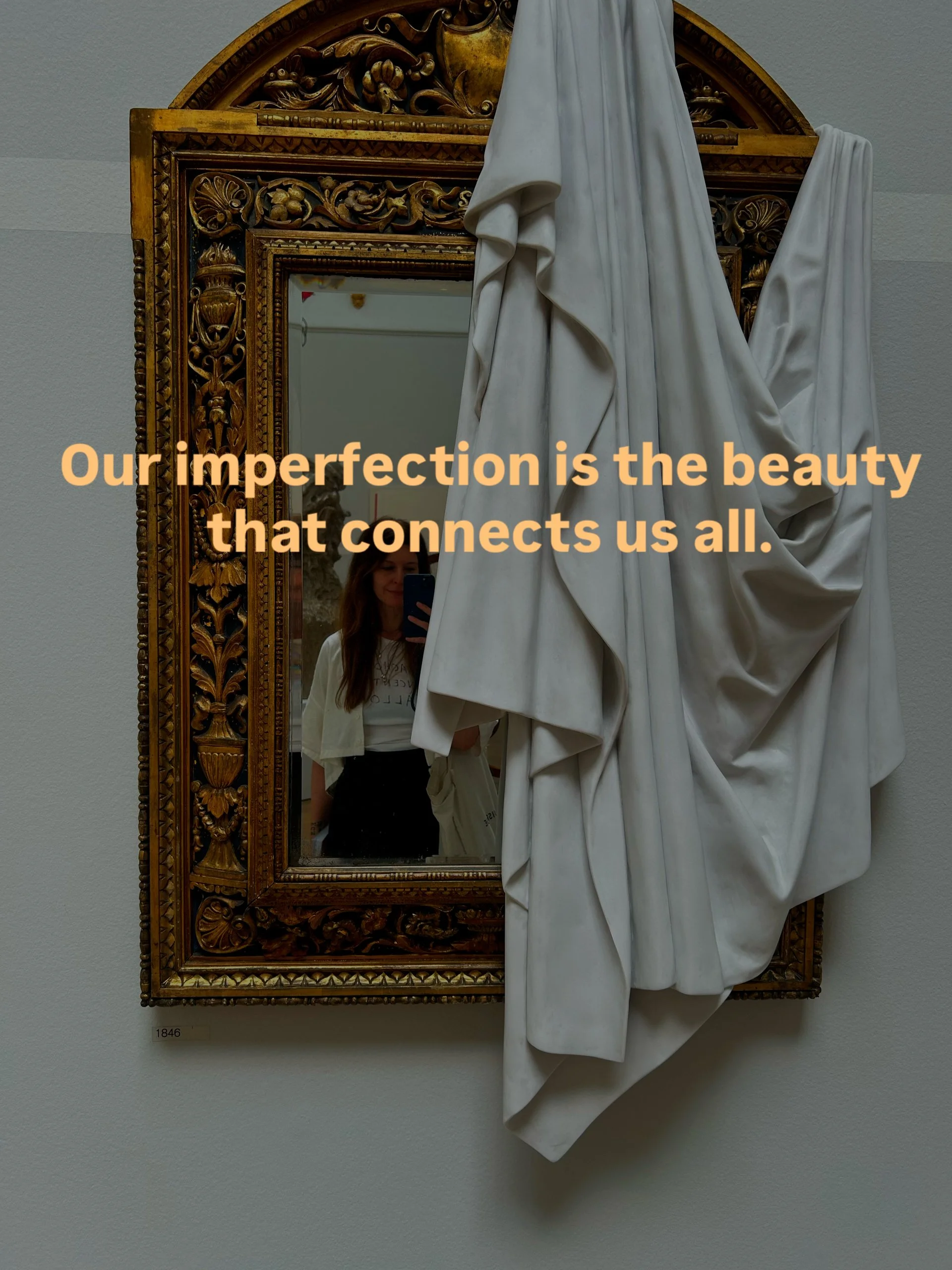
DECAY & WABI SABI
This is where i find the similarities with other cultural philosophies gets interesting. Because I have found that the closer you look, the more interconnected we become. This isn't merely theoretical. Anthropologists have explicitly developed the idea of ‘object biographies’ to understand how objects acquire histories as they move through time and different social worlds. The world in which something exists when it is first created is much different than the world in which it will exist in a few hundred years, and therefore we are merely stewards for that thing.
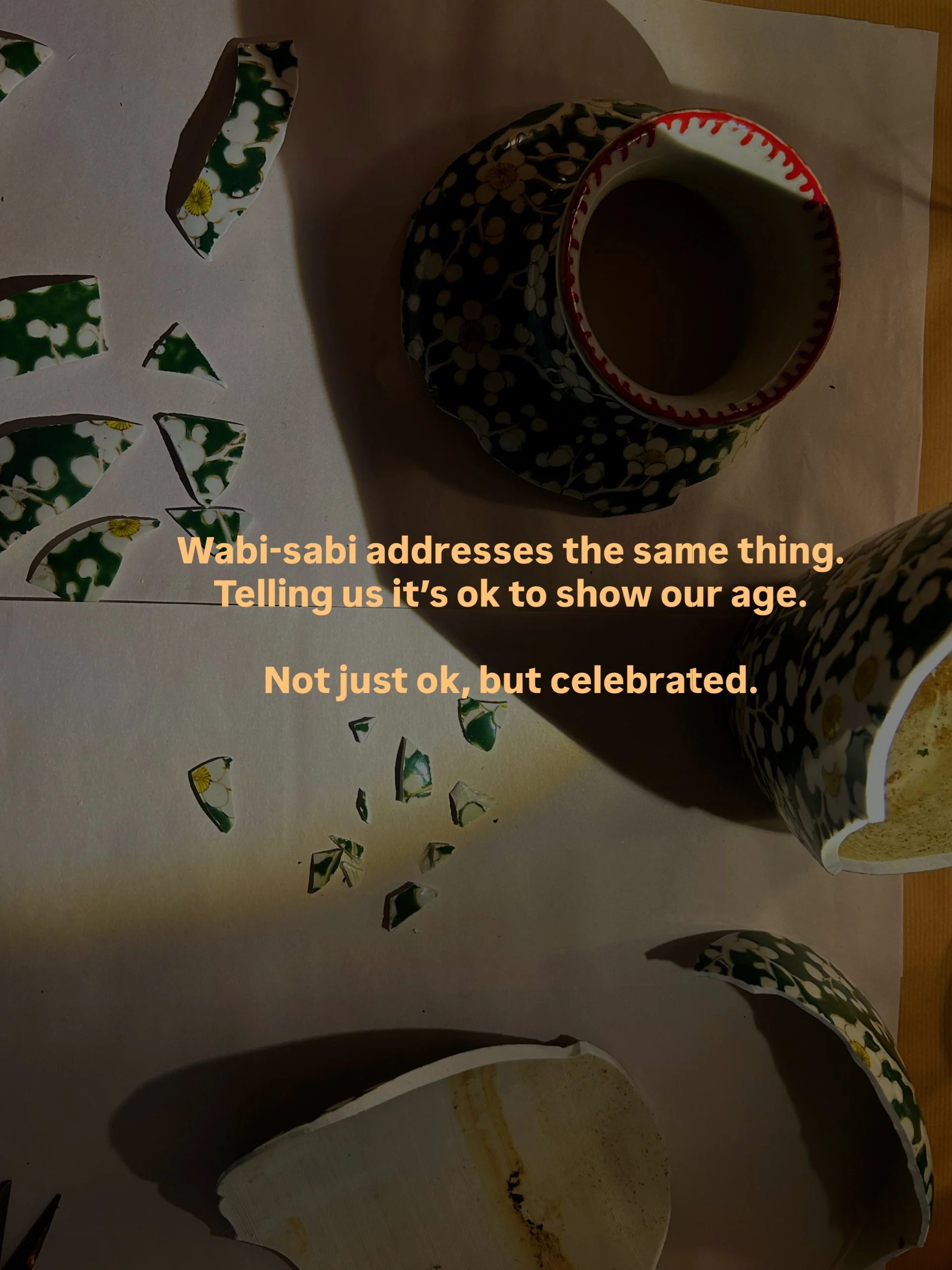
Wabi-sabi embraces this transience, emphasising the beauty of impermanence. And while I am reluctant to reduce this very broad philosophical principal in Japanese culture to a pithy westernised concept, I am always aware of this philosophy not just in my own repair practice, but in the built environment in general. It’s hard to live in a breathtaking city like London, infused with so many layers of history, and not appreciate the effects wear, impermanence and age has on everything around us.
PERFECT.
I can’t help but think of why we need things to be perfect in the first place. Our fundamental need for connection and community seems to be at the root of it. Psychologically, our survival in some way depends on being accepted by our family, friends, neighbours. This fear of being cast out lies at the root of it all, and unfortunately that fear gets exploited daily by very powerful forces (Zuckerburg & Co. I’m looking at you.) But once we realise that we are all in the same boat, we can let go of that fear, allow each other to just be imperfect, and call it day.
Often in our kintsugi workshops, when I’m guiding a class, I will find myself saying ‘perfect’ as a word to describe someone following an instruction well, or completing an task as I had envisioned it. I hear the word coming out of my mouth, and I twitch a little. I am actively working on finding a more ‘perfect’ word than ‘perfect’ to describe that which isn’t ‘perfect’ but just ‘is’.
So next time we’re together and you hear me say perfect, remind me that nothing is perfect. And that is ok.
If you love all things imperfect, and also love learning a new craft, Intermediate Kintsugi Repair might just be the workshop for you. Bookings only open up for these workshops twice a year, in the spring and autumn. So if you would like to know exactly when these classes get announced, join the waiting list here. This mailing list is only for our traditional classes, no fluffy marketing emails. If thats for you, hop on.
