
Kawai Kanjiro’s House
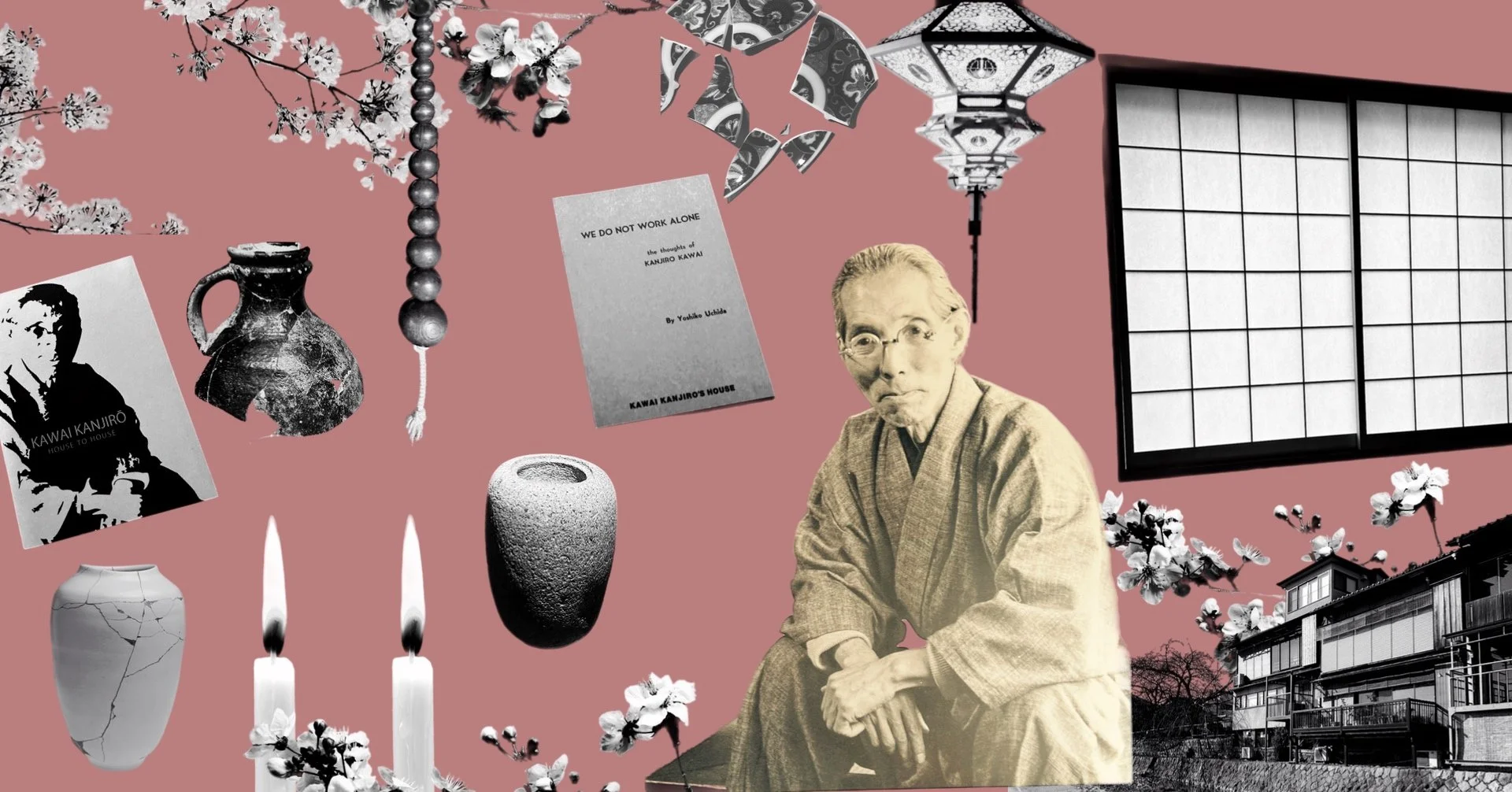
A peek inside the Kyoto home and work of Japanese ceramicist Kawai Kanjiro, through the eyes of a kintsugi practitioner
One crispy February morning in Kyoto, I found myself stepping out into the sunshine for a meandering walk through the quiet city streets. The thing about off-season Kyoto, is you aren’t as likely to trip over a bewildered tourist first thing on a Saturday morning, which suits me just fine. I will trade the mild weather of cherry blossom season for an unoccupied city street in the winter any day.
On this morning in particular, I had a few destinations in mind. The first was Kiyomizu-dera temple. Conspicuously situated on top of Mount Otowa this buddhist temple has long been a pilgrimage spot for spiritual seekers and tourists alike. And despite the brisk weather, this morning was no exception. By the time I arrived at the top of the hill shortly before 9:30am, the Nio-mon gate was already thick with bewildered travelers trying to get at least one photo that created the illusion that they were solo adventurers, pensively about to enter the gates of this sanctuary alone. This couldn’t be further from the reality of the place, of course, but social media wouldn’t know the difference. I wandered the grounds, wound my way up to the main hall and through the throngs of people lined up for thier turn to touch the waters of the Otowa-no-taki Falls. At this point, i’m a bit sheepish to admit, I wasn’t feeling so spiritual, and was thinking it was just about time to find another matcha. My next destination was one I had heard of from a few ceramicists, and luckily it was just a short 10 minute walk from the temple.
Down the hill, in the Higashiyama neighbourhood of east Kyoto known for its long history of ceramic production and traditional pottery, I would find the home and workshop of Kawai Kanjiro. Nestled in the low-slung residential area, this unassuming house looks indistinguishable from the other wooden machiya-style homes. However, behind the unassuming facade, a community of artists headed by Kanjiro had created a quiet universe of earthy ceramics and woodwork.
The Mingei Movement
In early twentieth-century Japan, a group of artists and thinkers began to question the distinction between ‘art’ and the ordinary objects of everyday life. At the heart of this movement was the philosopher and aesthete Yanagi Sōetsu, working closely with Kanjiro and ceramicist Hamada Shōji. Together, they coined the word Mingei in the early 1920s. Combining the ideas of min, meaning ‘the people’, and gei, meaning ‘art’ or ‘craft’.
The Mingei movement celebrated the quiet beauty of objects made for ordinary use. This could be anything including bowls, baskets, textiles, furniture, tools and vessels, made by largely anonymous craftspeople. Rather than valuing objects because they were rare or expensive, Mingei philosophy proposed that beauty could emerge from usefulness. Natural materials, simplicity and skilled craftsmanship were held in high regard. These were objects intended to be lived with rather than placed on a pedestal.
This philosophy was partly in response to the rapid industrialisation and modernisation of Japan. As mass production increasingly replaced traditional craft, Yanagi and his cohort became concerned that the knowledge and beauty embodied in everyday handmade objects could disappear. They travelled throughout Japan collecting and documenting folk crafts, while encouraging a renewed appreciation for regional traditions and the anonymous makers behind them.
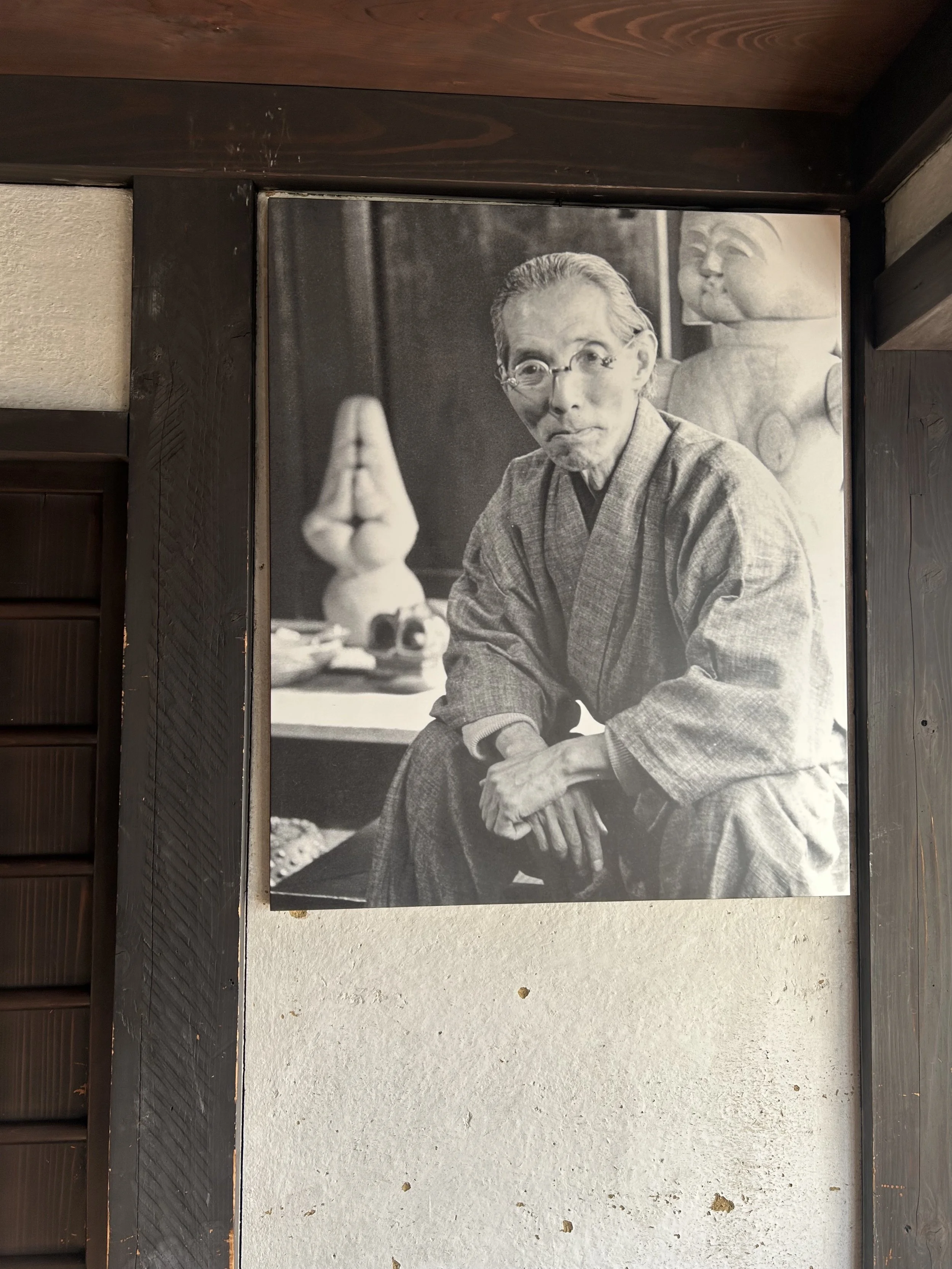
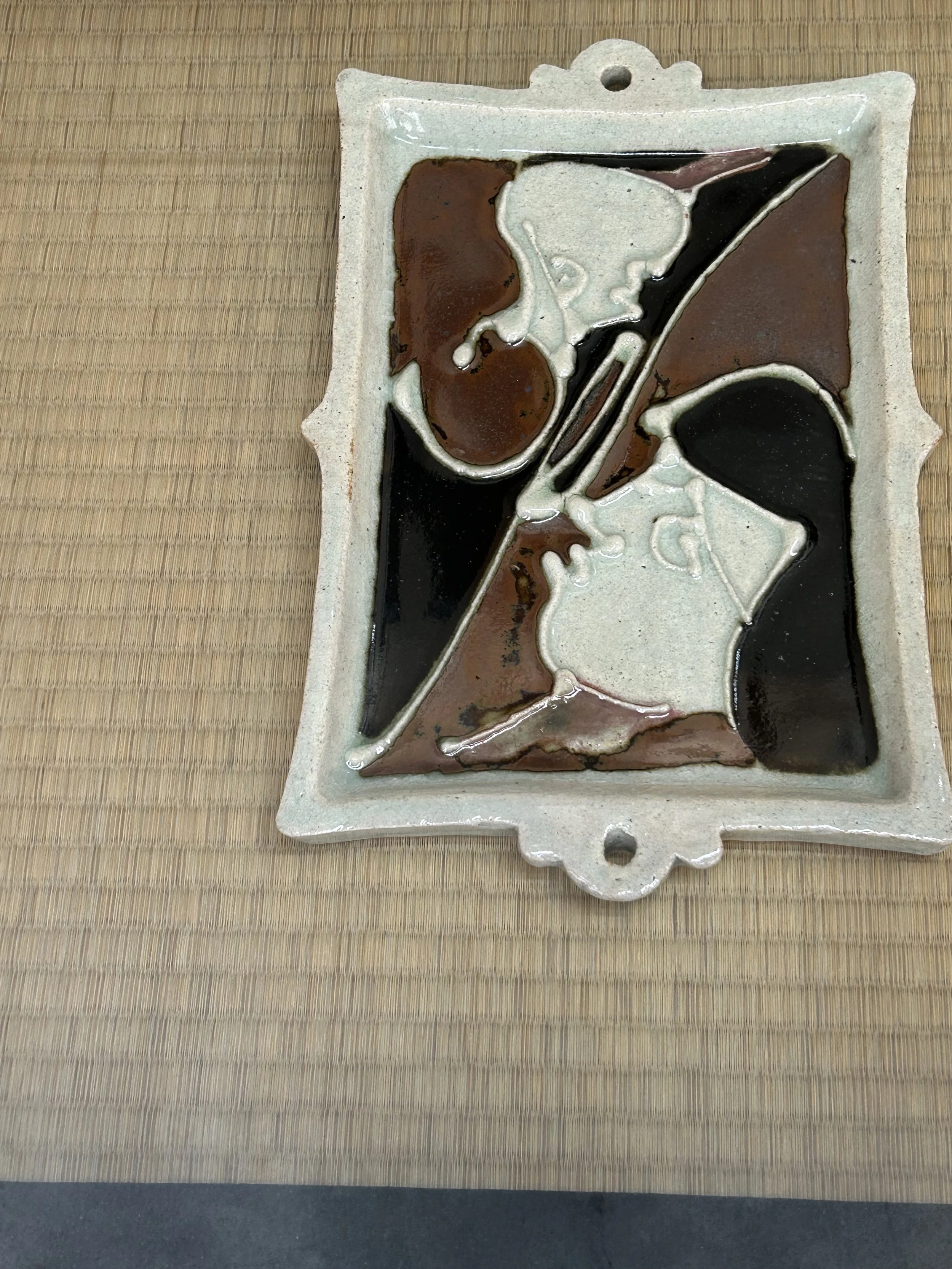
Kanjiro was particularly central to the Mingei movement, because he didn't simply theorise about these ideas, he lived amongst them. His ceramics combined traditional techniques with an intensely personal approach to form, colour and glaze, while his home became an extraordinary expression of the same philosophy. Furniture, architecture and household objects were treated with the same care as his ceramics. The boundary between art and daily life became deliberately blurred. As I wandered through Kanjiro’s home, now open to the public, a sense of peace that alluded me at the temple finally settled.
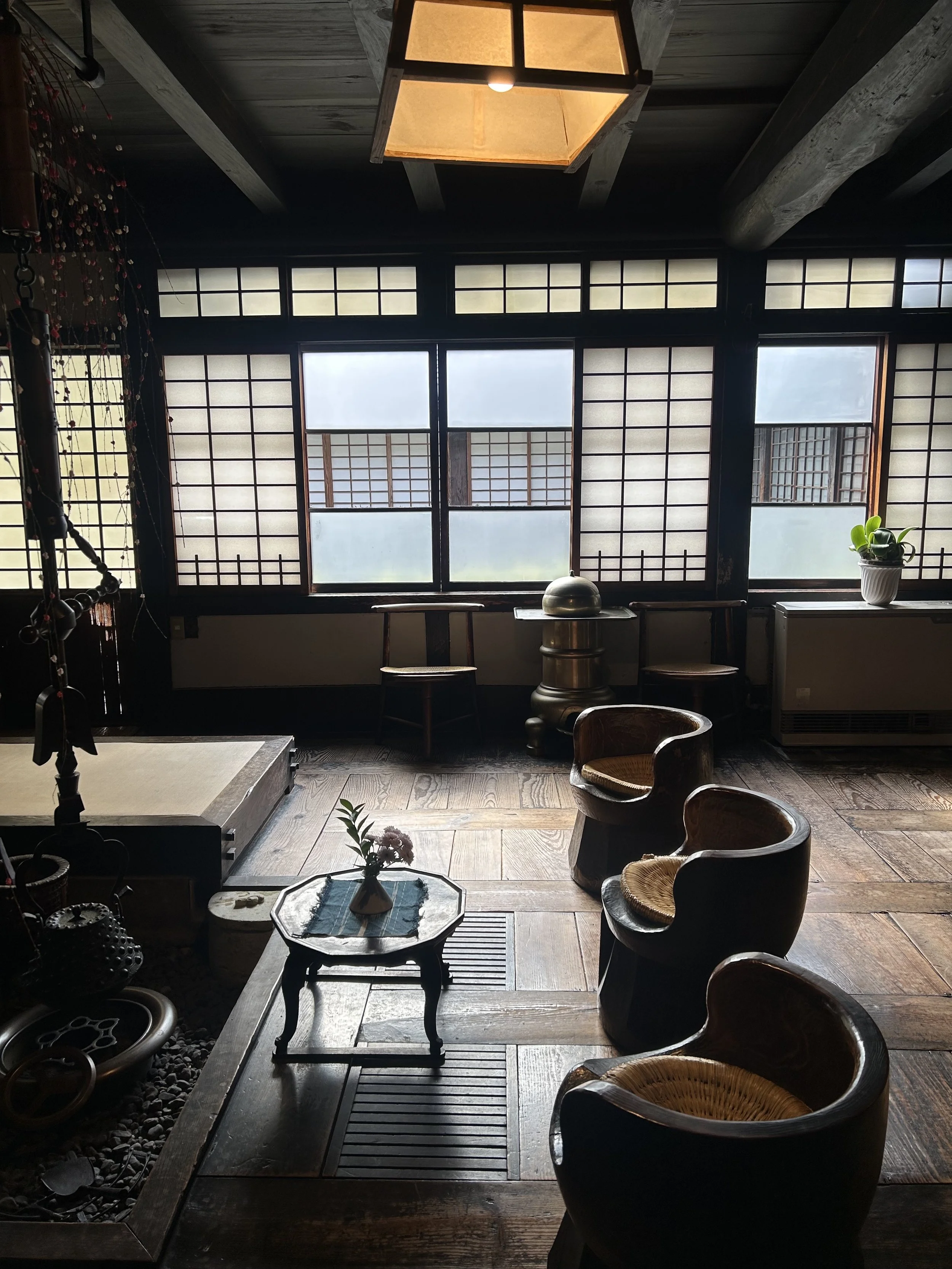
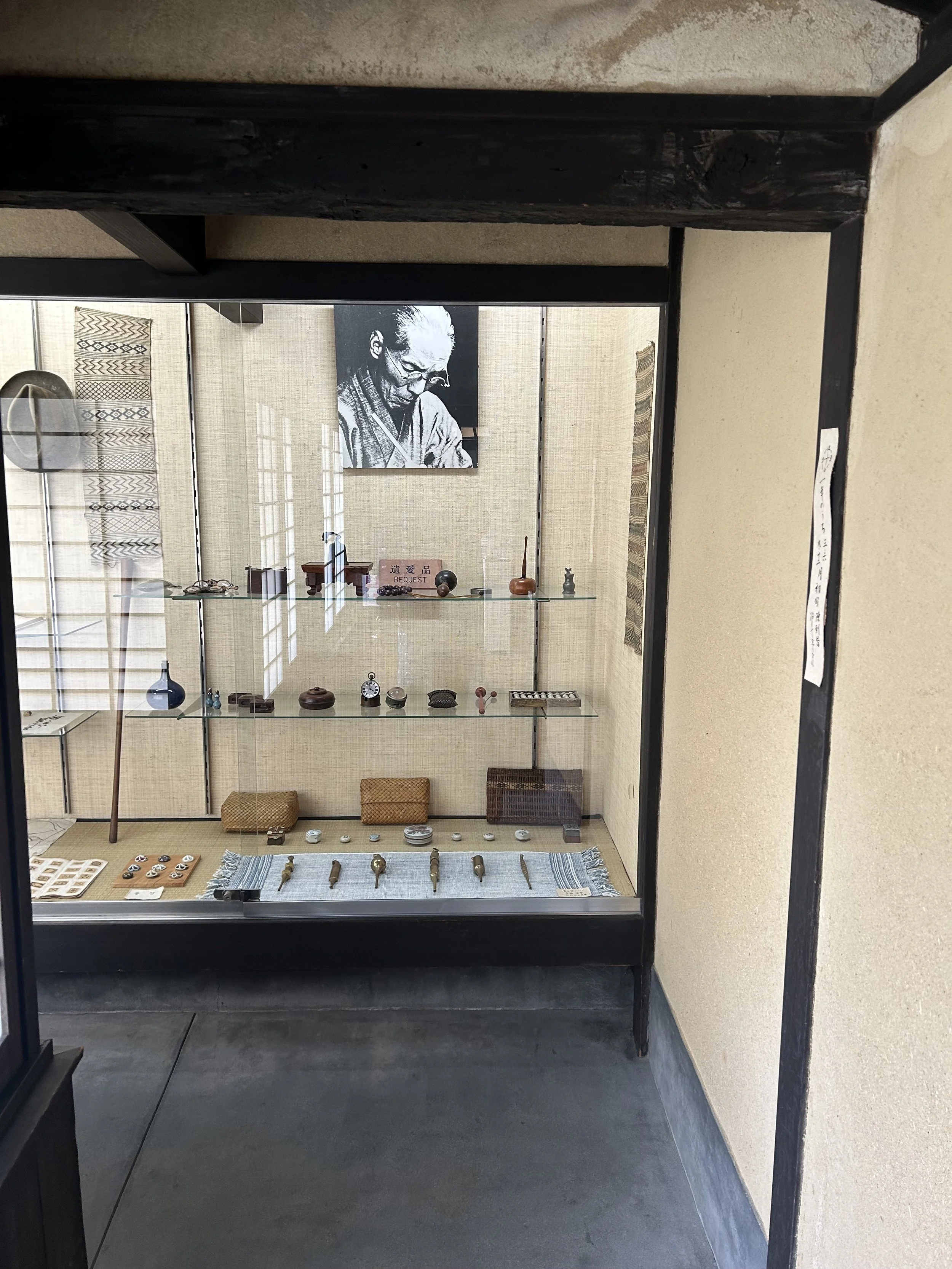
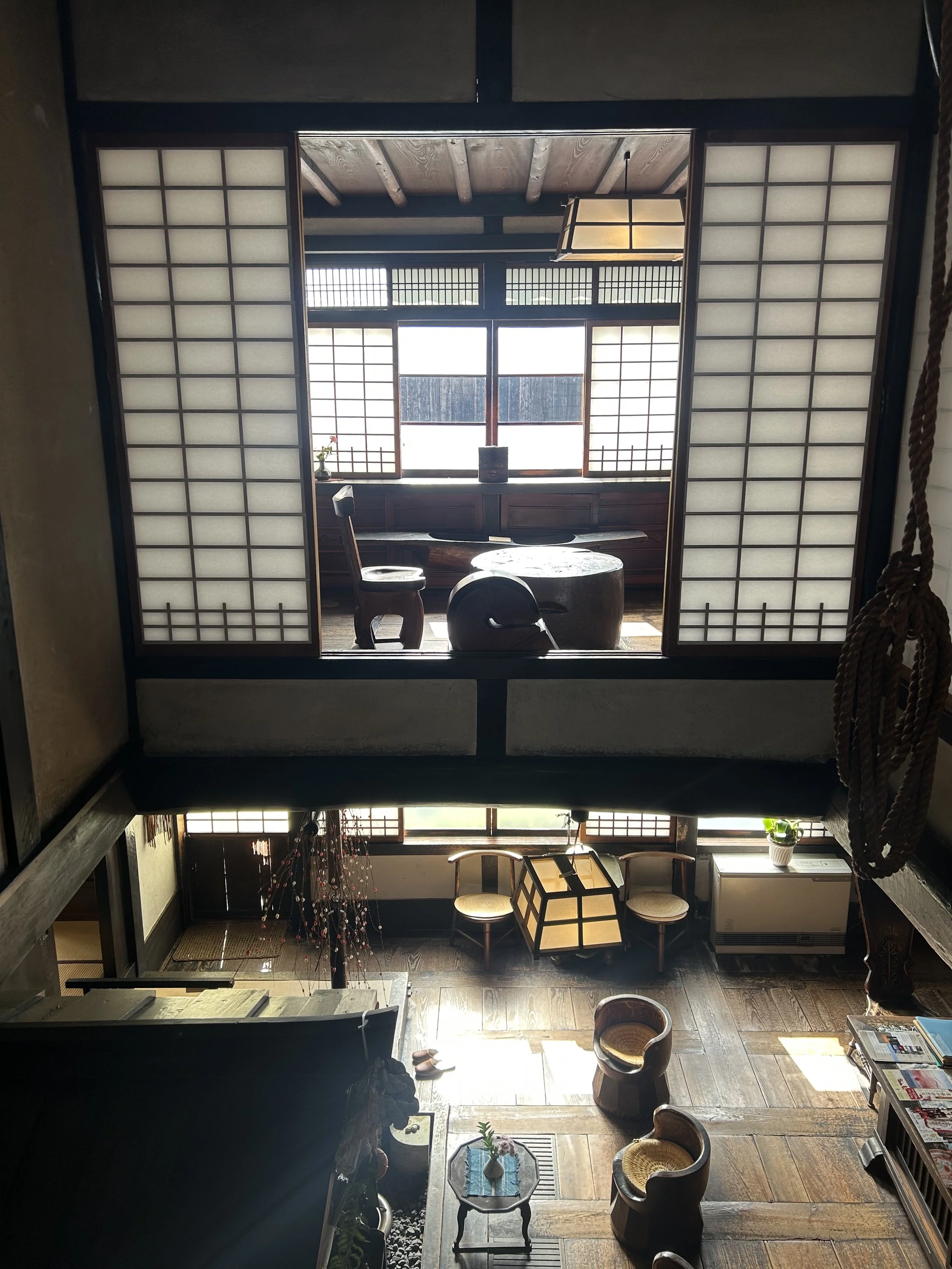
Kawai Kanjiro’s house is perhaps best understood not as a museum containing an artist’s work, but as one of his largest works itself. Designed by Kanjiro and completed in 1937, the house was built as a place to live and work, bringing together his home, pottery studio, gardens and the enormous climbing kiln that had been central to his practice. Today, remarkably little separates us from the environment in which he actually lived. The dark timber beams, handmade furniture, ceramics, wood carvings and everyday objects remain woven into the rooms rather than arranged like conventional museum exhibits. Perhaps this is why the house rewards looking closely. The grand features are impressive, but it is often the small, slightly eccentric details that reveal Kanjiro’s way of seeing the world.
THE WOODEN BEAD ‘RAILING’
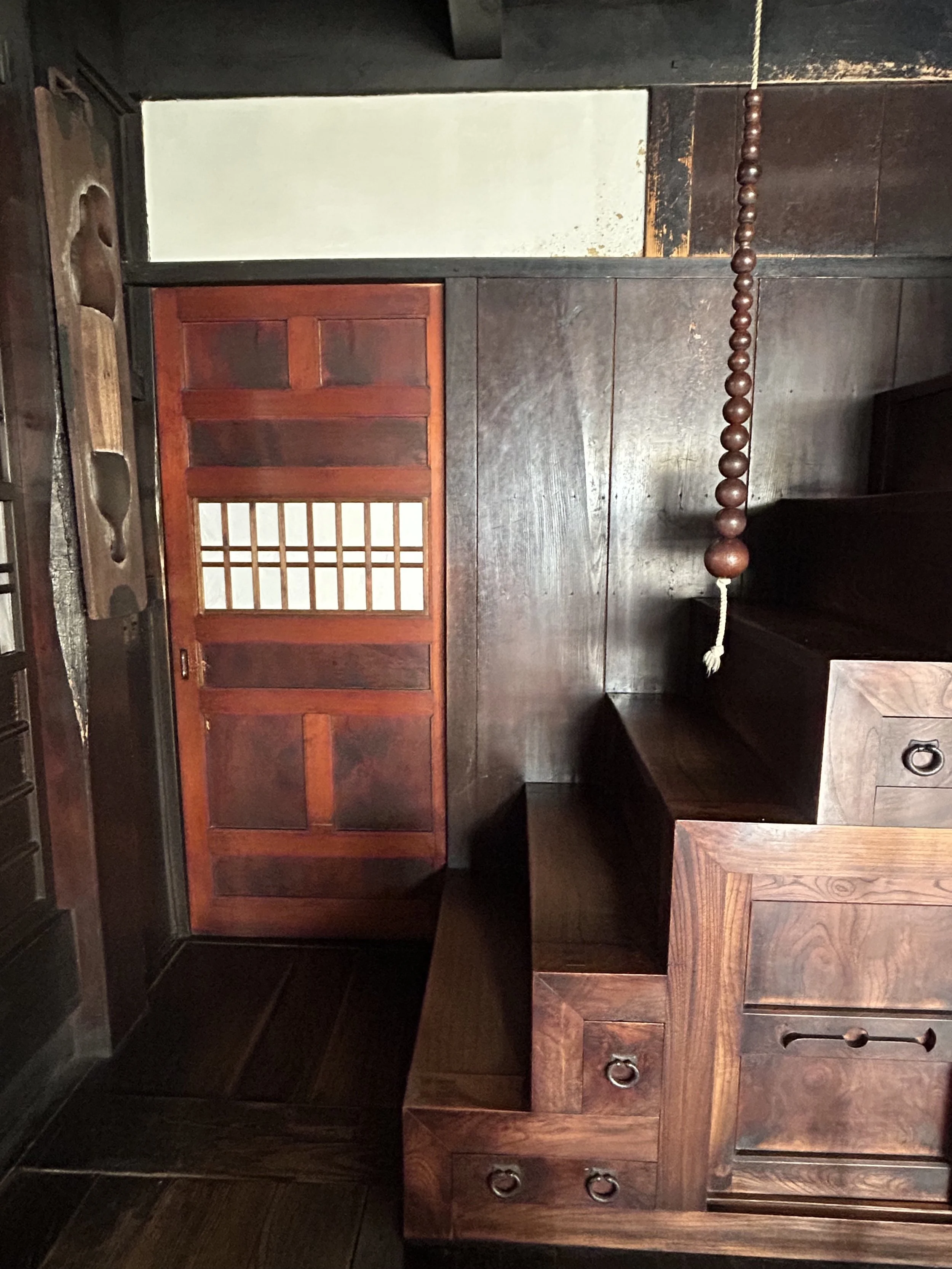
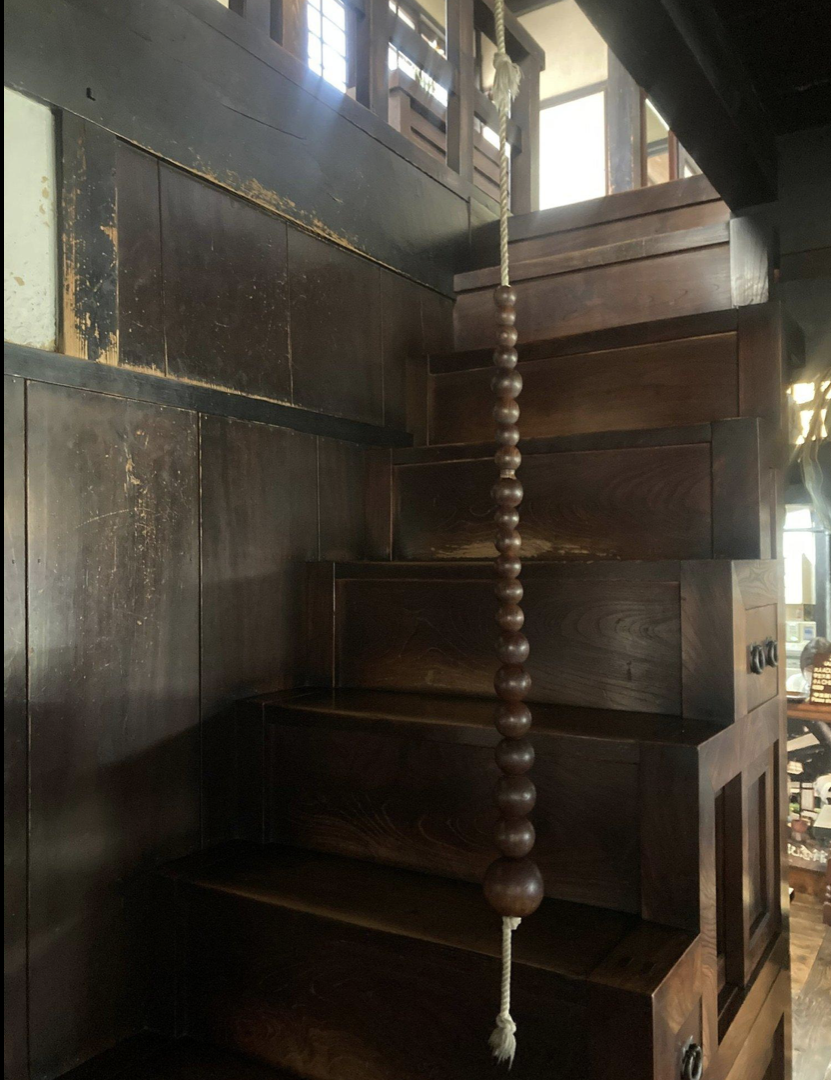
When you first enter the home, one of the first things you are struck with is the warmth. The interior is stoic, with dark wooden walls and cabinetry everywhere. And slowly as you look around, the sense of humour begins to reveal itself. Not obvious at first, but a quiet, creeping playfulness that is deeply satisfying. The staircase leading to the second level is open, with no barrier to the living area. A long rope with large wooden beads hangs, like a rosary without a cross. At first I had no idea what this detail was for, and then I quickly realised the ingeniousness of the design…it’s a railing. Instead of a boring wooden barrier, you hold the beads as you walk up the stairs, and it moves with you. The beads have become smoother and worn from years of handling and support. There is even an anecdote talking about how Kanjiro’s grandchildren used to swing from this rope, landing in the hearth below.
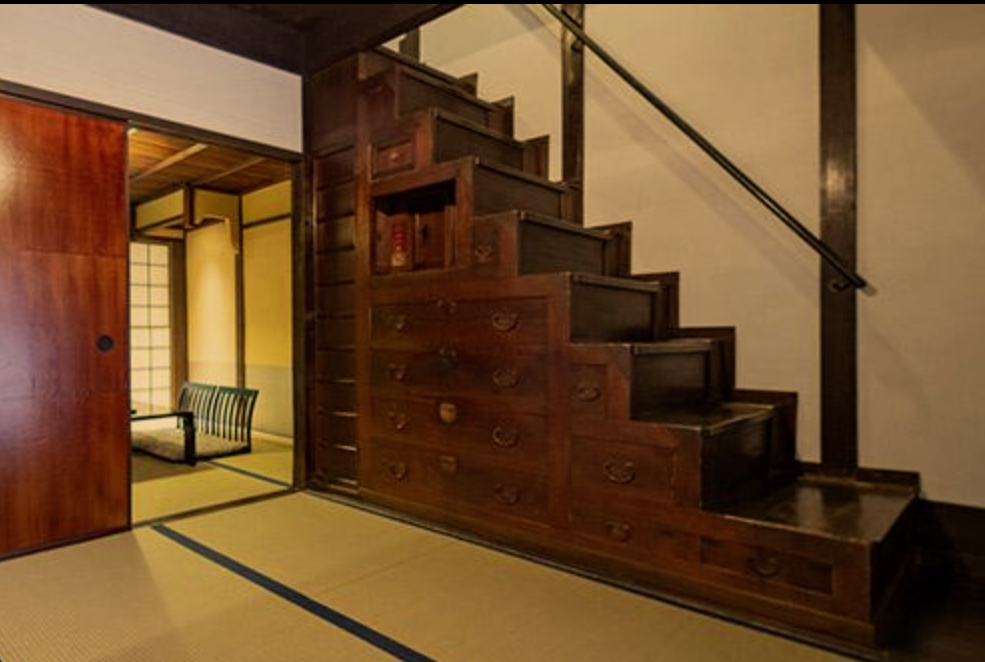
The beaded ‘railing’ isn’t the only feature worth noting about the staircase. The staircase itself is a working object. Not just as a functional piece to get you from point A (downstairs) to point B (upstairs) but beautifully built into the steps are custom drawers. Called a hakokaida, or ‘box staircase’ the staircase was apparently given to Kanjiro as a housewarming gift by the potter Shōji Hamada when the present house was completed in 1937. These stairs are not only expertly constructed, but so perfectly exemplify the wider Mingei ethos of yō no bi or ‘the beauty of use’
THE STONE BALL
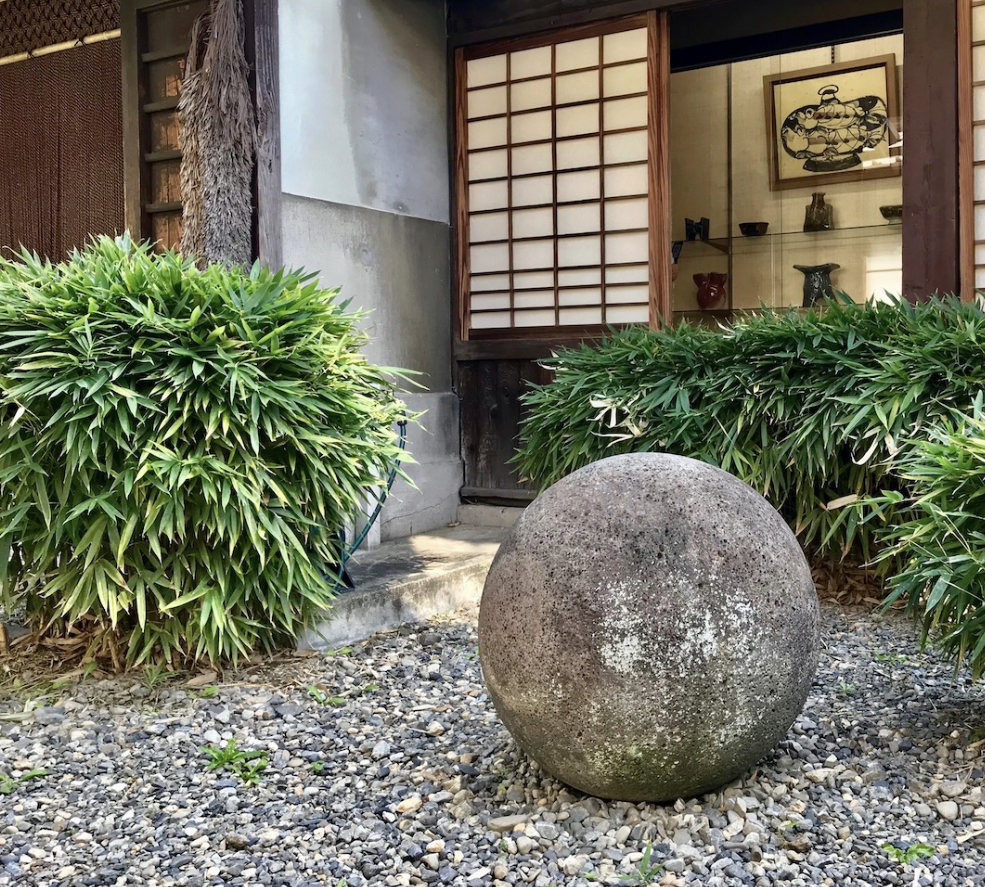
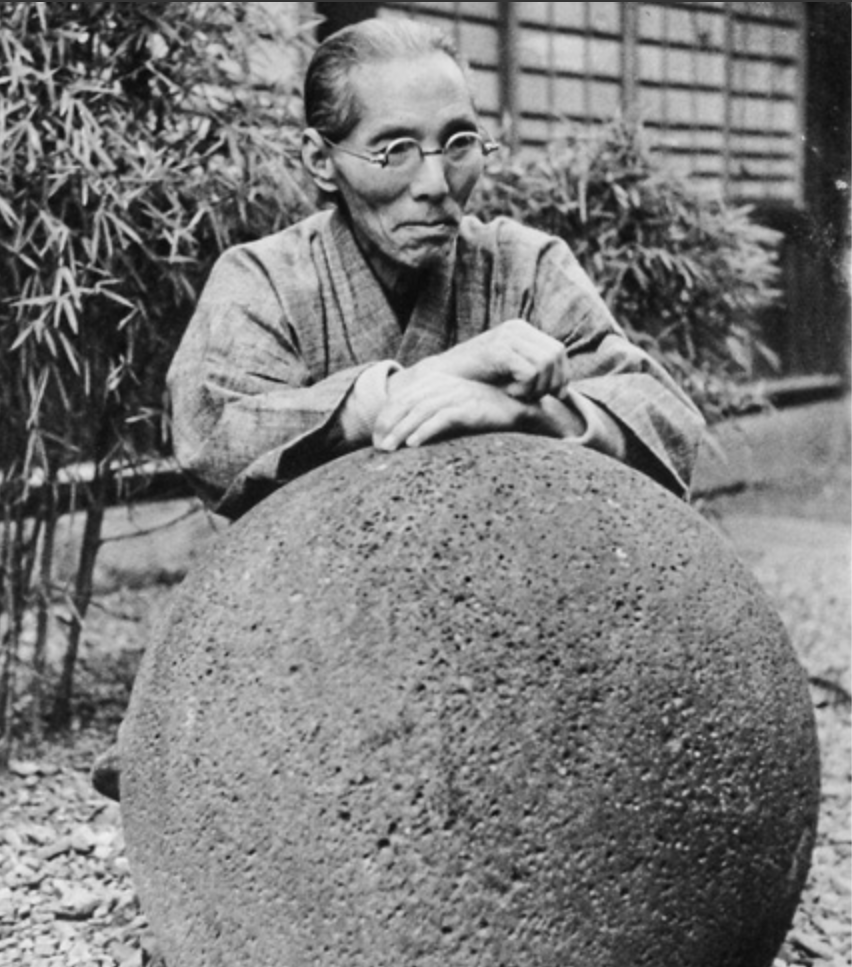
Just beyond a cat lazily stretched out in a stream of sunlight, I continued past the hearth in the centre of the main floor, and entered the garden. Typical of houses in Kyoto, this garden area is enclosed on all sides by the home, creating a cozy atmosphere. Called tsuboniwa , these internal gardens bring natural light and fresh air deep into the middle of the house. A large stone ball, roughly 2 feet high sits stoically in the corner. A gift from Kanjiro’s friend Ota Naoyuki, this stone ball was requested by Kanjiro himself, instead of the stone lantern that his friend originally wanted to give him. Delivered from Yasugi, this stone ball provided seemingly endless amounts of amusement and inspiration to Kanjiro, who would roll the ball from one side of the garden to the other. About the stone he said:
“It was interesting that by moving just one thing, everything changed. Yet it was also interesting to discover that everything indeed has its own place.”
The spot where the ball currently rests is the exact same spot he rolled it for the last time. It has remained there ever since.
THE CLIMBING KILN - Ceramics for the people
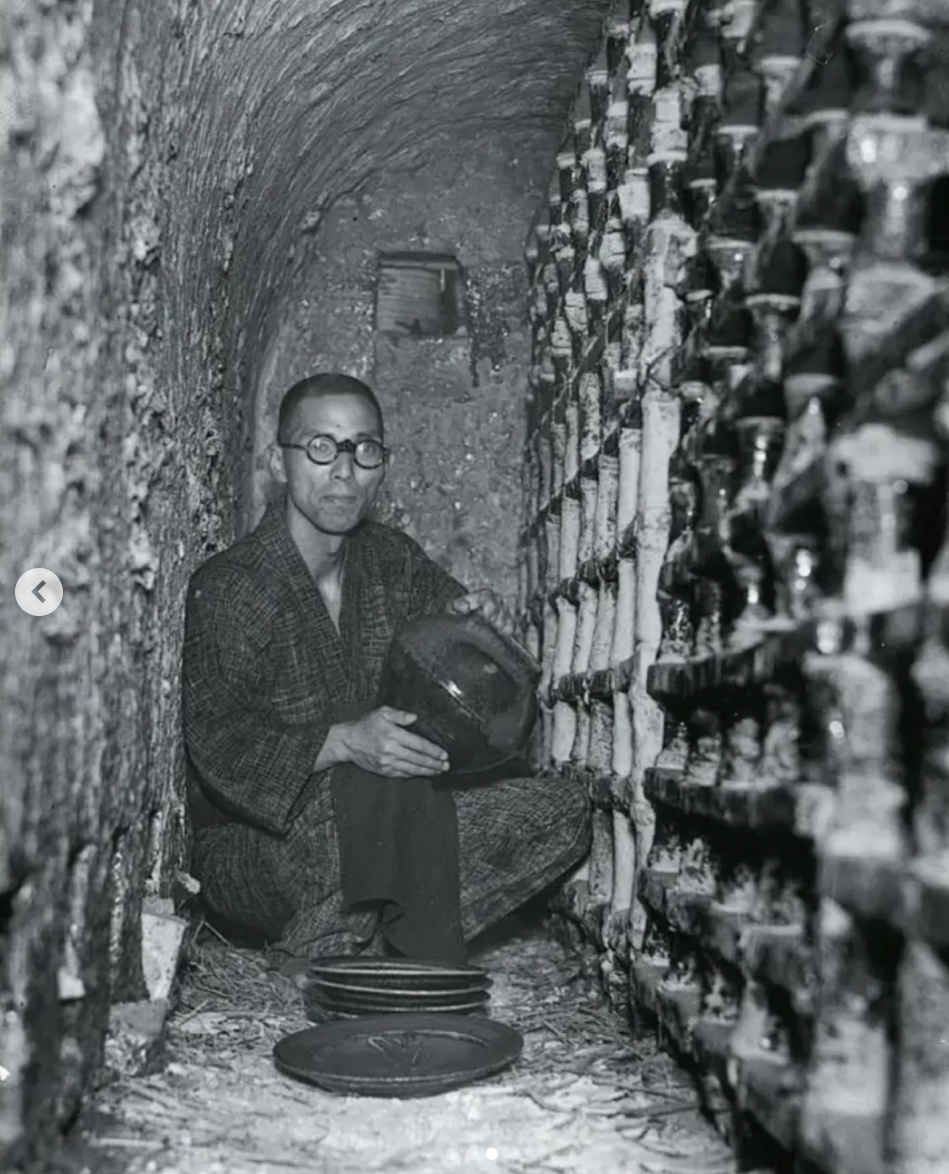
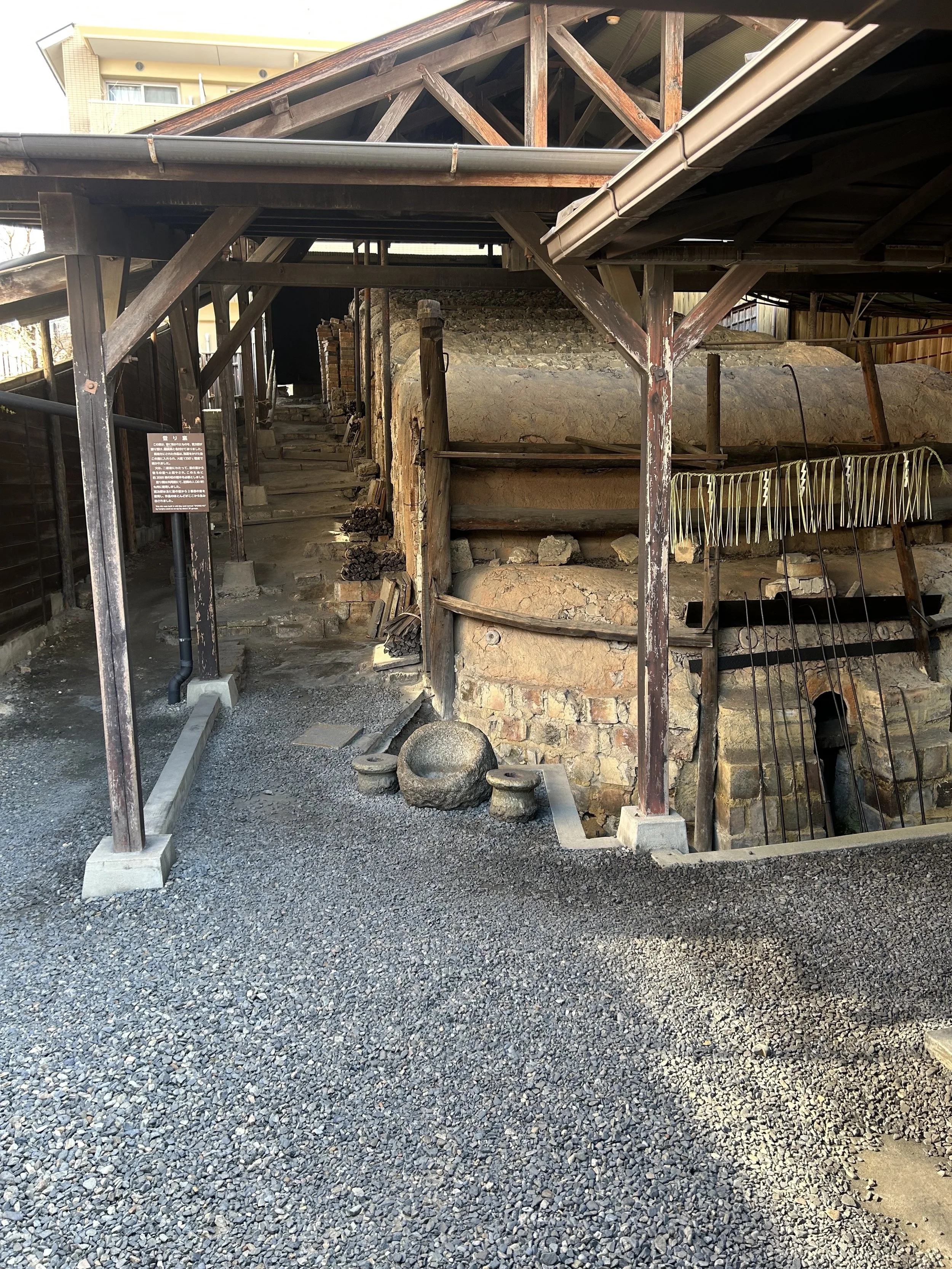
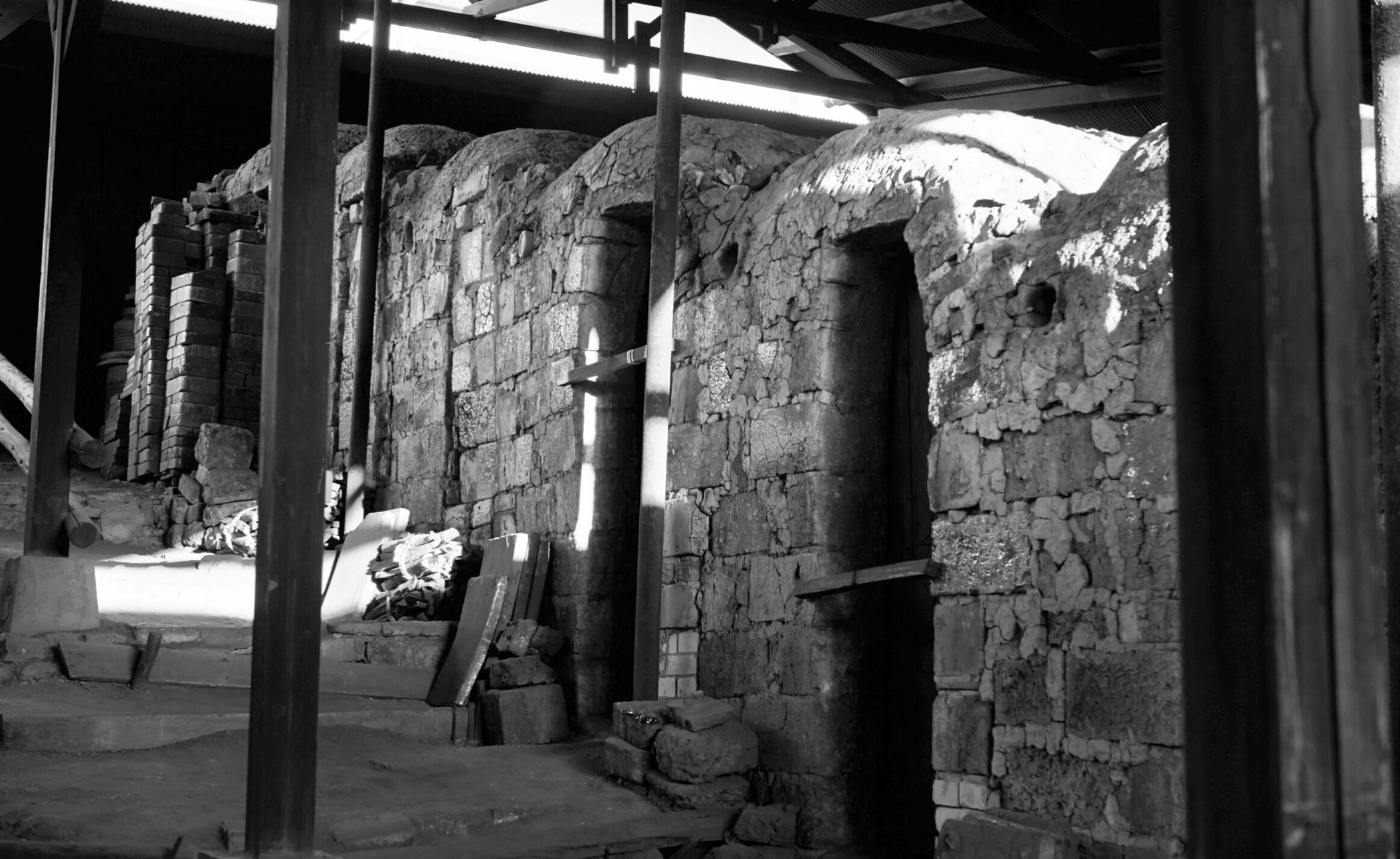
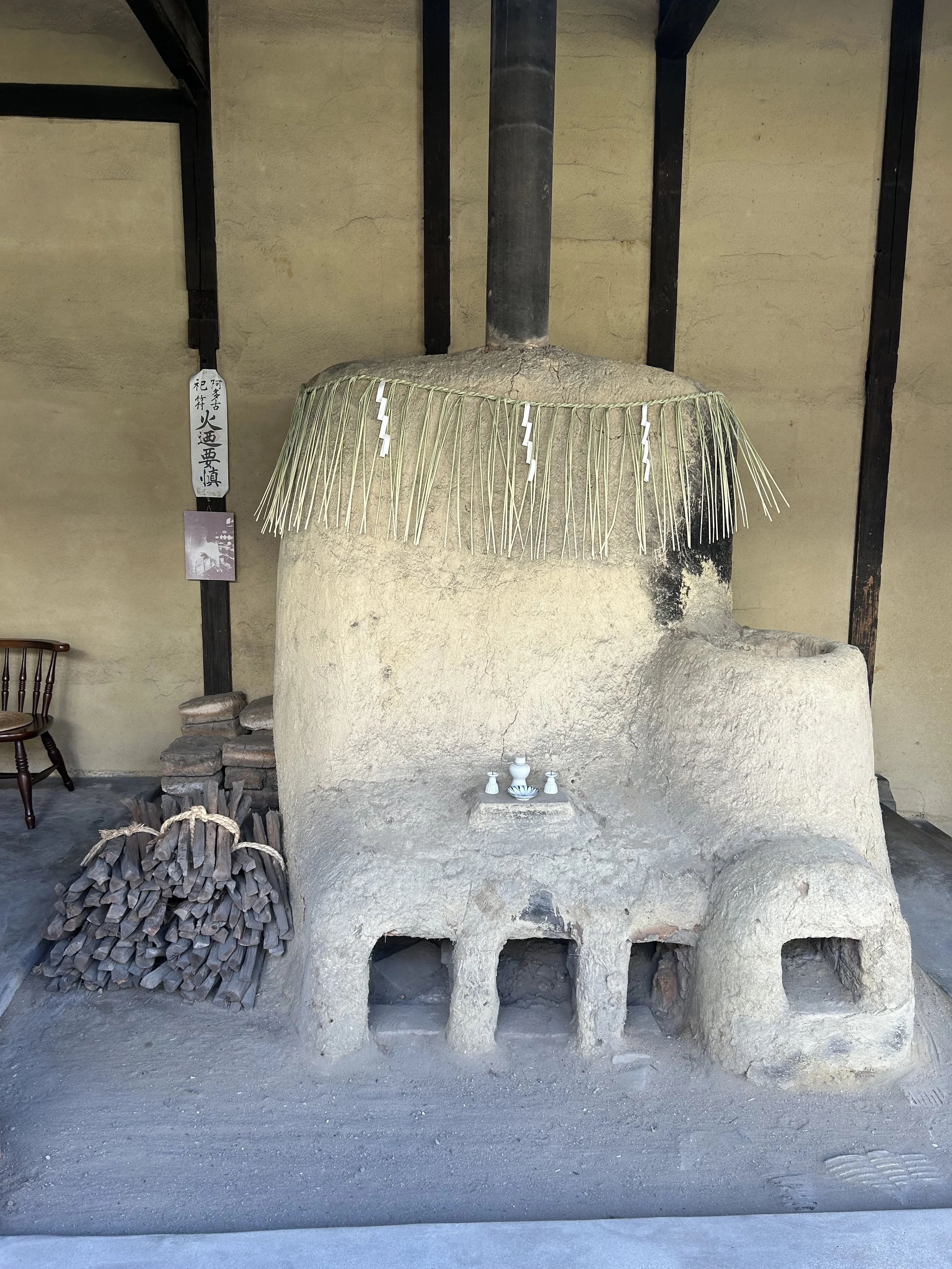
The back garden has several kilns. How so much production managed to fit into such a humble looking exterior continued to shock me during my walk through the home. Just when you think it’s over, another area thrumming with productive spirit reveals itself. On the other side of the enclosed garden, there is a small adobe kiln, with several small ovens. Beyond the meandering backyard, through a small exhibition space housing some of Kanjiro’s later ceramic work, you will find the climbing kiln. Perhaps the most impressive and relevent example of the Mingei philosophy of ‘art for the people’ this massive kiln was not just for Kanjiro’s home, but one he shared with his neighbours. Essential in making the Gojozaka neighbourhood the ceramics hub that it was in the late 1930s, this climbing kiln was shared with upwards of 20 other family homes in the area. A climbing kiln by design is a wholly collaborative project, with epic resources placed into the monthly running of it. This type of kiln relies on massive amounts of wood, with heat barreling upwards through the channels, creating not just sufficient heat, but colossal plumes of smoke. Eventually, in the early 1970’s, several years after Kanjiro’s death, these kilns were banned from use in the populated city areas. This climbing kiln is a protected heritage monument.
KAWAI KANJIRO AND THE ART OF KINTSUGI REPAIR
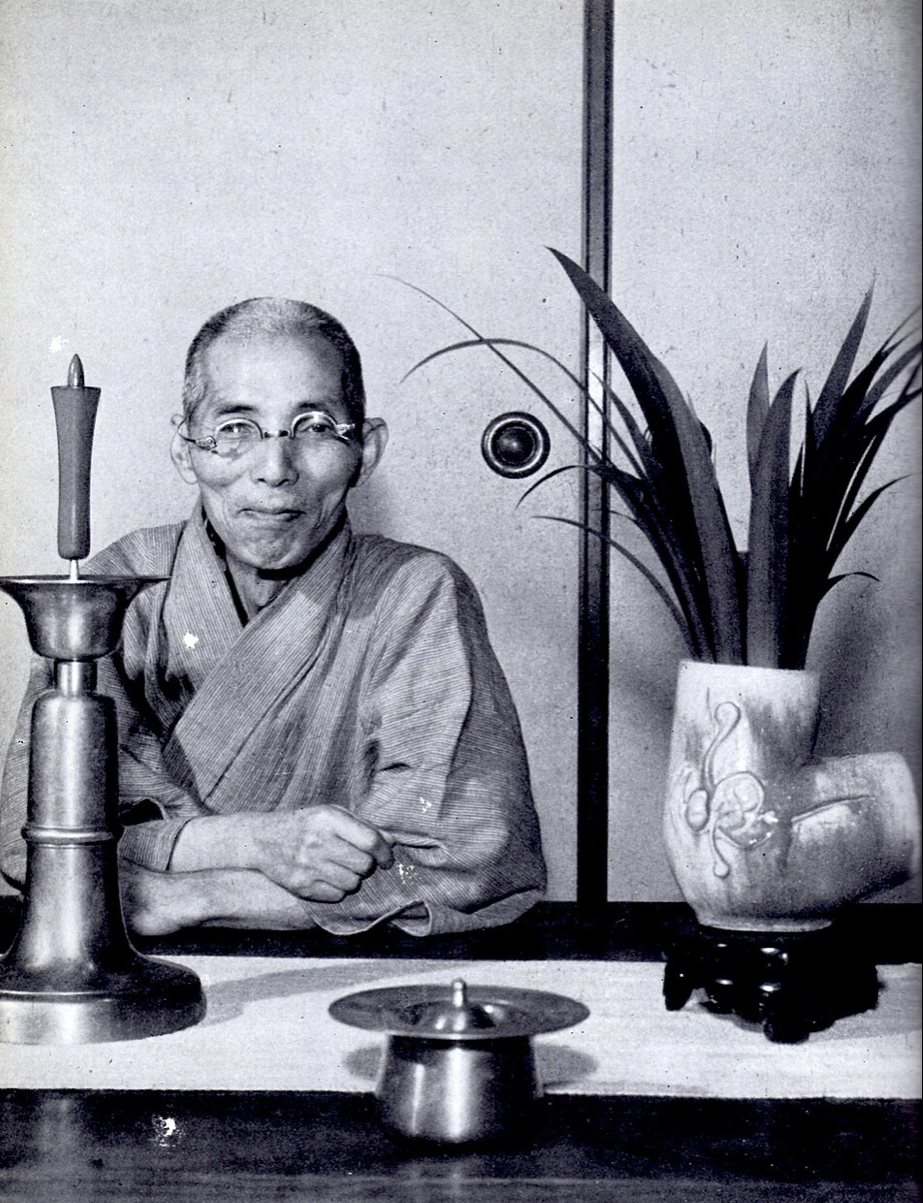
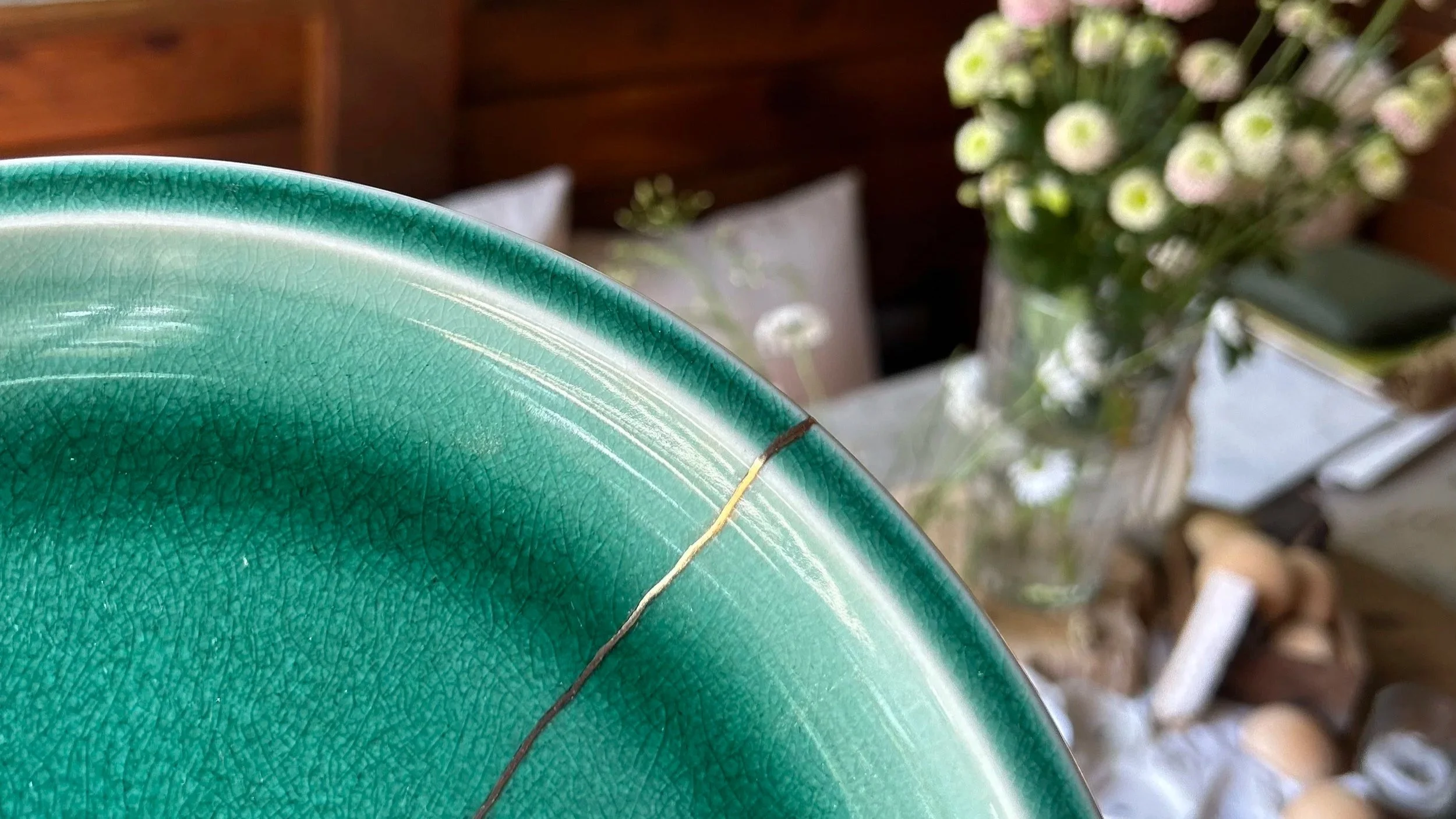
Kanjiro’s understanding of wabi-sabi is reflected in his home in so many ways. The principals explored by his friend and Mingei collaborator Soetsu Yanagi is something I have reflected on in a previous post about the work of artist Francisco de Zurbarán. The relationship to light, useful objects and age are exemplified in every quiet and considered corner of his home. While I didn’t see any specific evidence of Kanjiro’s appreciation of Kintsugi repair as a practice to enhance that which is broken in his own work, Im always keeping one eye out for these connections as a restorer myself. It wasn’t until long after leaving the home that I found that connection. In fact, it was so on the nose that I had to read it twice to make sure I wasn’t hallucinating. In a passage written by researcher Yoshiko Uchida in 1952, recalling a story Kanjiro had told her about an old man and a vase:
“It was a beautiful thing-new and without a flaw. The old man wanted to show this vase to a friend who was coming to call, but he was embarrassed with it. It was too new and too perfect. So, he took a brush and dipped it into gilt lacquer which was used in those days to mend pieces of broken pottery. Then, he drew a crooked line across the face of the brand new vase.”
Suddenly, Kawai-san had become that man. His hands moved in the air, painting a line on the beautiful new vase. His face broke into a happy smile. “Now the line on the vase made it look old and mended,” he went on, “It was no longer perfect. The man was satisfied and he showed it to his friend. The friend understood. He admired the vase and appreciated what this man had done.”
Kawai-san leaned back to look at us. “Isn’t that a wonderful story?” he asked.
”That is a real Japanese story. If you can understand that, you can understand how the Japanese have found beauty in what may seem imperfect to man, but which is perfect by the standards of nature.’”
Kintsugi Workshops at The Salvage Company
If you find yourself wanting more wabi-sabi in your life, to gain a better understanding of craft, or to learn how to repair in your own ceramics at home, pop over to our booking pages for Kintsugi Repair. Workshops run weekly from our East London studio. Learn all about them here.
