
An Art lover’s guide to Japan
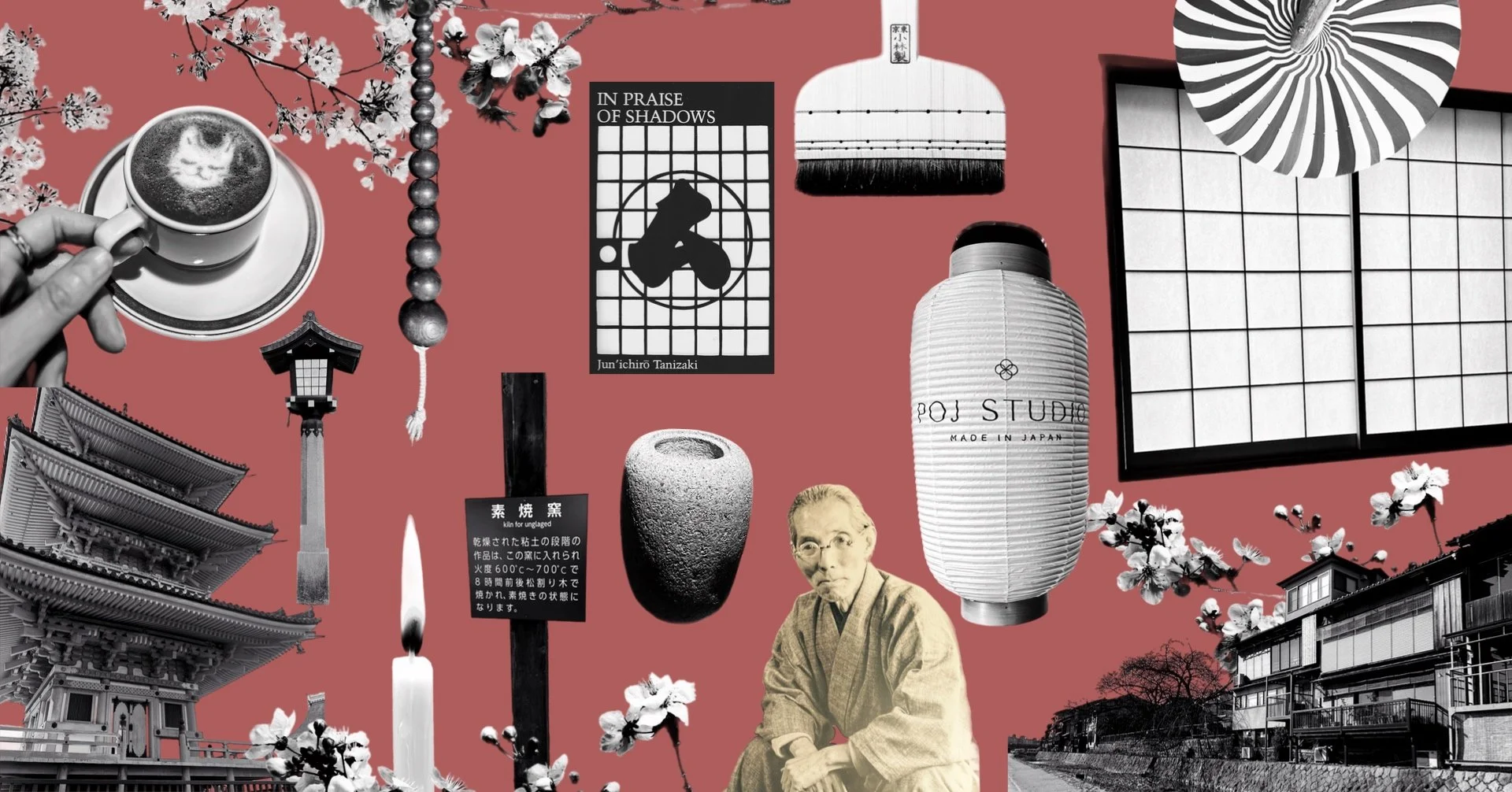
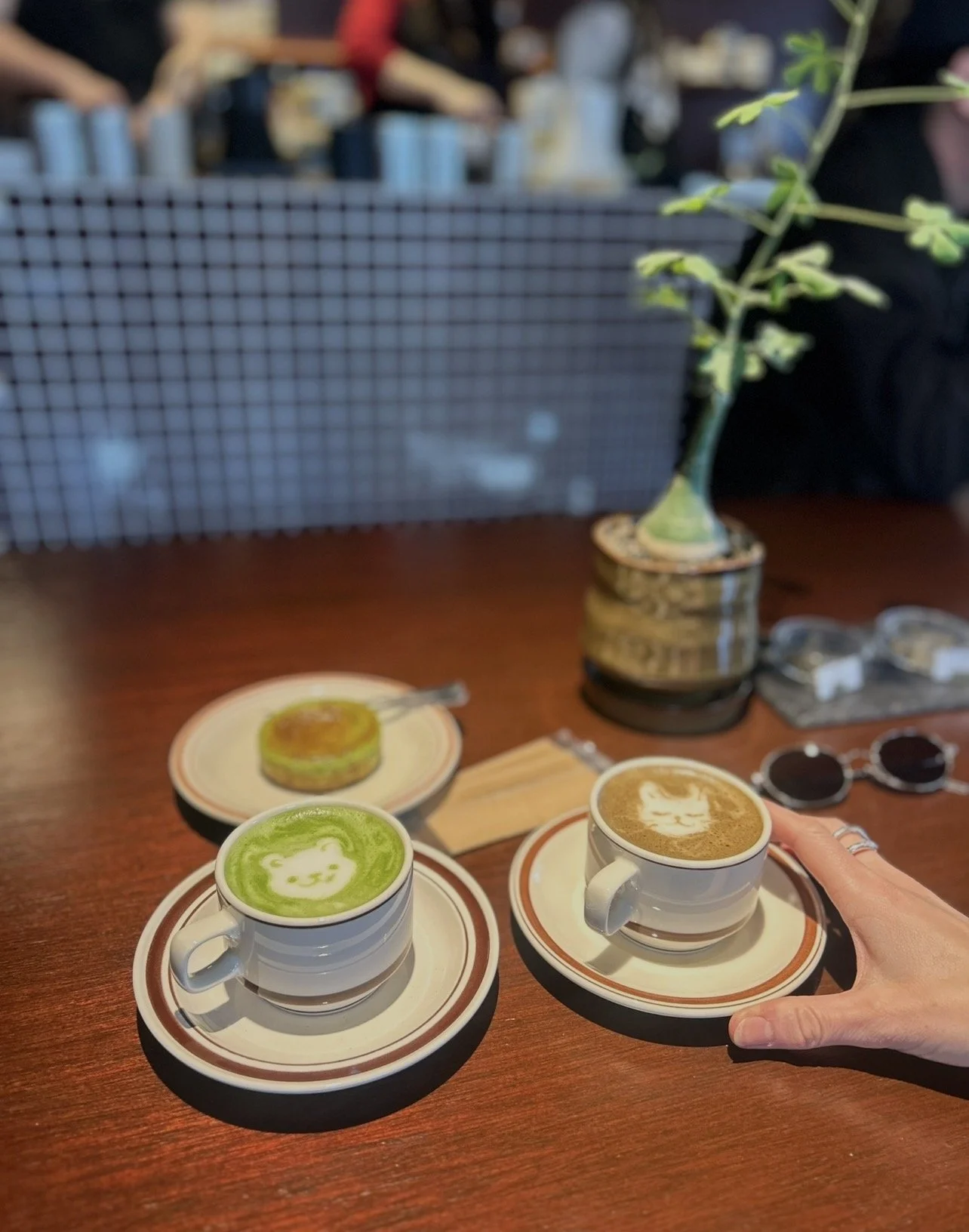
Each season in Japan has its charms. The gently falling February snow in Osaka. The quiet streets and low morning light on a morning walk to Weekenders Coffee in Kyoto. The shorter lines, and general ease of finding a spot on the Shinkansen. There are plenty of benefits to visiting Japan in the off-season. The vibrancy of Hanami (the height of Cherry blossom season running through March and April) is exceedingly beautiful. But for my money, I’ll take any opportunity to travel anywhere in the world off-peak season. I would say I’m known amongst my closest friends as someone who hates to rush, and theres no way to feel more hustled than in the thick of a tourist crowd ambling along from one sight to the next. Don’t get me wrong, even ancient temples when crammed with tourists never fail to humble you with their majesty, but theres something about having the privilege of unhurried time that makes one truly appreciative.
The Golden Route, following the old Tōkaidō Road that stretches roughly 500 kilometres between Tokyo and Kyoto, is called that for a reason. For centuries, this was Japan's most important highway, connecting the shogun's capital in Edo (modern Tokyo) with the imperial court in Kyoto. Merchants, pilgrims, samurai and craftspeople all travelled this route, carrying not just goods but ideas, helping to mould much of the culture that visitors come to experience today. These days, the modern Golden Route linking Osaka, Kyoto and Tokyo is a well-trodden tourist itinerary, and with the ease of the bullet train, it remains the most popular way to experience Japan for a first-time visitor. It's easy to navigate and offers a little bit of everything: ancient temples and shrines, sprawling modern cities, incredible food, traditional crafts and some of the country's most important museums and cultural sites. it's the perfect place to get your bearings before heading further off the beaten track. And while this route is well travelled, it also acts as a gateway to countless lesser-known regions
After my visit earlier in the year, the off-off season for tourists, I wanted to condense all the amazing art shops, antiques, oddities and little bits I found in between into one place for you. So next time you visit Japan, you will know what to keep your eyes peeled for.
Consider this a mini artists guide. The Golden Route through the eyes of an artist and conservator, with a special focus on urushi lacquerware and kintsugi. If you have ever wondered what art shops are unmissable, and what treats you can find on your way, this is for you. A little tip for new visitors, if you mark the ones you don’t want to miss on your google map, you will be able to easily plan your visit around other sites in the same neighbourhood.
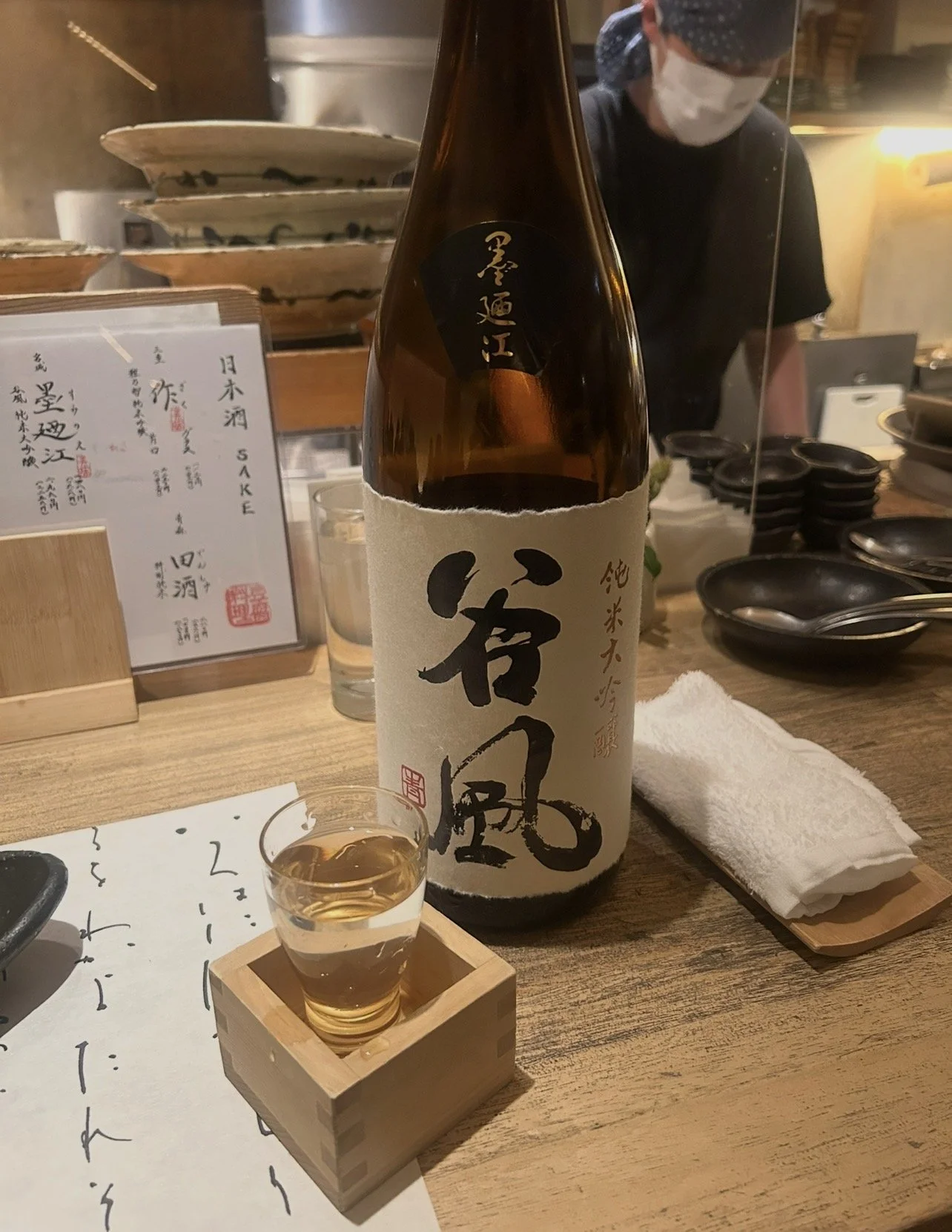
OSAKA
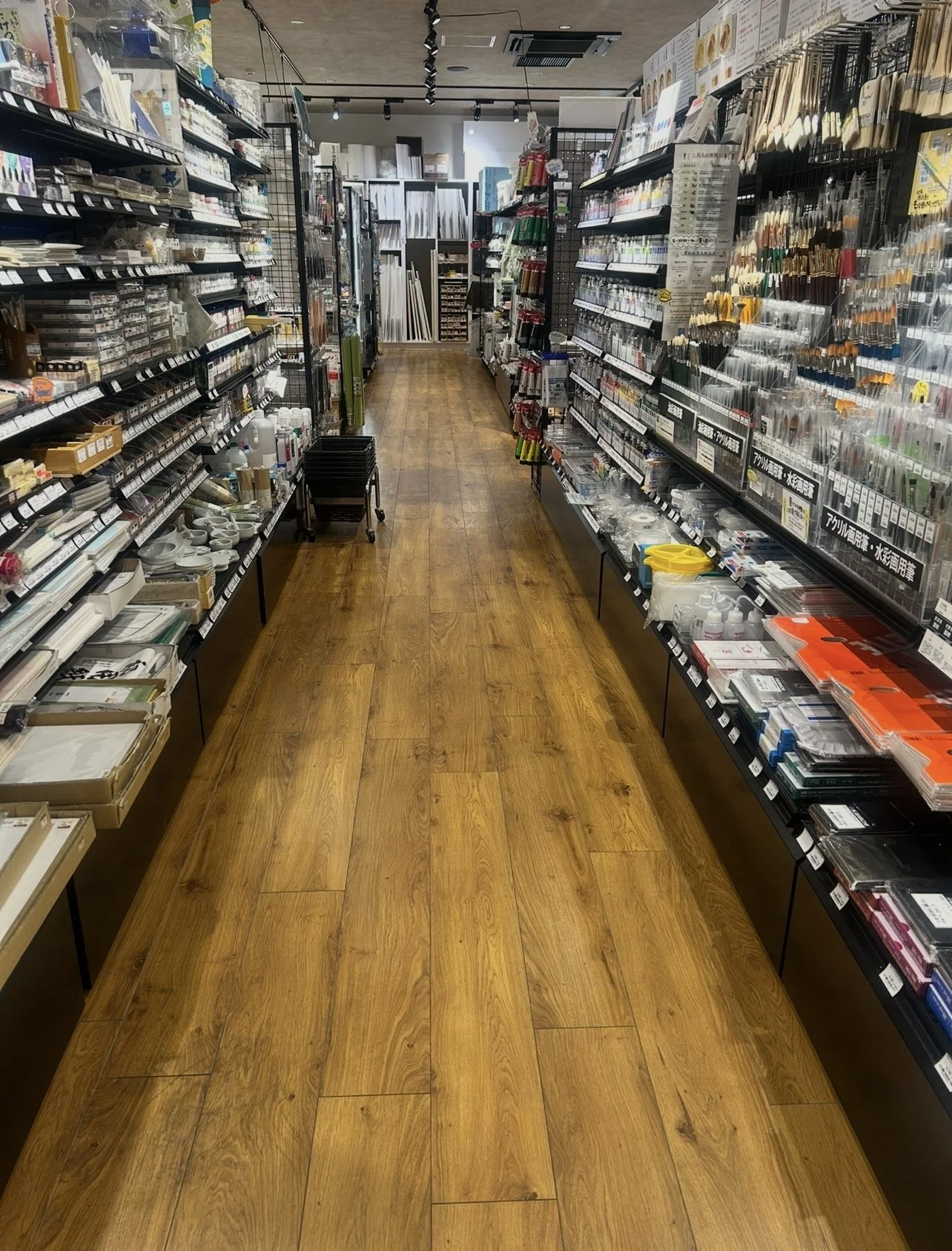
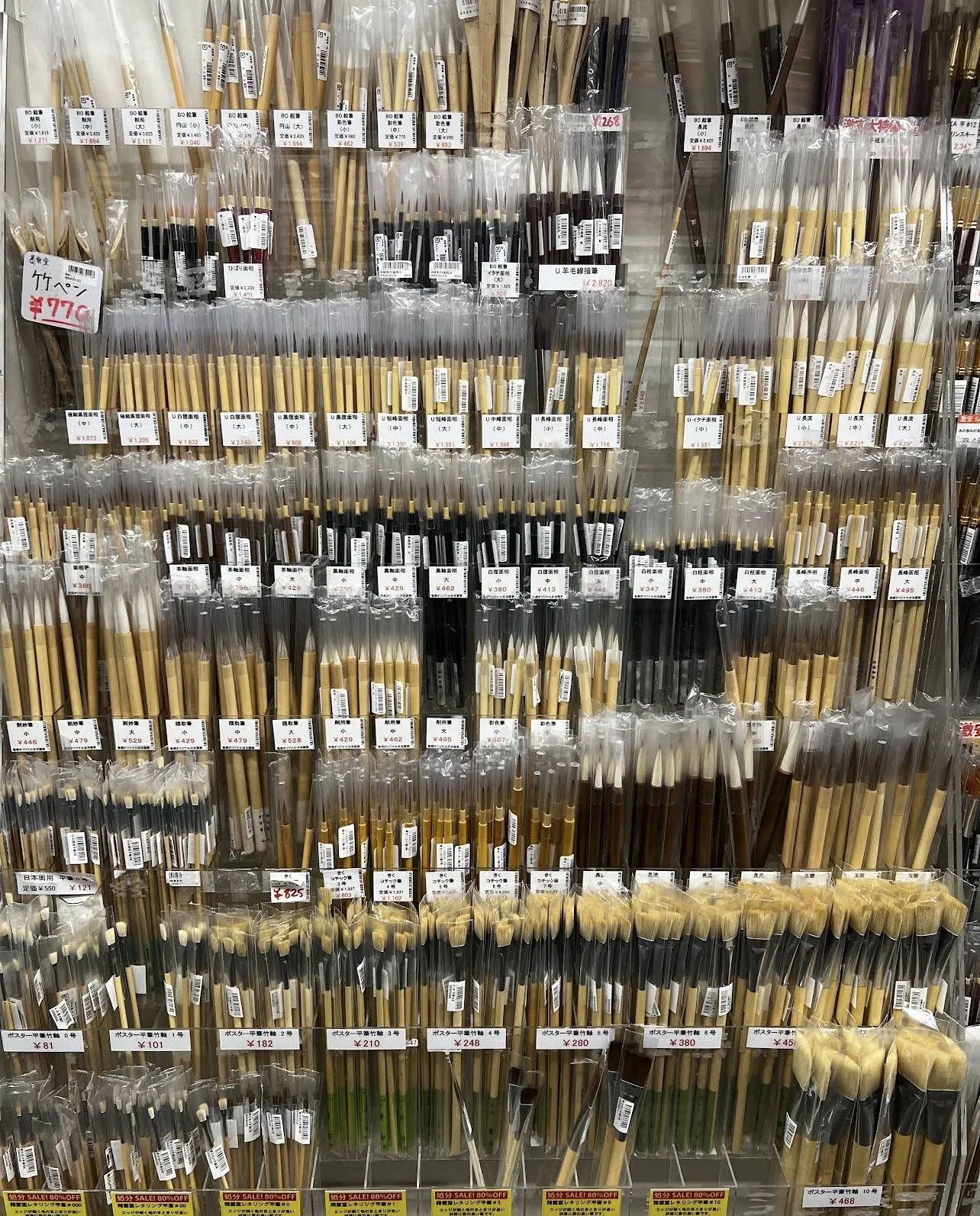
Sadly, Osaka is the place I spent the least amount of time in on this visit. Only having about one and a half days in Osaka lead to some very pragmatic decision making when choosing what I would prioritise visiting. Most of my stops were within walking distance of the central Shinsaibashi neighbourhood. The first and most important destination was KAWACHI art shop, probably the most recommended art supply shop on my list. And it didn’t disappoint. Located upstairs (I walked by twice before finally finding the entrance) it has everything you are used to seeing at hip East London specialty stationary shops, usually at wildly marked up prices. TOYO toolboxes, beautiful hand-poured watercolours and an amazing selection of brushes and papers. My next art shop was a bit of a wildcard. Sasabe art materials looks as scrappy as it is, but don’t be fooled by the looks of this rough gem. I found some of my best deals here. A great selection of detail brushes that I have loved using for the final application of urushi. Bring cash. I learned this the hard way.
Honorable mentions:
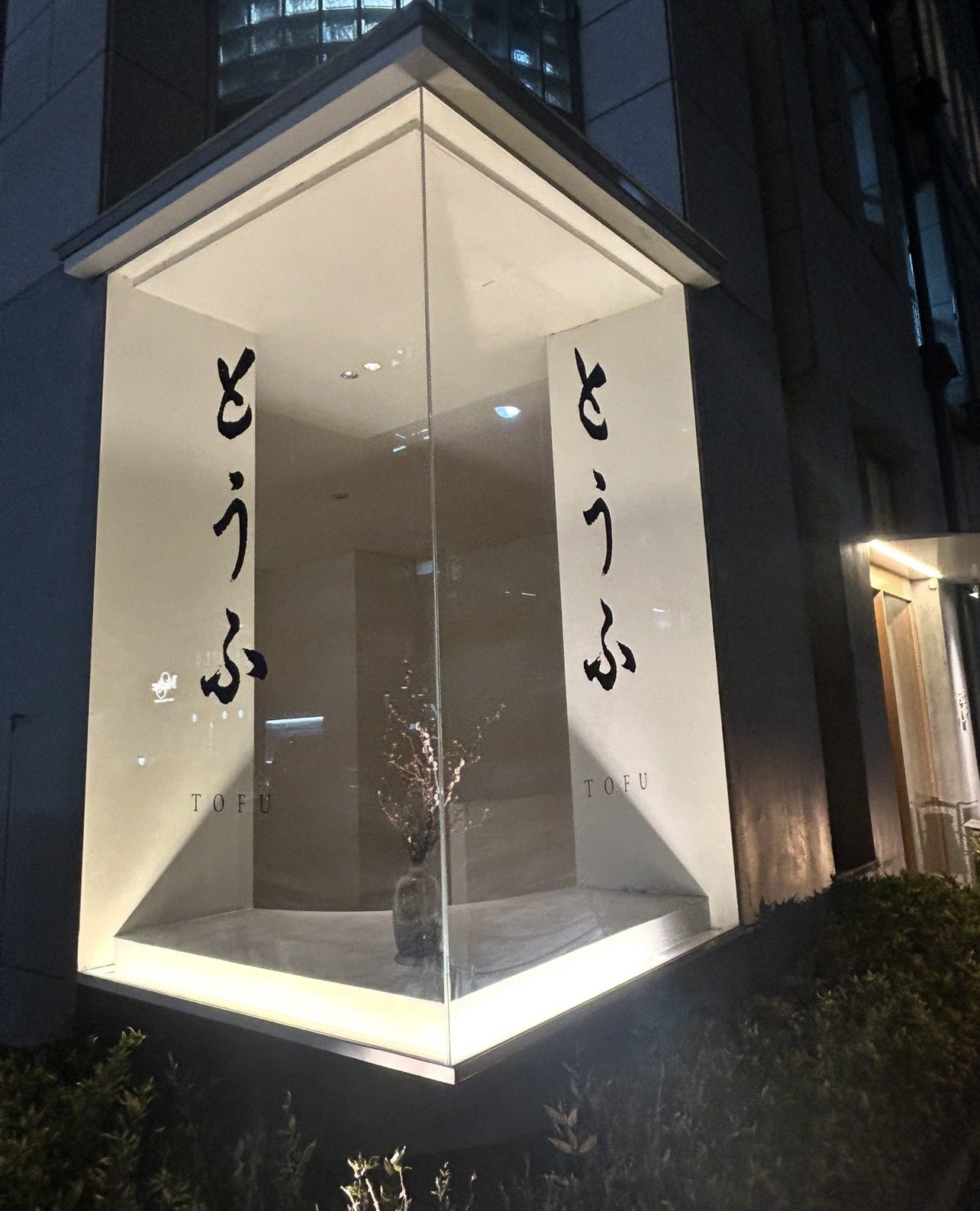
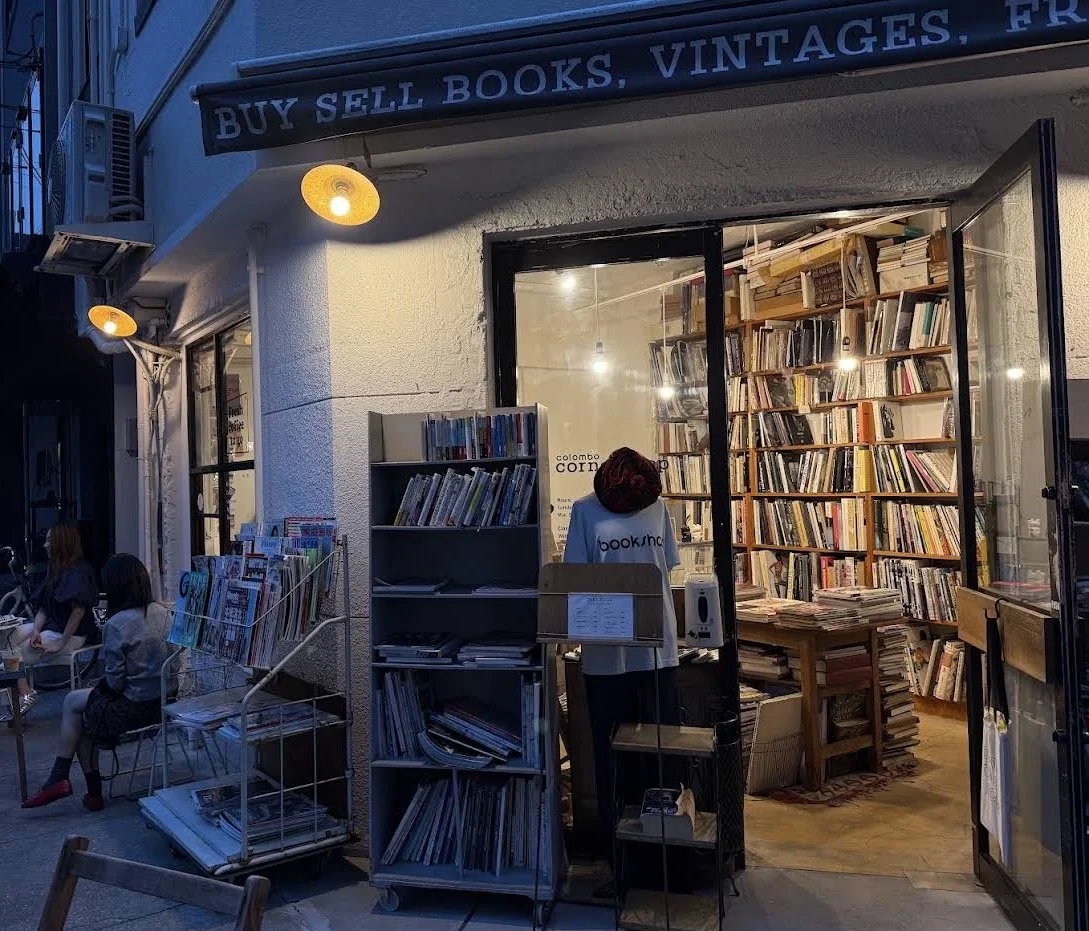
Aside from art materials, I made sure to hit a few places that are certainly worth mentioning. While Osaka is known for delicious takoyaki if you are looking for a truly beautiful dining experience, I accidentally ended up at one of the most lovely restaurants I have ever been to. Tofu Sorano is located in Shinsaibashi and specializes in hand-made tofu dishes that are so lovely and delicate, and for ambience alone I can highly recommend this place. Soothing and earthy are terms that come to mind. And while the staff don’t speak much english, and my Japanese outside of craft lingo is a bit abysmal, they couldn’t have been more warm and welcoming. Finally, Columbo Cornershop is a must if you love old records, books and coffee, with the occasional antique nick-nack thrown in. The lovely owner prints his own sweatshirts as well, so I obviously got one.
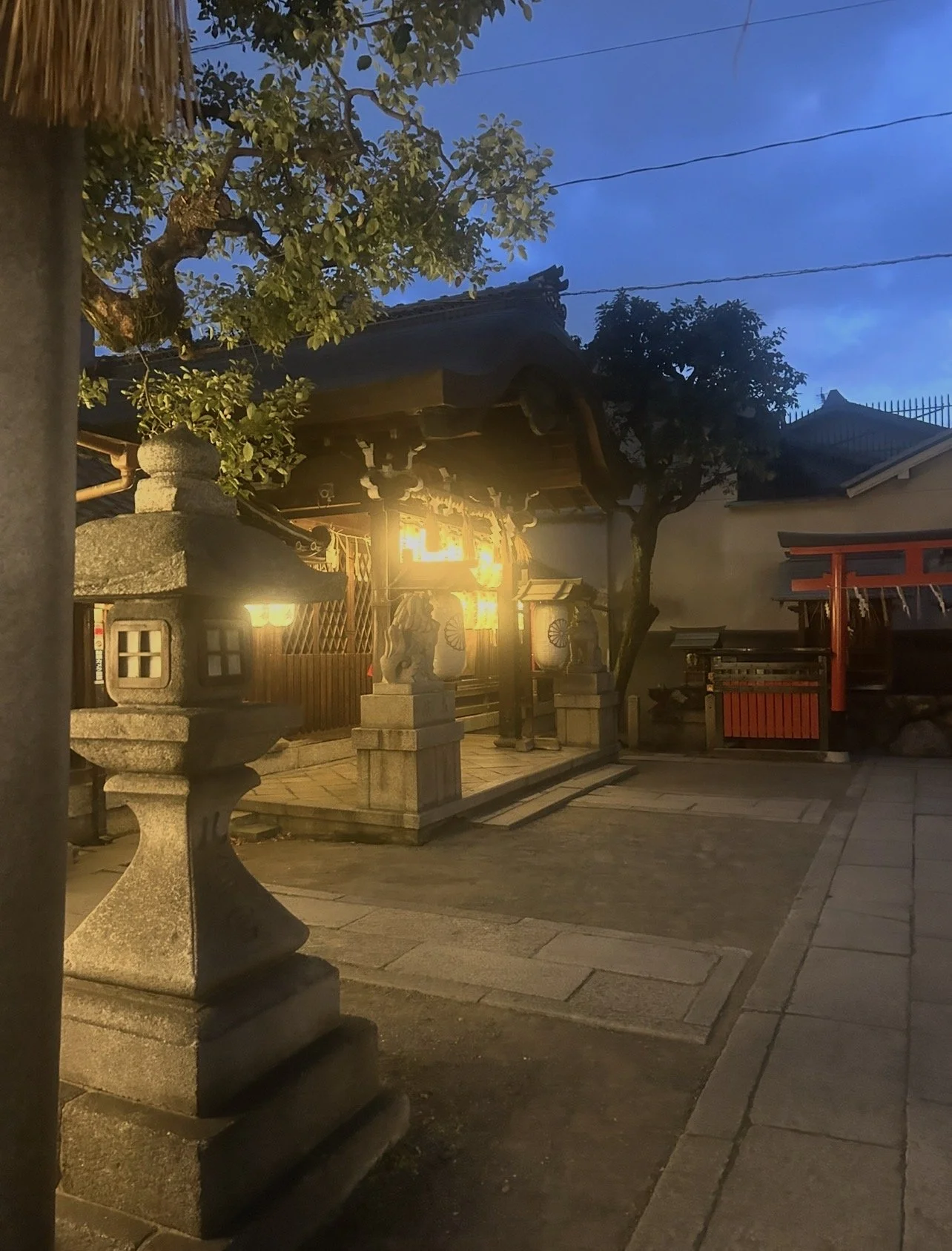
KYOTO
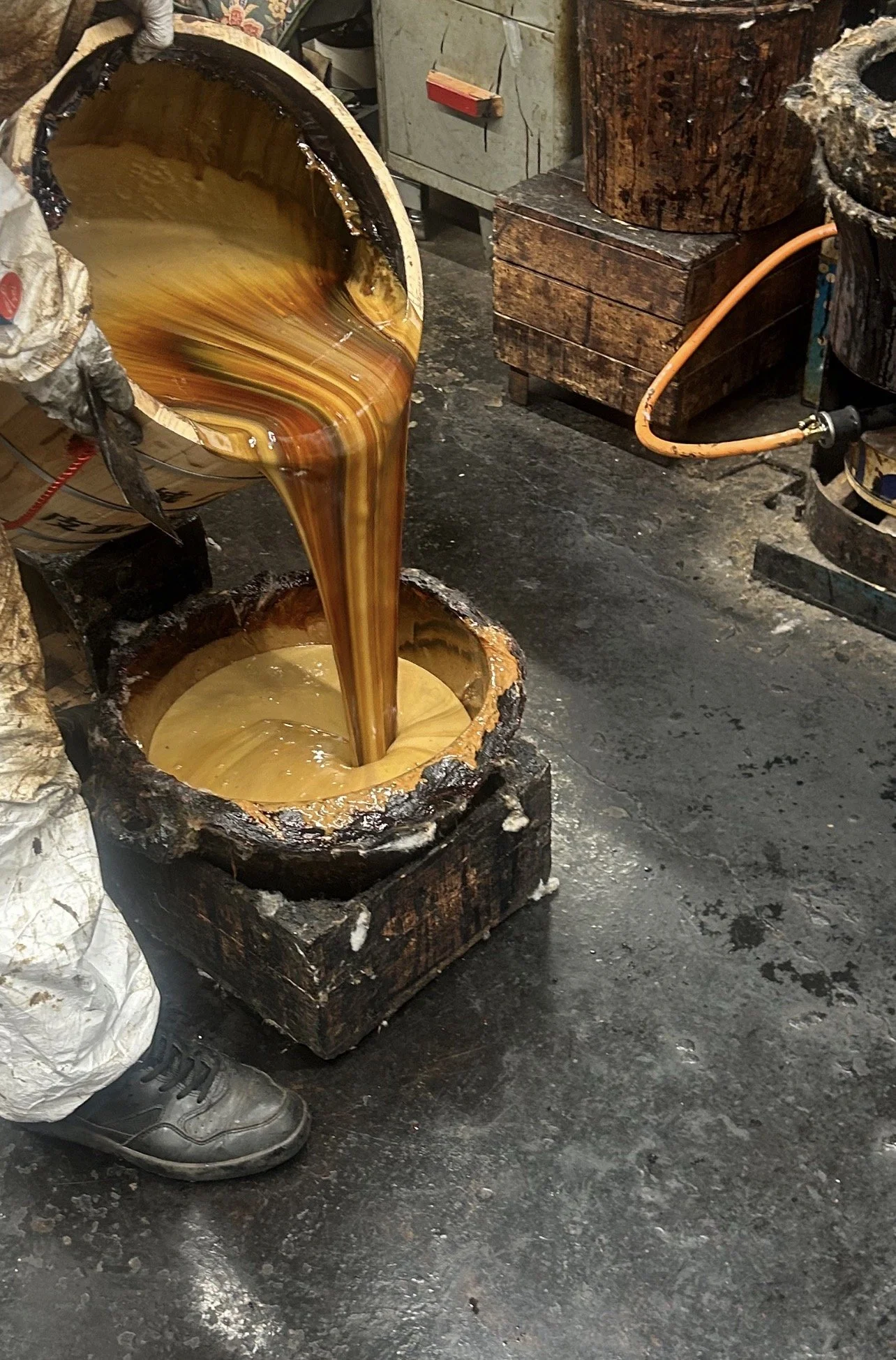
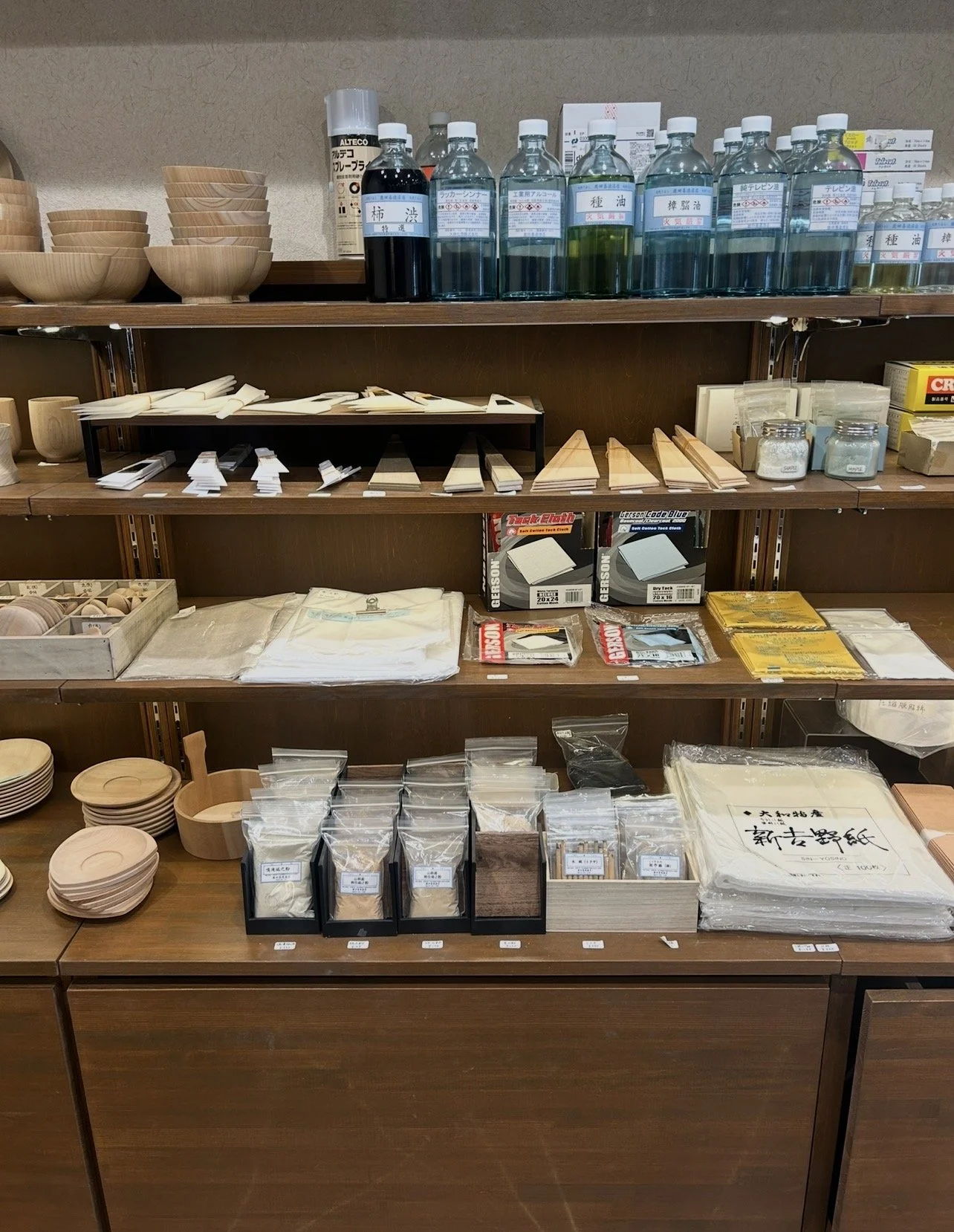
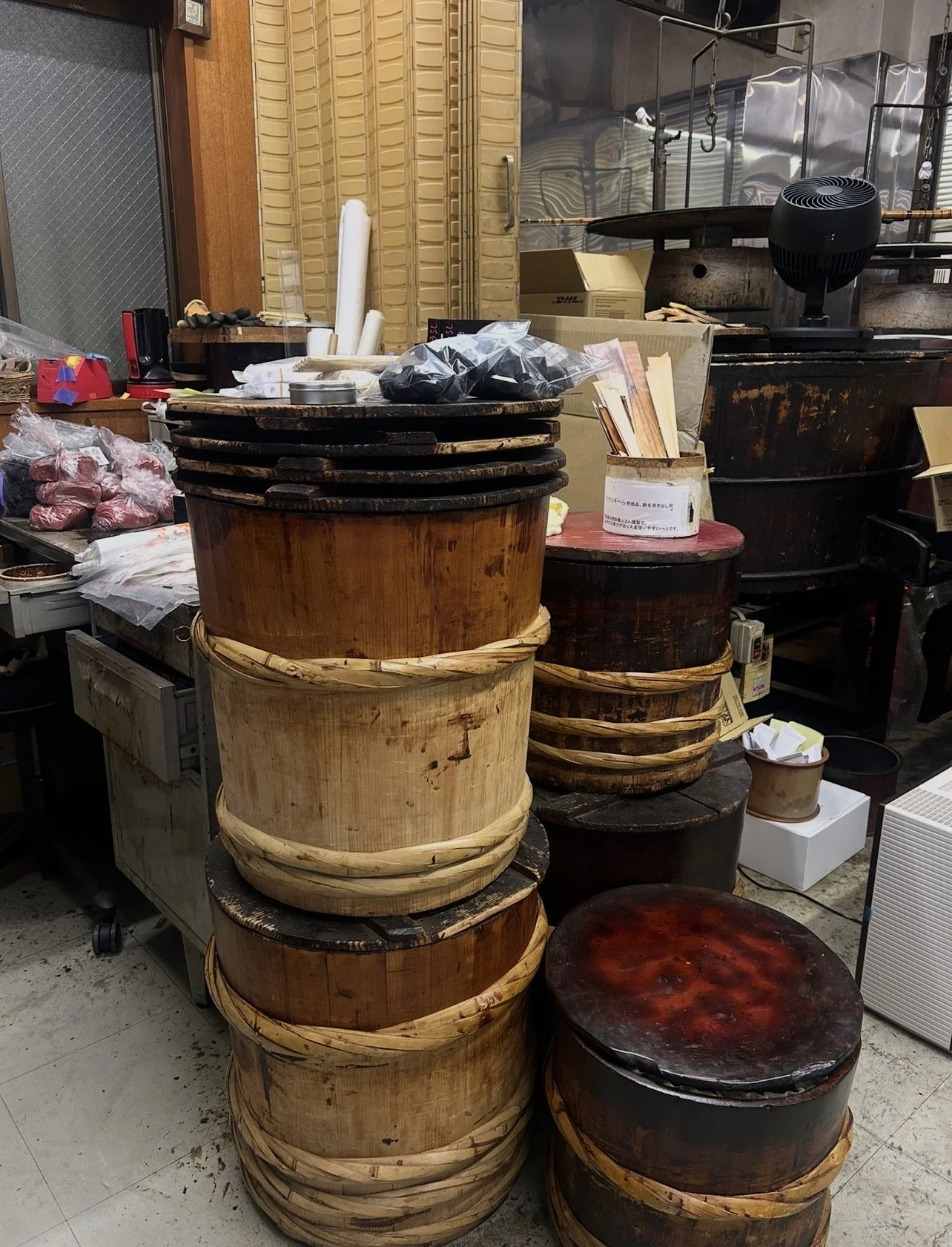
Now, I don’t like to play favourites, but I came to participate when it comes to craft. As a conservator and urushi craft practitioner, Kyoto is the town for me. Not only does it possess a lot of the charm of ancient Japan, but it also happens to be the Golden Route city with the closest ties to urushi production and craft. Many of the beautiful low residential homes populating the city centre were saved from WWII bombing, creating this homey coziness you can feel even when wandering the streets in the dead of winter. Delicate machiya townhouses with their wooden lattices and narrow frontages sit alongside temple gates, moss-covered gardens, and tea houses built in the sukiya-zukuri tradition. Kyoto is the perfect combination of bustling modern city, with the charm and peacefullness of an edo-period village. I had two very important stops on my visit, the first and my favourite urushi stop on my trip was Tsutsumi Asakichi. I talk a little bit about this incredible 5th generation urushi refinery and shop in my last post about urushi here, but in short, this place is unmissable. I was fortunate enough to undertake a urushi intensive and tour of the refinery hosted by their incredible staff, but they also run amazing workshops in urushi finishing and kintsugi. If you happen to be an english speaker, they also have some staff members who are bilingual, which is somewhat rare in specialty shops.
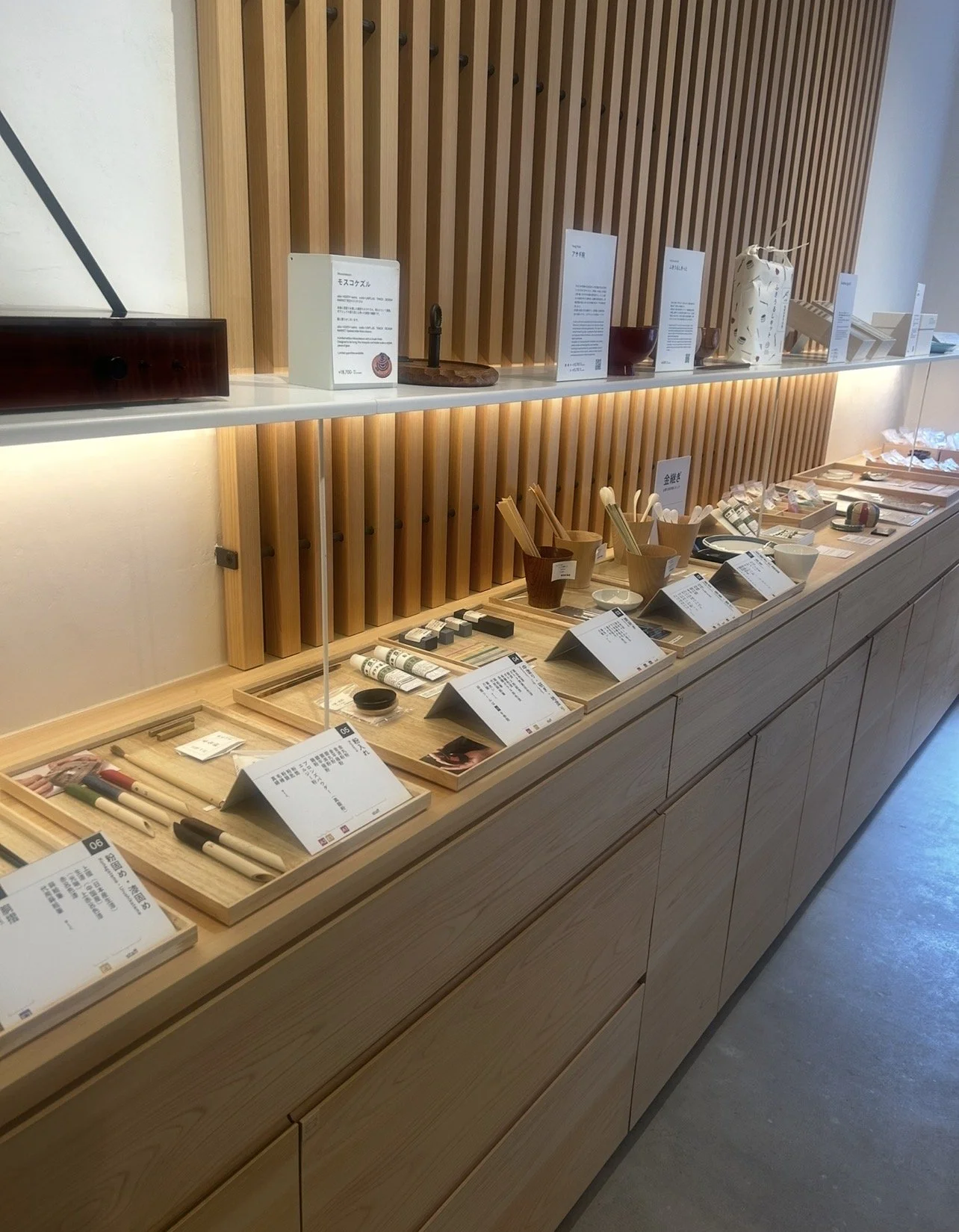
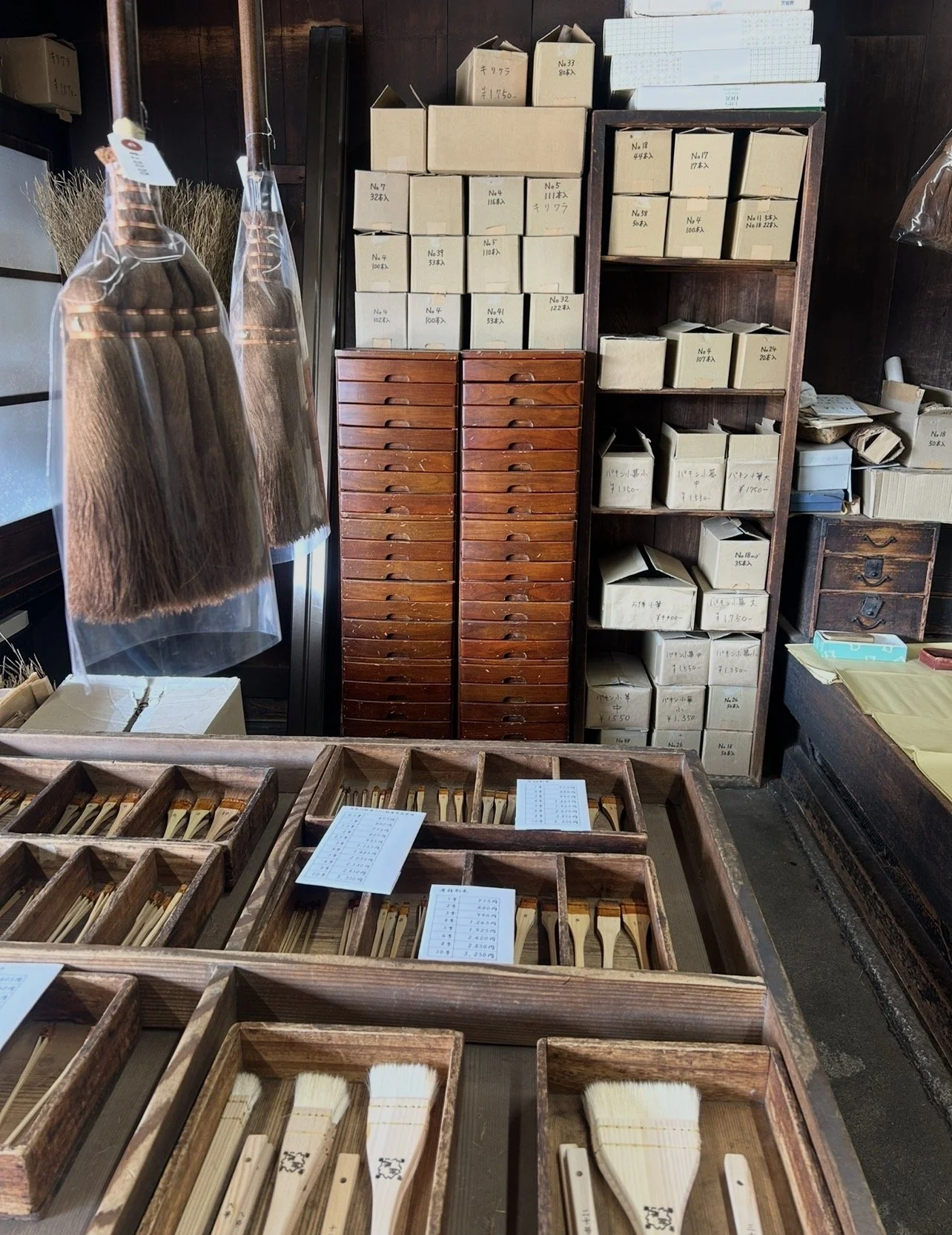
The other specialist supply shop that is exceptional if you are interested in kintsugi or urushi supplies is Shikata Urushi. A bit smaller, everything was laid out beautifully, and they had a great selection of books and tools. They generally don’t speak much english here, so it’s a good idea to come prepared with some screenshots of what you are looking for if your Japanese is a bit wobbly. Poj Studio is also based in Kyoto and worth a pop in if you love a beautiful space, and their traditional kintsugi kits are put together nicely for casual repairers. In regards to general beautiful and unique hand-crafted goods Naito Shoten, a 100 year old hand-made brush shop located near the Kamo River, is well worth a visit. I was taken off guard by how charming this place was. All of their brushes are hand-made and their selection is not limited to art brushes. If you want to bring home a gorgeous brush for sweeping the floor, or scouring your dishes, they make those too!
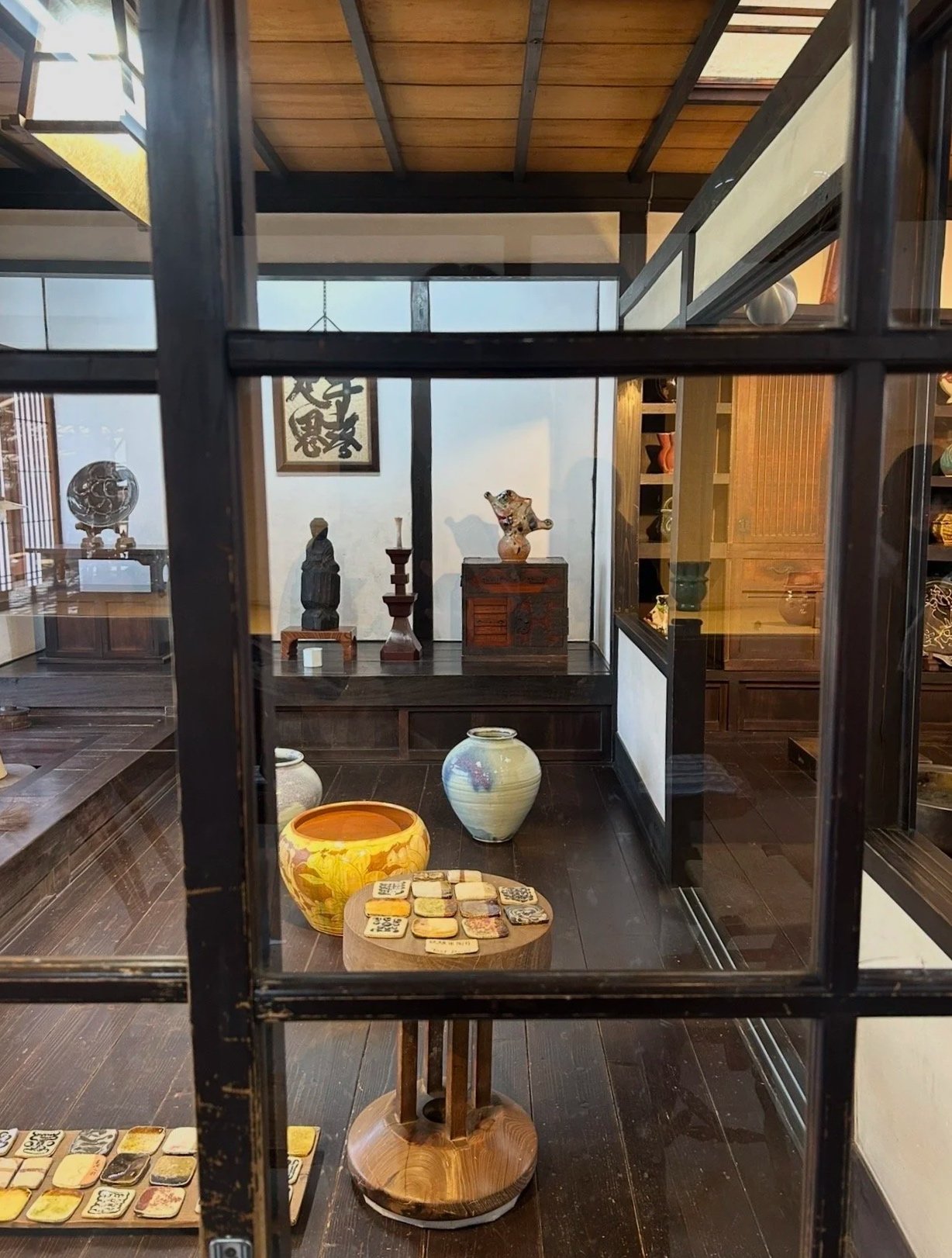
I cannot address Kyoto without mentioning their incredible antiques. My very favourite, Pro Antiques , is located a short walk away from the Imperial Palace, and not only has an incredible selection of ceramics all displayed in order of time period, but perhaps more relevant to my purposes as a kintsugi practitioner they have a back room filled with damaged pieces from the Edo period and beyond saved especially for restorers. In fact, I brought back as many lovely broken and chipped pieces as I could fit into my suitcase for you to use in our Intermediate Kintsugi workshops. There are many wonderful flea markets in Kyoto as well, but the other antique destination I can recommend is Antique Belle. In addition to some lovely oddities, they also carry a selection of damaged pieces waiting for repair. Waste not, want not, as they say.
Honorable mentions:
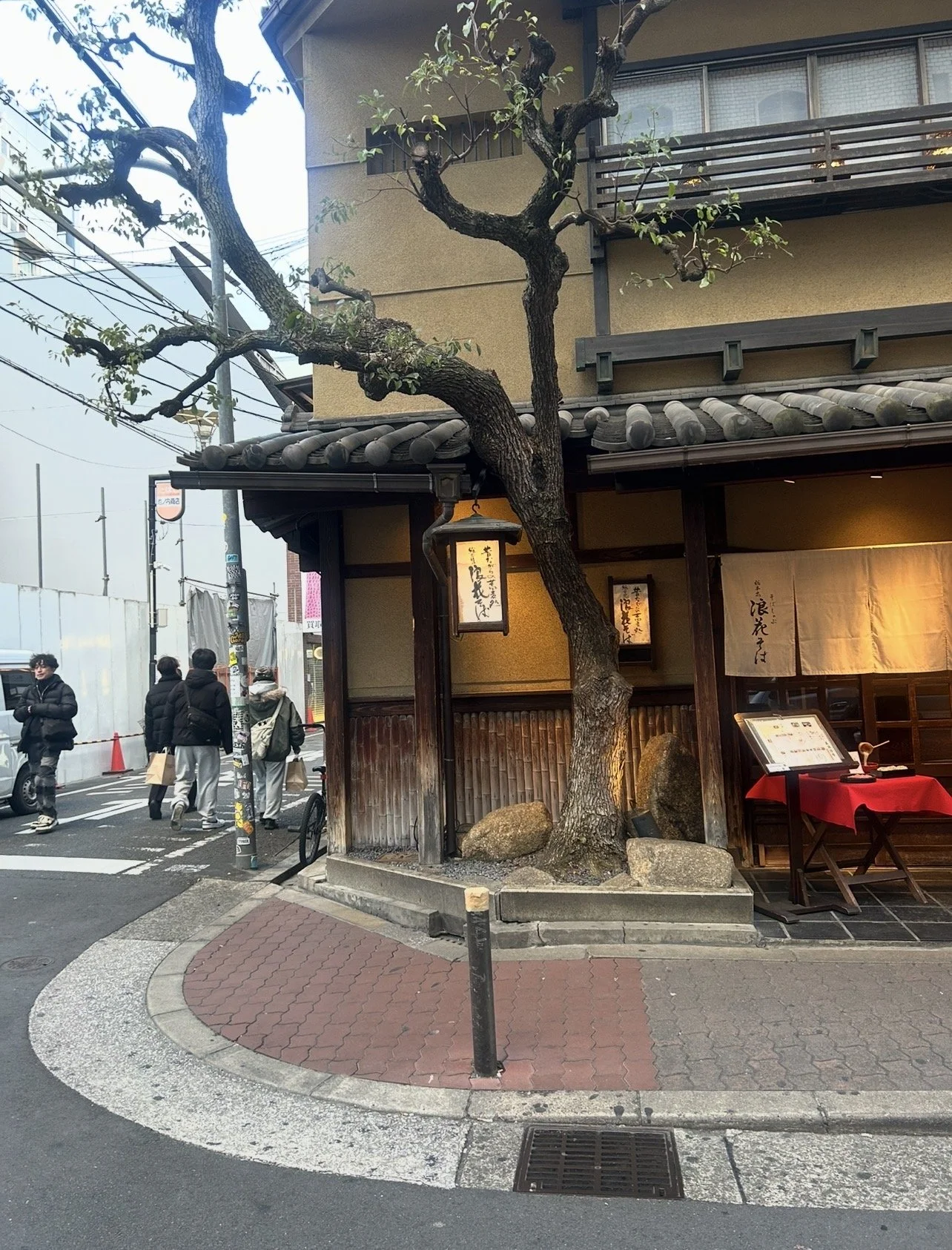
I was all on my own in Kyoto, and one hot tip I can offer is that off-season hotels, even really lovely 4 star ones, are a fraction of the price of Tokyo hotels. Not only that but most have private onsens, which is a bonus. A short walk from the Downtown Kyoto hotel I was staying in I found Men-ya Takakura Nijo. When I say ‘ found’ I really mean it, as the door had no signage. Once inside, I realised that perhaps this mysterious ramen place doesn’t really want to be found by tourists, but after having beat the system and ordered my tsukemen on a little iPad screen at the door, I was treated to the best noodles of my entire trip. Highly recommend, if you can find it. Lastly, and definitely not least, a short 10 minute walk from Kiyomizu-dera Temple in Higashiyama you will find Kawai Kanjiro house. I have already mentioned this incredible house-turned-museum in my Henry Moore post here, and I have an upcoming post dedicated to this amazing man, but this place is truly unmissable for artists, ceramicists, or anyone fascinated with the work that lives on after an artist is gone. Lastly, nestled on a quiet side street near Nishiki Market you will find SOWGEN, a rare gem of a conceptual antiques-meets-junk shop. Specializing in both larger furniture and small treasures, this spot is well worth a visit. I left with a few things small enough to fit into my carry-on.
TOKYO
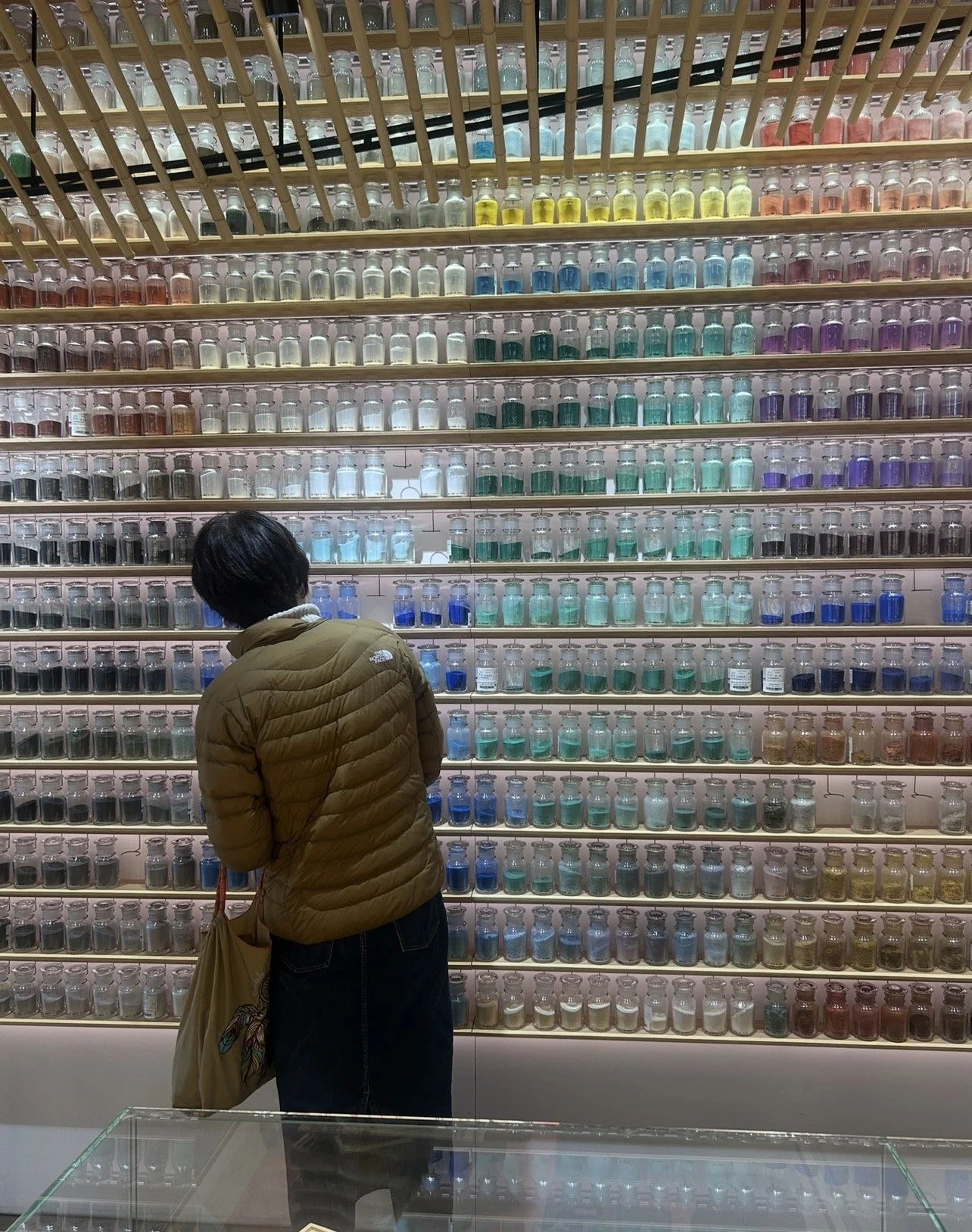
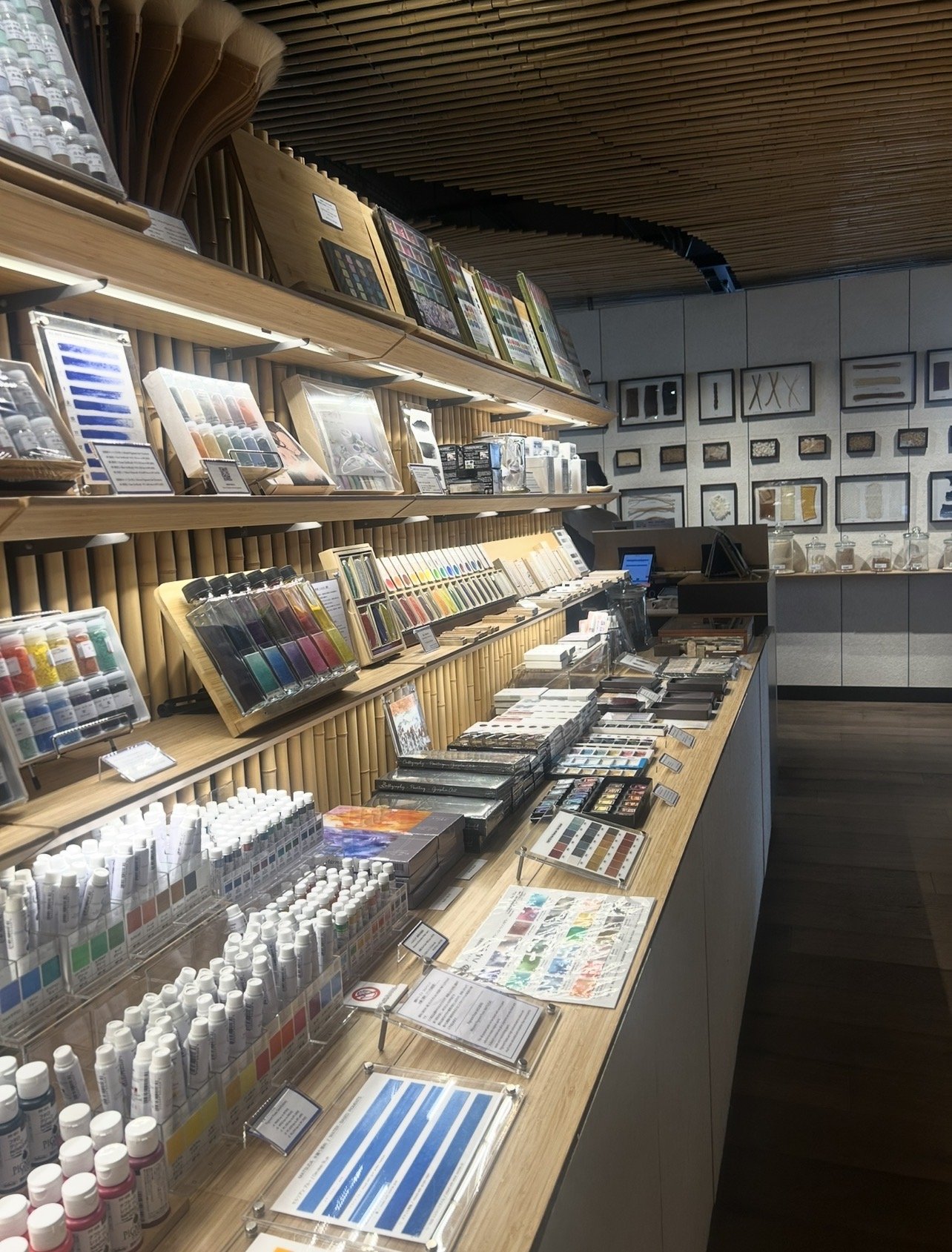
Finally, Tokyo. A place so vast that it warrants a blog post all its own, but here I will list a few of my unmissable highlights. As an artist, you cannot mention Tokyo without mentioning PIGMENT. Whether paint is your thing, brushes, gilding, or just raw pigments themselves, this shop is a Mecca. Stunningly laid-out, the back wall is lined top to bottom with gorgeous apothecary jars of every available variety of raw pigment, with the centre island dedicated to tools. Their brushes are incredible, and their staff is highly knowledgeable and really helpful. If you are wanting to gather a few materials for Kintsugi repair while in Tokyo, there is really one place to go. Watanabe Shoten is located in Ueno, 5 mins from Okachimachi Station. I have been ordering materials from Urushi Watanabe for years now, and getting to finally visit in person was a real treat. An excellent selection of every type of urushi you could need, and a perfectly curated selection of tools too. Be prepared with photos or good translations of what you are after though, this is an old-school Japanese specialty shop. While I didn’t get to visit the Oedo flea market on this trip, I have also heard it is well-worth a visit too.
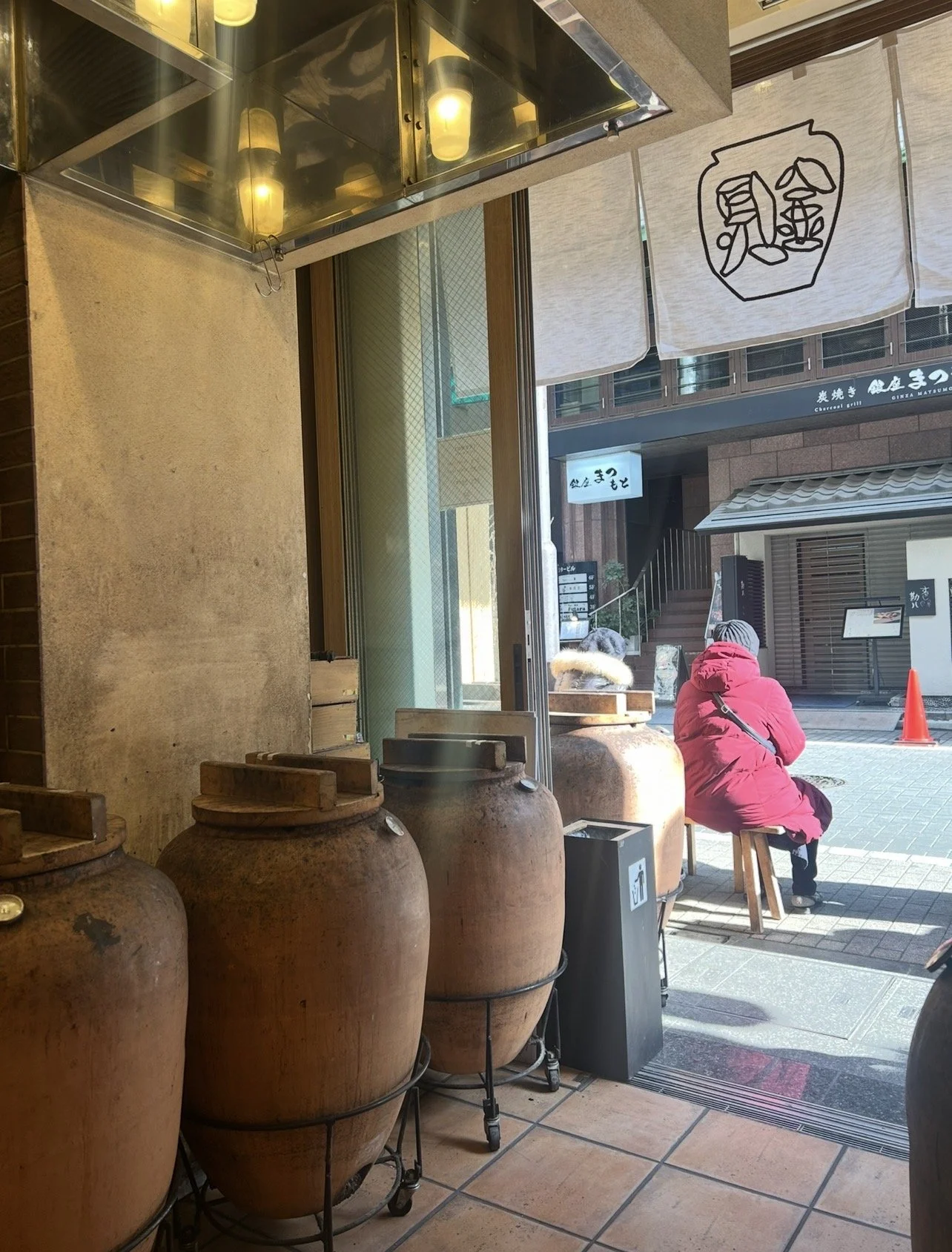
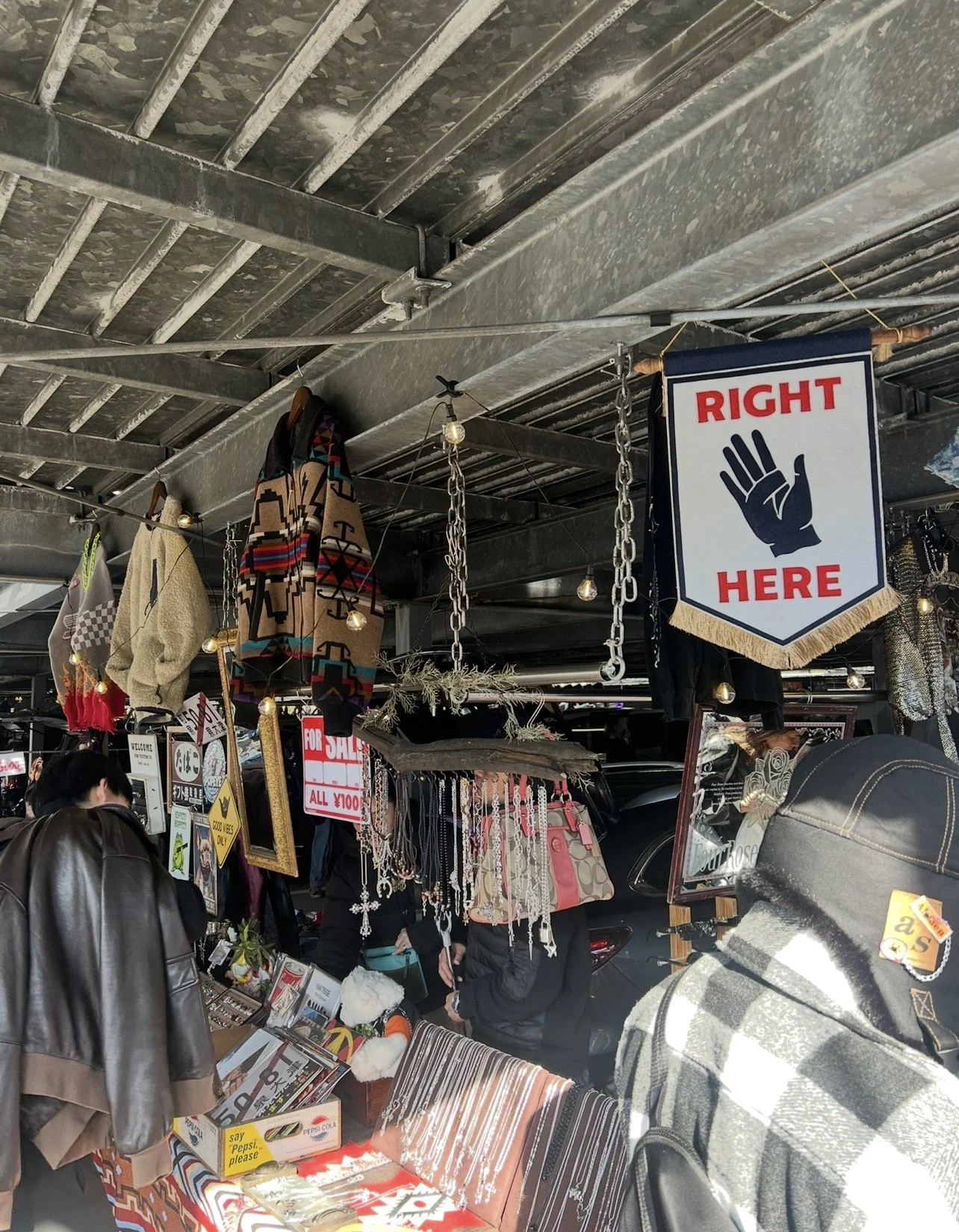
On the topic of flea markets, The Tokyo Flea is a must. I used to visit flea markets for a living when I ran The Chief Salvage Company, and the Tokyo Flea was an unexpected favourite. A wonderfully eclectic mix of clothing, antiques, kimonos, art and ceramics. A magpie heaven, I went twice. If you happen to be a stationery fiend, ITOYA is the place for you to get your fill. 9 floors (maybe 10?) of stationery and supplies located in the heart of Ginza. The beautiful layout alone is worth a wander through. As you will already be in the neighbourhood, Ginza Tsuboyaki-imo was probably one of my favourite surprise treats of the trip. This tiny hole in the wall around the corner from all the upscale Ginza shops specializes in only one thing…roasted sweet potatoes. When you line up, you will see large clay urns, where the sweet potatoes are caramelised slowly for over three hours. You can buy a whole, half or quarter caramelized sweet potato, which comes wrapped in a beautiful coloured paper. Everything about this place is soothing to the soul. This place is listed on google as a ‘Japanese sweet shop’ which made me sceptical, until I had one.
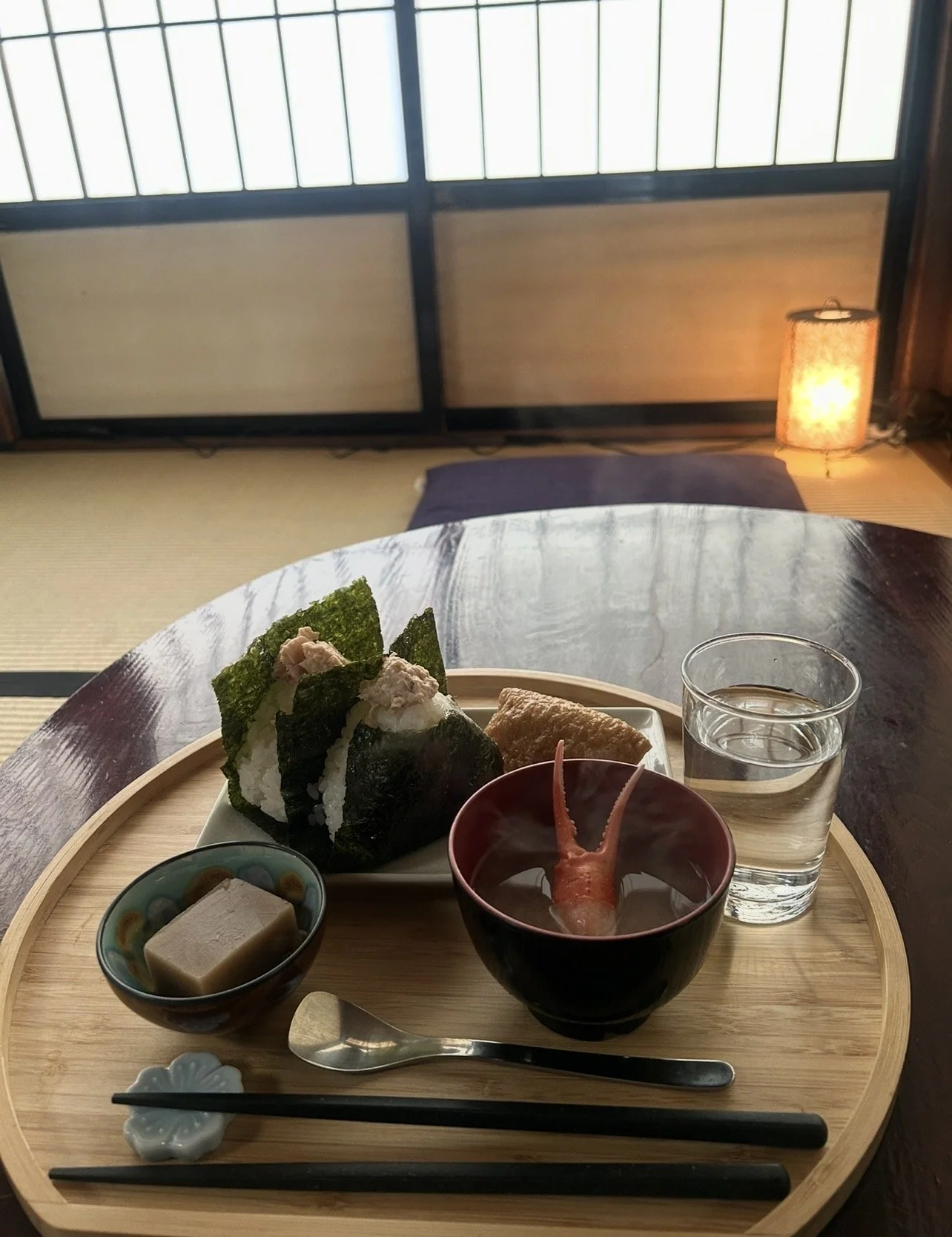
On the topic of pleasant surprises, I encountered one on my third day alone in Tokyo at the Tokyo National Museum. The museum itself is lovely, Its vast collection spanning over 12,000 years, from prehistoric Jōmon pottery and exquisitely crafted samurai swords to delicate folding screens, Buddhist sculpture, lacquerware, ceramics, textiles, and ukiyo-e woodblock prints. Walking through its galleries is like tracing the evolution of Japanese craftsmanship. In the farthest back corner of the museum you will find a door leading to a peaceful garden with a pond. Follow the path around the pond and you will find Tohaku Chakan, a cafe now housed in an original 18th century teahouse. The history of this low-built sukiya-style teahouse itself is fascinating, having been relocated from its original home in Aichi Prefecture, the teahouse which is named Okyokan for the celebrated painter Maruyama Ōkyo who is thought to have painted the original screens and decorative elements, now houses the museum’s cafe where you can sit on the tatami floor with a matcha and take in the peaceful atmosphere.
Honorable mentions:
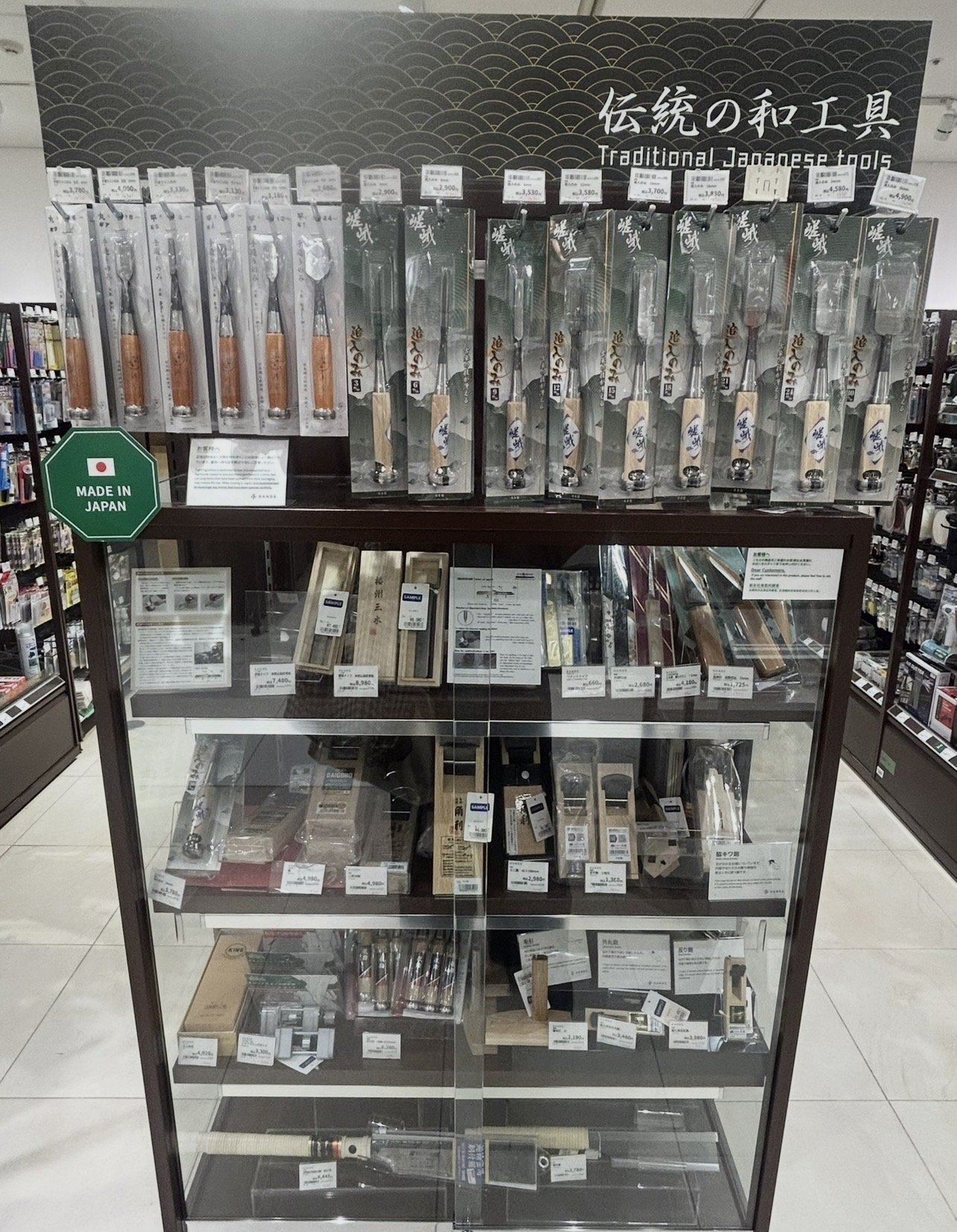
A few honorable mentions that apply not only to Tokyo, but to Kyoto and Osaka as well. I can’t remember who first mentioned the department chain HANDS to me, but when I finally arrived at one, I fully understood why it’s called HANDS. This place has a little bit of everything, with a special focus on those who work with, well, their hands. There are whole areas dedicated to craft, specialty tools, materials, and even a small kintsugi section! I was pleasantly surprised by the novice selection of tools for those wanting to try their hand at repair, as well as the ridiculously reasonable prices. I picked up some of my favourite Olfa craft knives, which usually cost about 4x the price in the UK. There are also housewares, kitchen tools, and stationary. It’s a one-stop shop for Japanese tools that don’t quite fit under the category of art supplies. Another interesting find was Standard Products. This chain shop is kind of like if Muji and a pound shop had a baby. Unbranded objects for the home, travel and just overall useful bits and bobs. A great place to grab things you might have forgotten to bring on your travels.
Finally, It needs to be acknowledged that the miracle of high-speed rail is not only one of the most impressive Japanese achievements, but possibly one of the most pro-social modes of transportation you can experience. Smooth, unintterupted miles of rail carrying you seemlessly every 15 minutes or so across the country. The carriages are as quiet as church, and no one would dare take a speakerphone call, even if there are only a handful of passengers nearby. You would think this is a very low bar to clear, but living in London has made me easy to impress in this regard. Riding the shinkansen is one of the most peaceful environments you can find. Even the temples humming with tourists fail to match this spiritual experience. Yes, its a bit pricey, but getting a one or two week railcard is well worth it if you will be traveling the Golden Route.

If you haven’t signed up to our newsletter yet, that is the best place to hear all about our travels, studio insights, material tips and upcoming workshop news first. I brought back so many wonderful bits from this last Japan visit that I would love to share, so if you would like to be the first to hear about it, let me drop it right into your inbox.
