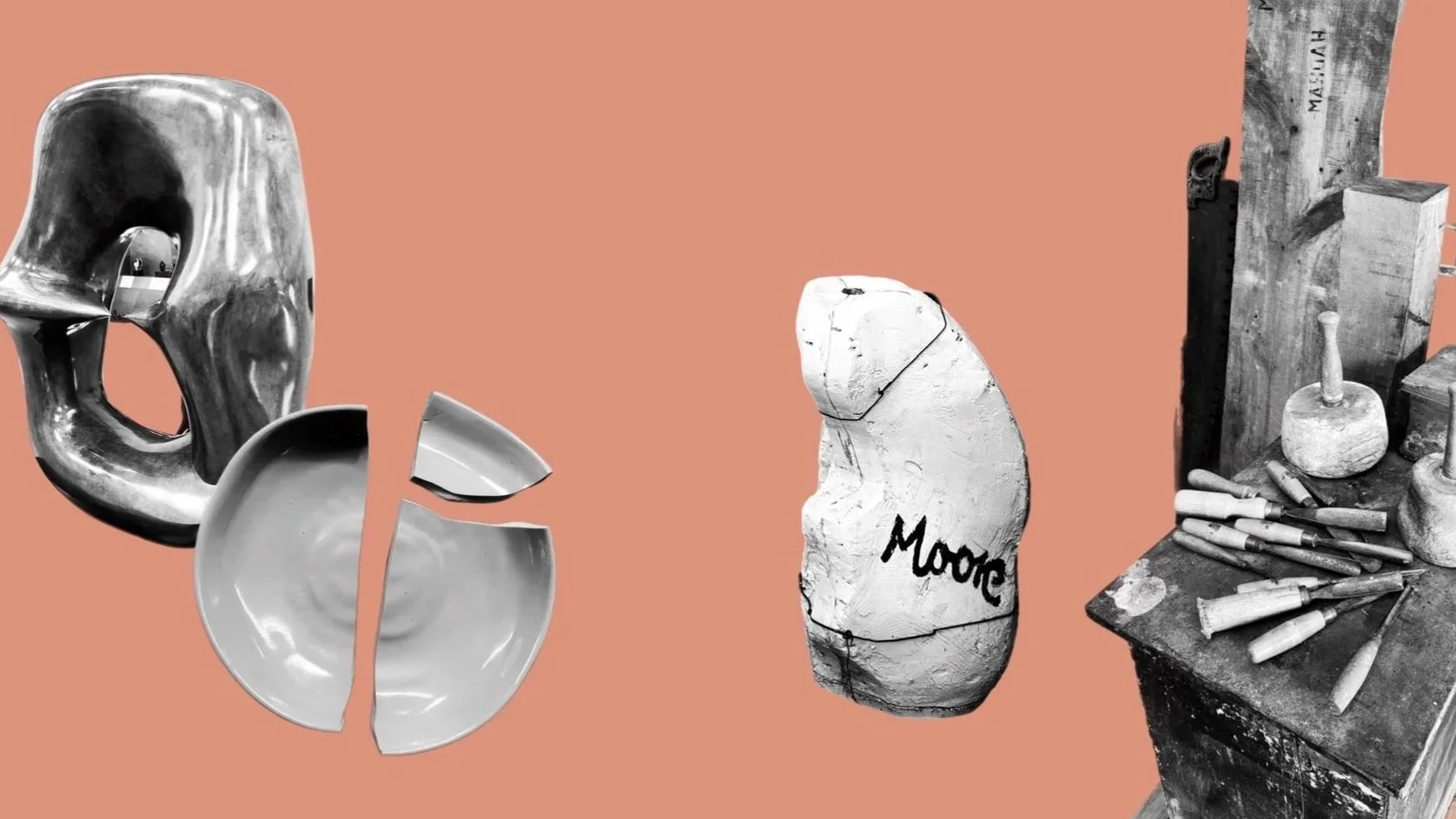
Henry Moore’s House
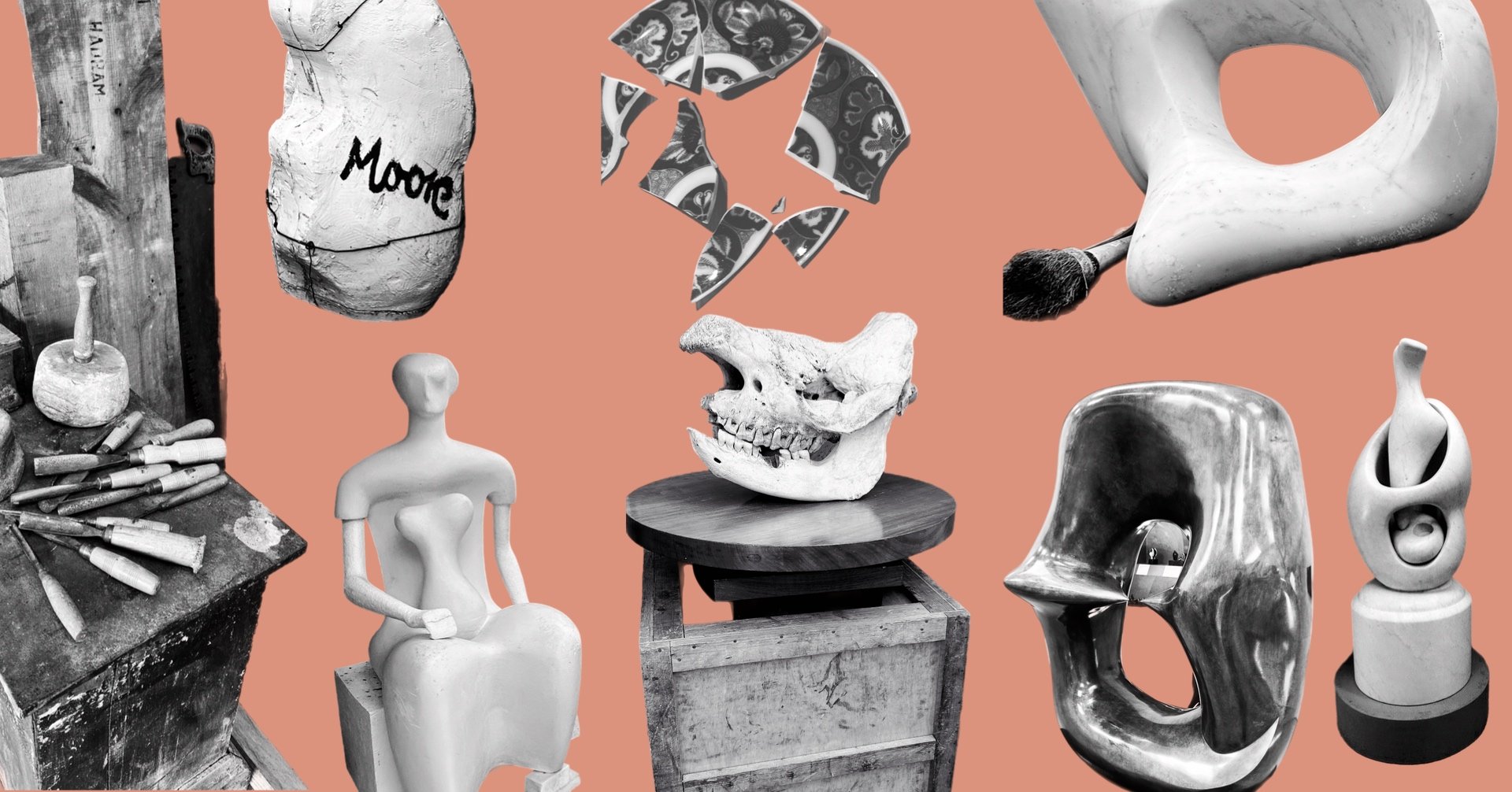
What a British sculptor can teach us about living, working and wabi-sabi.
I didn’t always like the work of Henry Moore. In fact, you could say there was a time in my childhood when I downright despised it. It wasn’t Henry Moore’s fault exactly, it was more a result of the seemingly interminable school day trips to our local art gallery that put my teeth on edge. This gallery had been bequeathed a large collection of Moore sculptures in the early 1970s and had a whole wing dedicated to them. Like many 9 year olds, my capacity for thoughtful interrogation of modern art was lacking. Patience and attention had not yet been developed, and these blobby forms without any of the colour or the obvious interest of, say, a Warhol, just didn’t make sense to me. I would sit on the gallery floor counting the specks in the cold terrazzo, praying that the floor would swallow me up.
I am so sorry Henry.
But I will say in retrospect that I have Henry Moore to thank in many ways for who I am today. Because I didn’t know it at the time, but even in my boredom, I was absorbing some tiny bit of his genius. Through osmosis, I grew into someone who worships organic form, and how it beautifully frames and reflects nature.
The work that Henry Moore made across a career spanning more than six decades is perfectly encapsulated by his home and studio – or, more accurately, a constellation of studios – spread across a 70-acre estate in Perry Green, a small hamlet in rural Hertfordshire. What began as a wartime refuge grew into the centre of Moore's creative world, and today the property survives as a museum where visitors can wander through the very landscapes, workshops, and gardens that shaped some of his most celebrated sculpture. On A sunny Thursday afternoon in May I finally ended up there. I’m embarrassed to say that in my 8 years living in London, this has been on my list of places to visit. Much like the Roman Temple of Mithras buried under the Bloomberg London headquarters (a place I am also embarrassed to admit I haven’t been to) when extraordinary pieces of cultural history are on your doorstep, you tend to take for granted that a visit is just a short train ride away. Before you know it several years have passed without ever having seen it in person.
I can’t say for sure if Henry Moore was aware of the concept of wabi-sabi, but perhaps more importantly he seemed to understand it in his bones. Everything about the way in which he worked, observed and communed with nature speaks directly to this concept. A philosophy which underpins much of Japanese culture, craft and aesthetic, wabi-sabi is often reduced to a therapeutic modality of imperfection through the western lens, much to the bemusement of a lot of Japanese people I have talked to. But why is that? I think It has to do with a few more nuanced concepts. Looking at some of these connections, you can see why kintsugi, for instance, is often seen in a therapeutic context.
Integration of Art, Nature, + Time
If you were going to translate wabi-sabi into a mathematical equation (not the most natural parallel to draw, but stay with me here) , I posit that you could say it’s something like:
(Object + Nature) x Time = wabi-sabi.
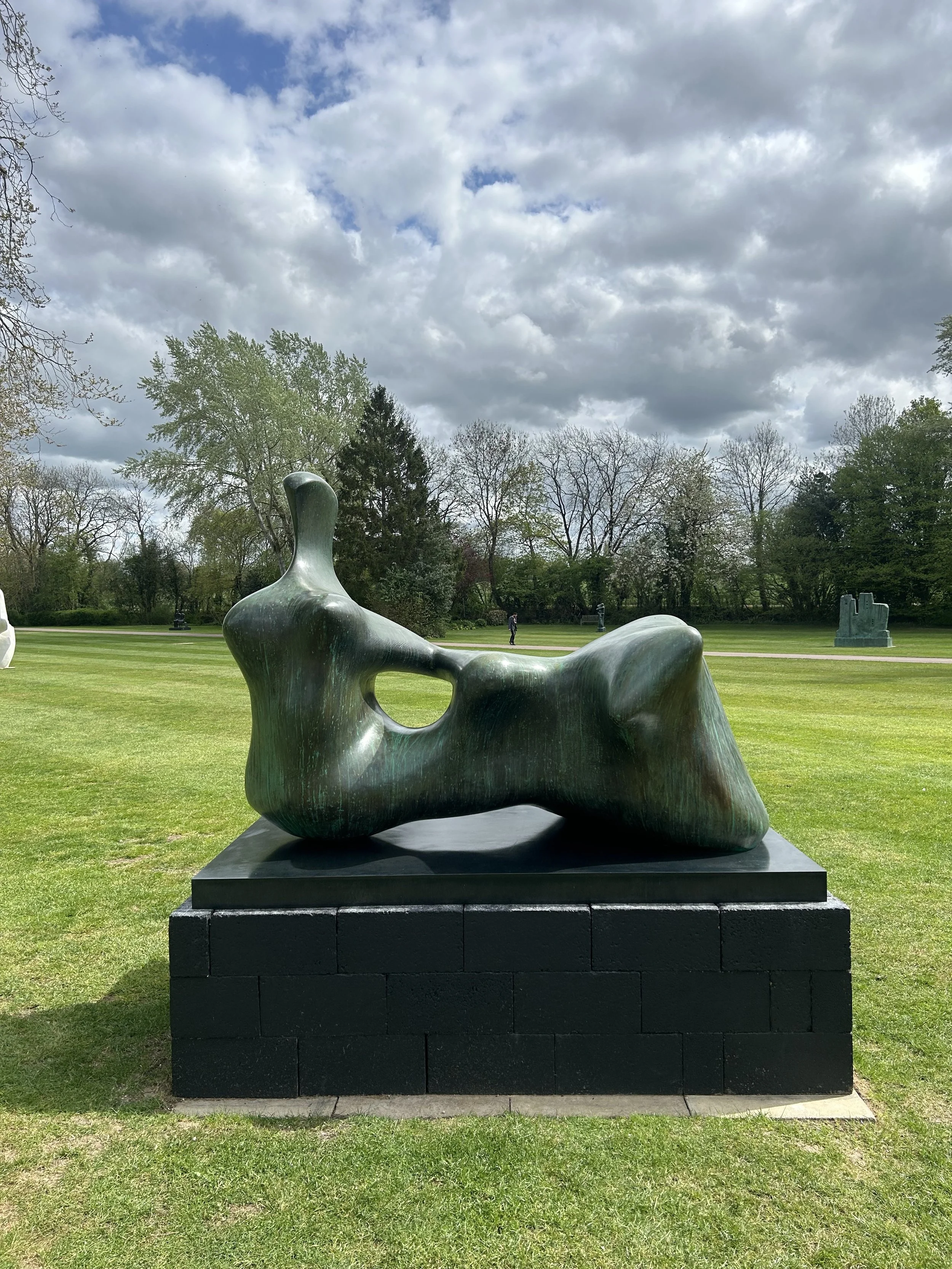
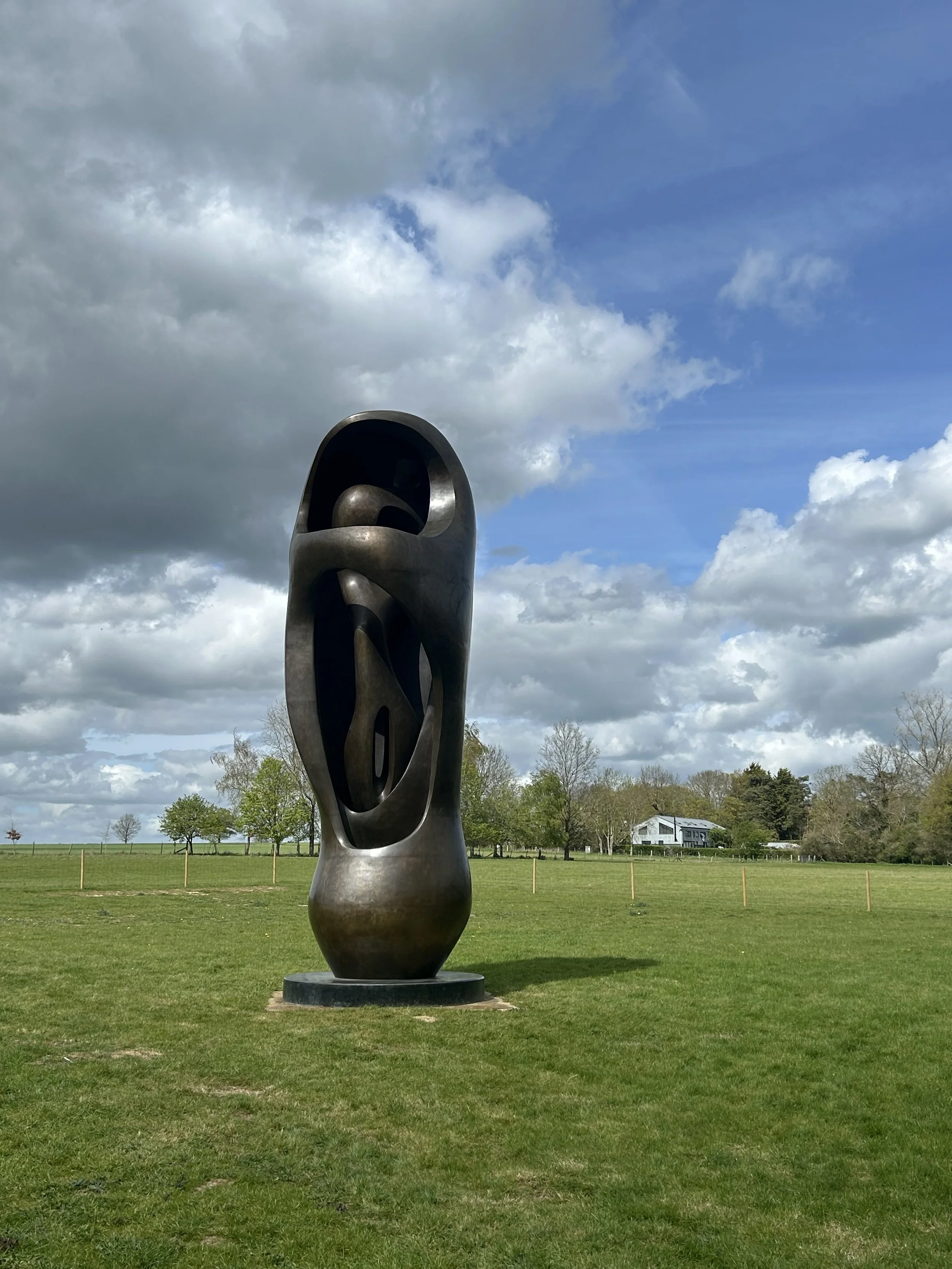
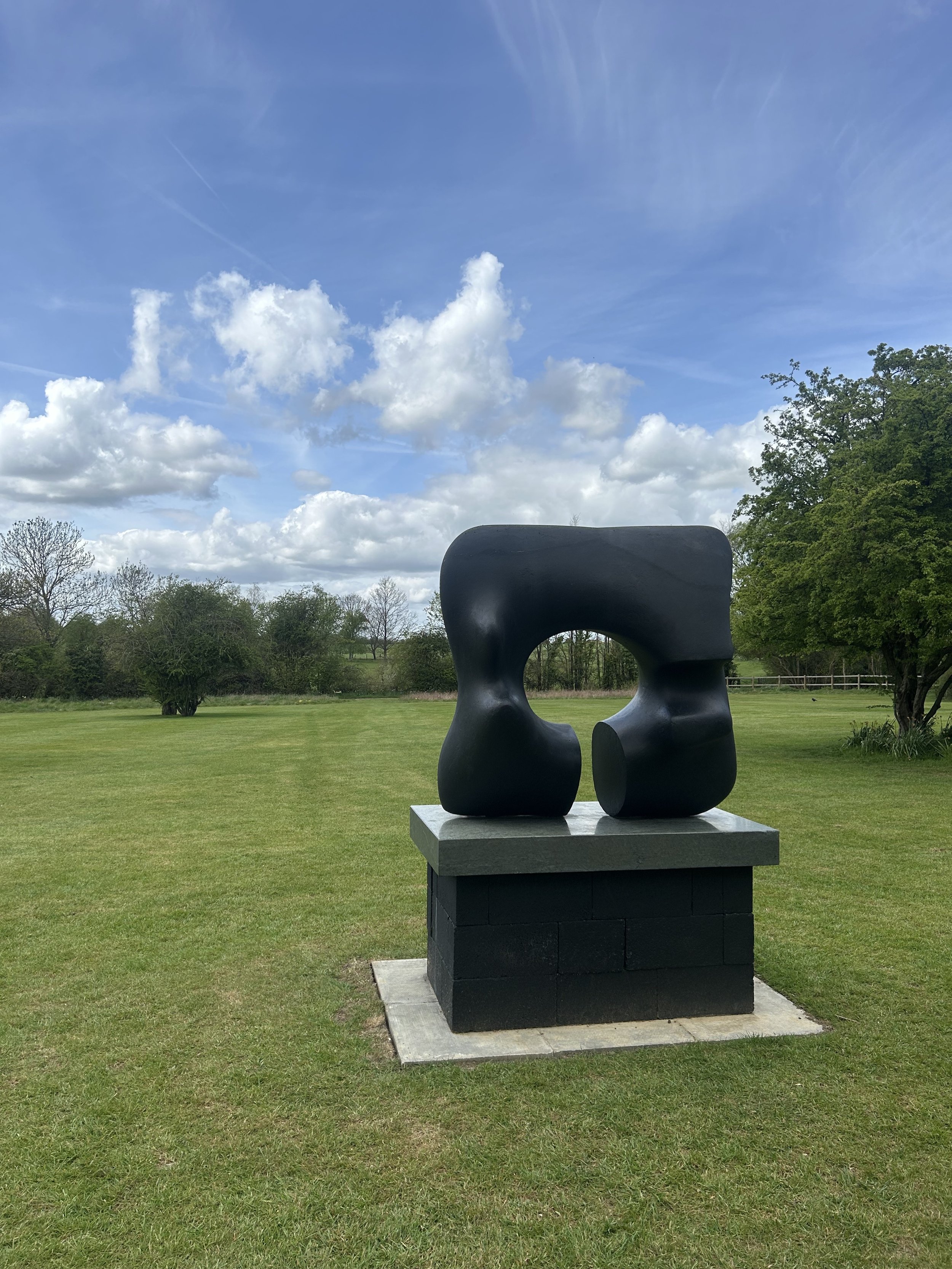
That is to say, you could think of wabi-sabi as time itself combined with natural elements (wind, rain, etc) and how these two unavoidable and mutable factors play upon the face of an object. Stone, wood, sand, plaster all respond differently yet definitely to the effects of time and whatever elements they are exposed to. In Henry Moore’s garden, you will stumble upon stone and bronze sculpture, left over the years to accumulate character based on nothing more than the elements themselves playing upon the surface. Wind storms blowing almost imperceptible particles of sand and dust, slowly smoothing edges. The surface patina of bronze slowly weathered by years of exposure. It is because these aspects of Moore’s working life are left to the elements that they achieve the beauty that only time can offer.
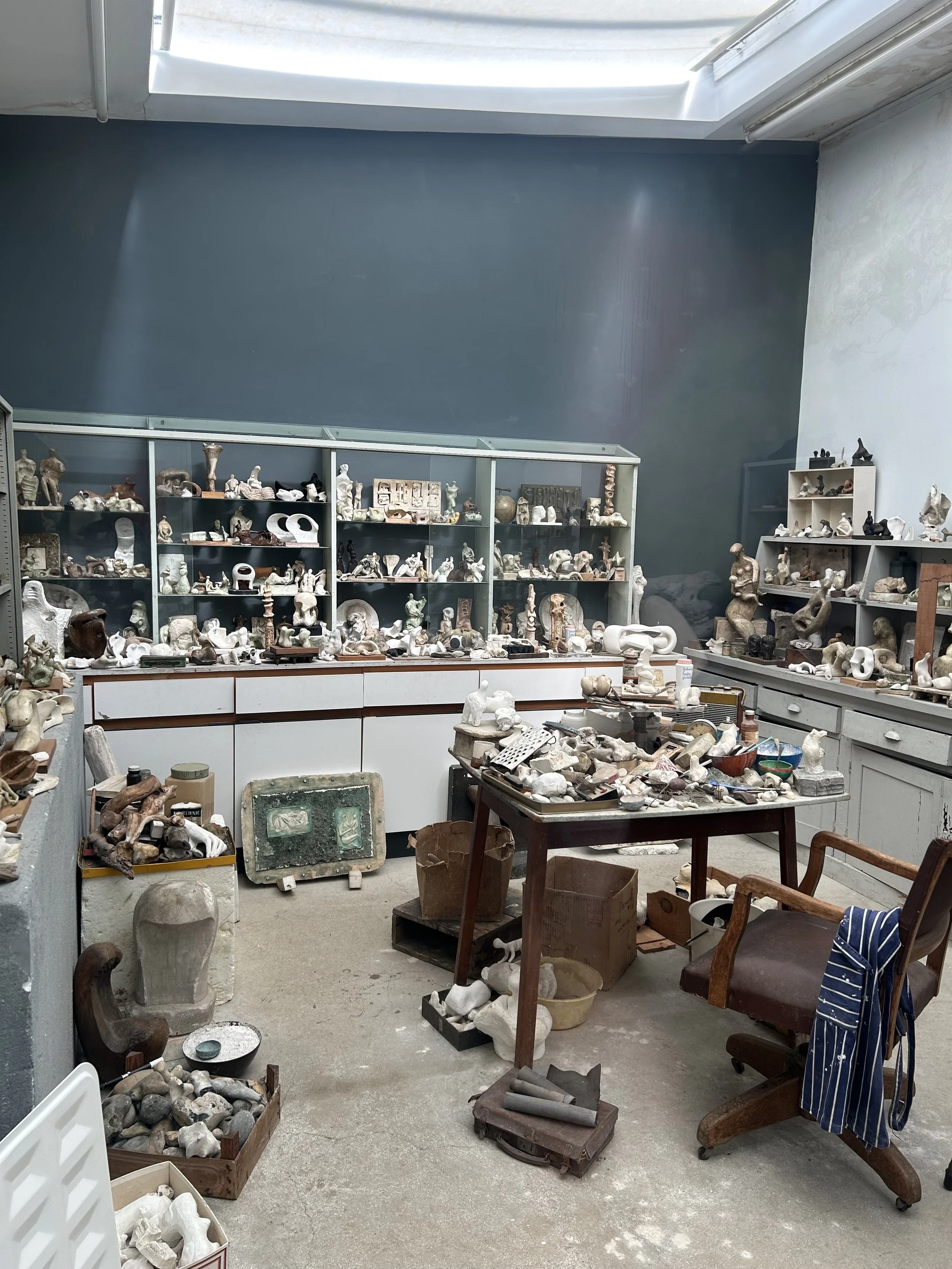
On the grounds of Moore’s home there are several studios, and in between these studios you will find evidence of an artful life thoroughly examined and mined for inspiration from nature. as you walk from the Yellow Brick Studio and the Maquette studio, there is a makeshift outdoor greenhouse which Moore called his ‘plastic studio’. Constructed from impermanent materials, clear polythene that you can see right through, these studios were meant to be temporary and moved when needed. This allowed Moore to see different larger-scale sculptures in full natural light, while keeping them sheltered from the harsh elements until their completion. In this portable studio, tools strewn, a partially carved figure, all randomly dotted around. This temporary studio serves as a bridge between the containment of the studio environment and harsh outdoor working conditions.
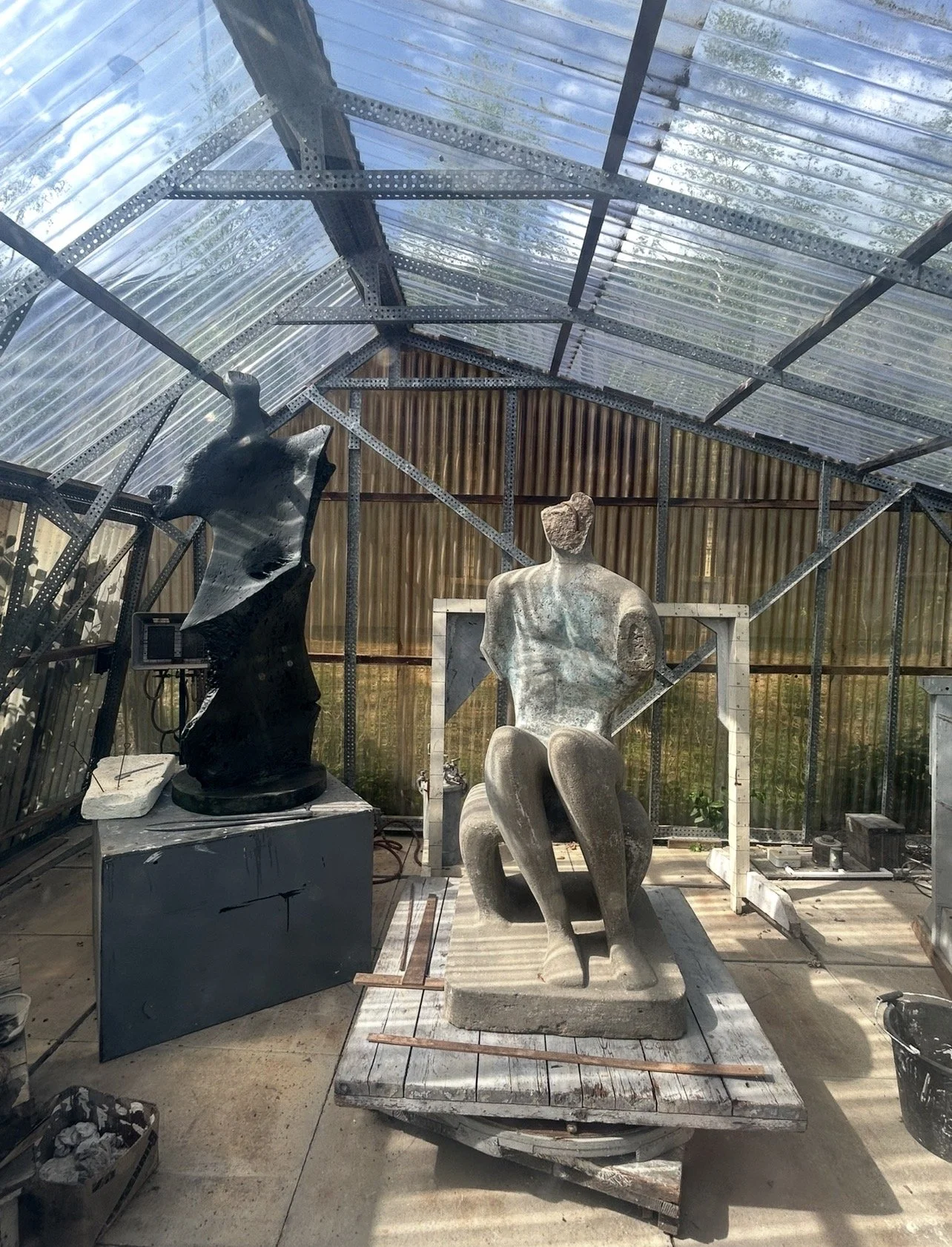
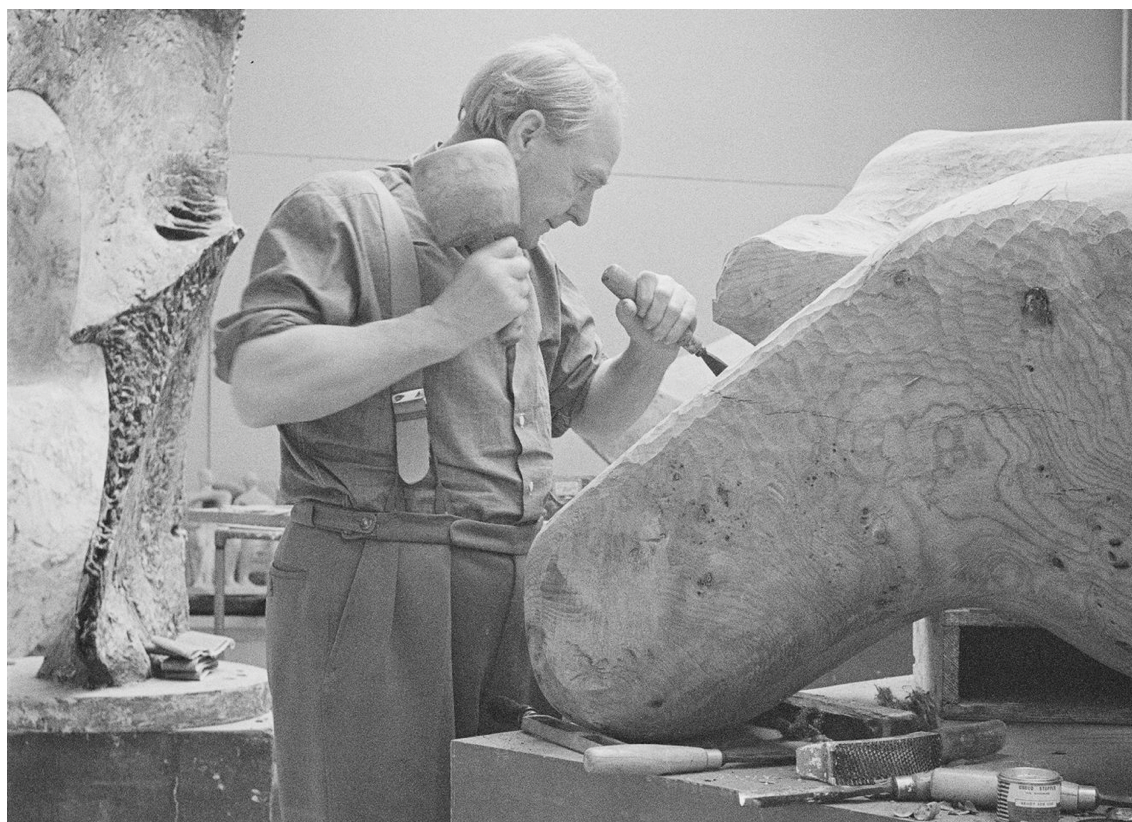
Process not perfection.
On the grounds visitors quietly wander into studios and the spaces around the buildings, often landing by accident on some monumental biomorphic form looming stoically over them. It’s these outside sculptures that give the indoor studio spaces context. While it’s understood that corners of these areas of fertile production are staged, they maintain a remarkably organic feeling to them. The Yellow Studio, for instance, where works were created in elmwood and stone, tools are casually strewn along the surfaces between medium and larger sculptures, as though Moore just finished work that very day and retreated inside for dinner.
Throughout the studios visitors encounter maquettes, tools, plaster models, sketches, and works in various stages of completion. Rather than presenting only polished masterpieces, the museum preserves traces of experimentation, revision, and labour.
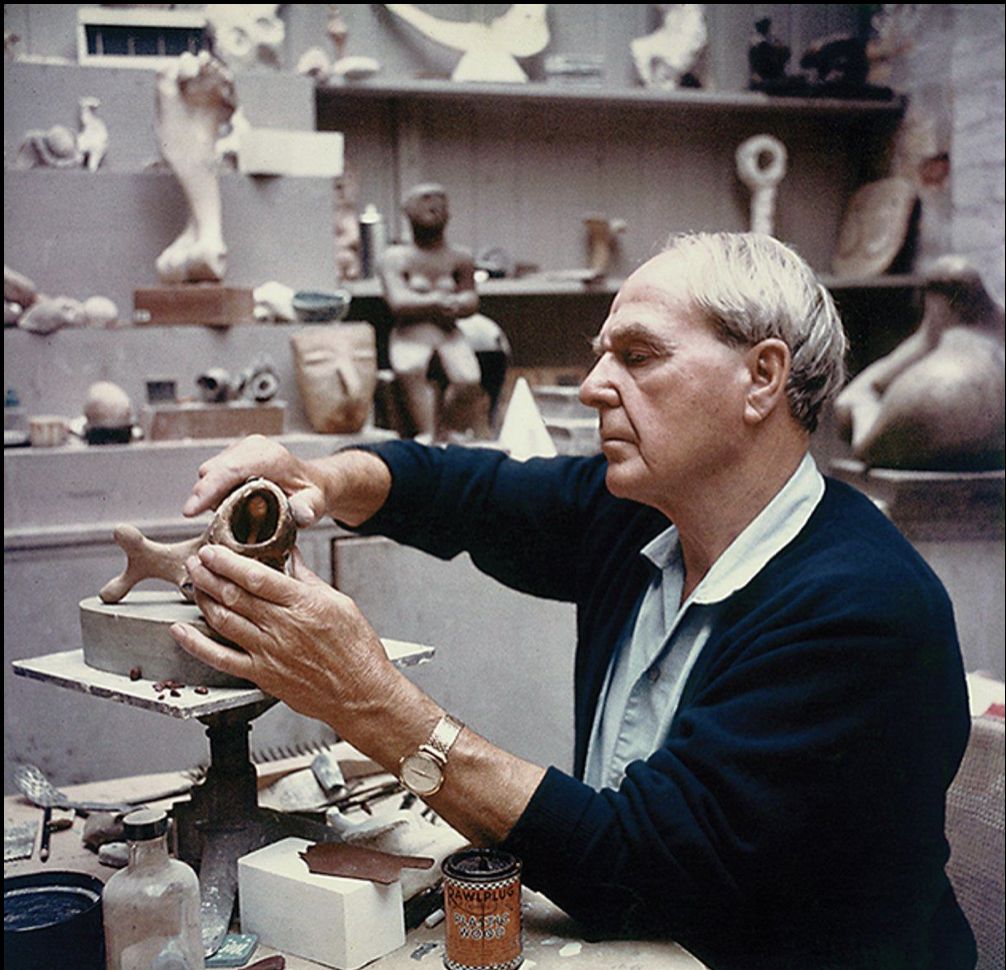
By its very nature, wabi-sabi honours process and the hand of the artist. Seeing each stroke or pass of the chisel is just as valuable as seeing the dust and remnants of stone left once those marks are made. You could also closely link the process of sculpting to the ceramic much in the same way. The work of Chōjirō , widely regarded as the father of raku-ware and the wabi-cha aesthetic, reflects the same sympathy with natural form as seen in much Moore’s work. No studio at Henry Moore’s home more clearly exemplifies this connection than the maquette studio. Tiny natural specimens are accumulated along the walls, with fluid lines, earthy-tones and weathered edges, waiting to be transformed from seedlings to fully realised works. The clear affinity for the natural world revered by both of these artists is undeniably rich and deep.
Wabi-sabi often finds beauty in process, incompleteness, and the marks left by making. In much the same way that a tea bowl crafted by Chōjirō may reveal the hand of its maker through irregularities or repairs, Moore's studios reveal the journey behind the finished sculpture. The value lies not only in the final object but also in the evidence of its becoming.
Organic Forms + Imperfect Beauty
There’s a Japanese term Ma which seems to be having a bit of a moment. Ma, meaning literally ‘gap’ or ‘interval’, is one of those resonant concepts because (much like wabi-sabi) it represent different things to different people. But fundamentally, it is about the breathing room given to objects, and how this negative space is as important as the material next to it. Perhaps more so.
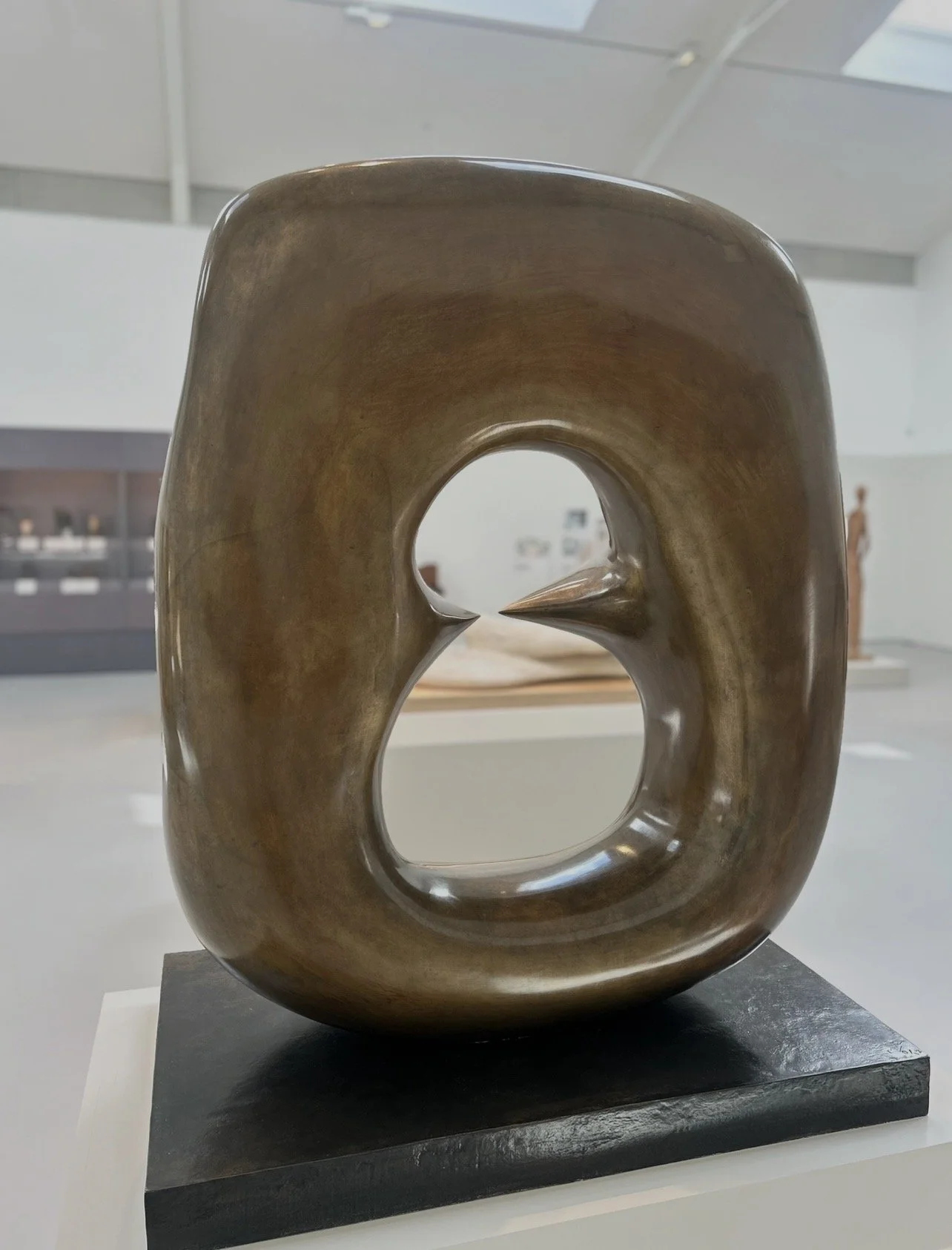
Many of Moore's sculptures were inspired by bones, stones, shells, weathered wood, and the human body. Their surfaces are often asymmetrical, pierced, eroded, or shaped by forms found in nature rather than by geometric perfection. As I wandered the grounds just past the maquette studio, I found the piece that immediately made me think of the importance of ma in Moore’s work. Oval with points (1968) is a large cast bronze, curving into a smooth loop, with a void directly in the centre. And within this void, two ‘teeth’ jutting inwards, not quite connecting. The distance between the points and within the loop give space and meaning to the surrounding structure.
Moore’s fascination with the natural world and how it shapes soft edges through age and erosion closely mirrors the same appreciation found in the Japanese wabi-sabi aesthetic philosophy. I couldn’t shake the connectedness as I wandered the peaceful grounds that had given so much inspiration to Moore. And he is certainly not alone in this tradition of not only reflecting the natural world, but immersing himself so deeply in it, that they become one humming machine.
ARTISTS LIVING & WORKING
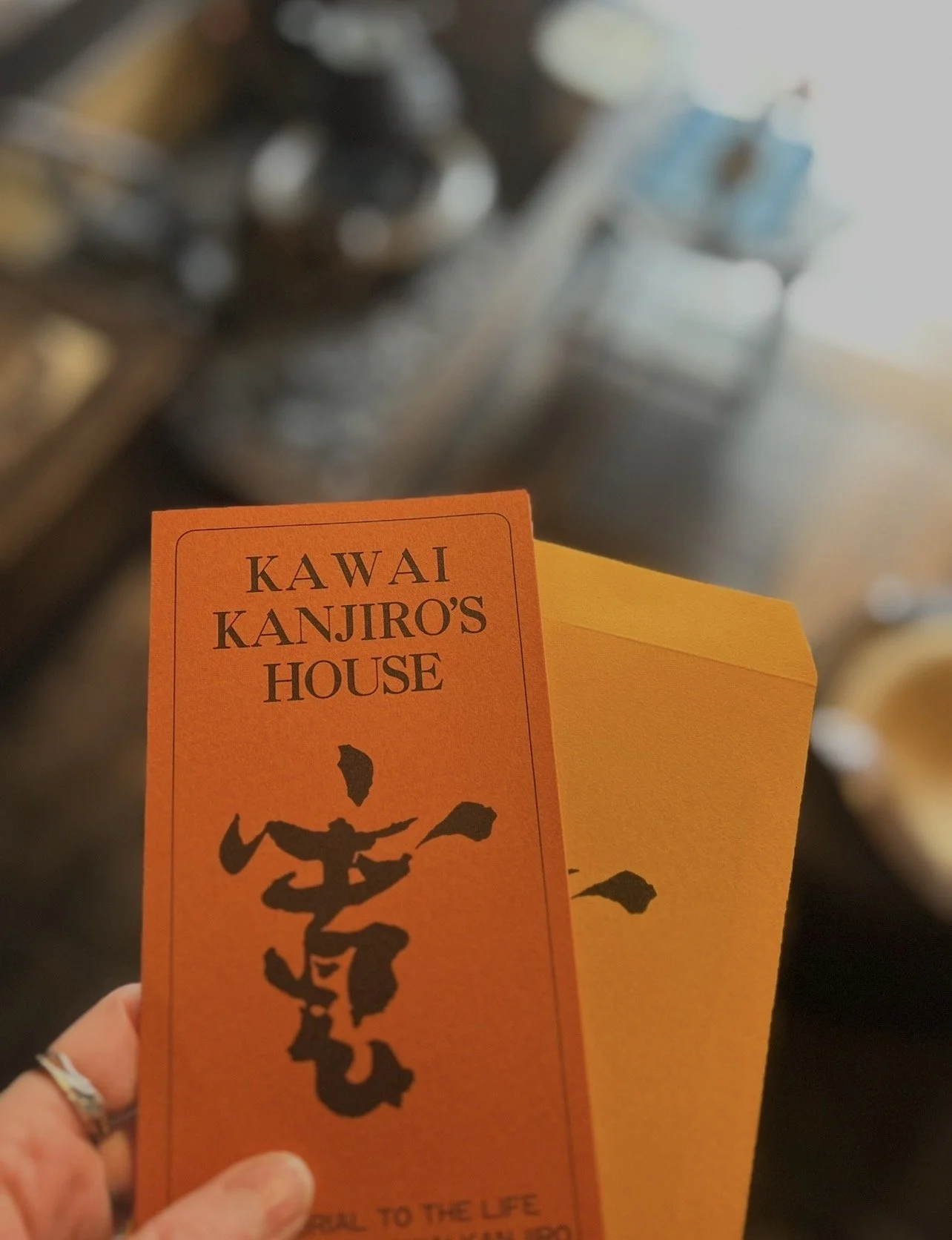
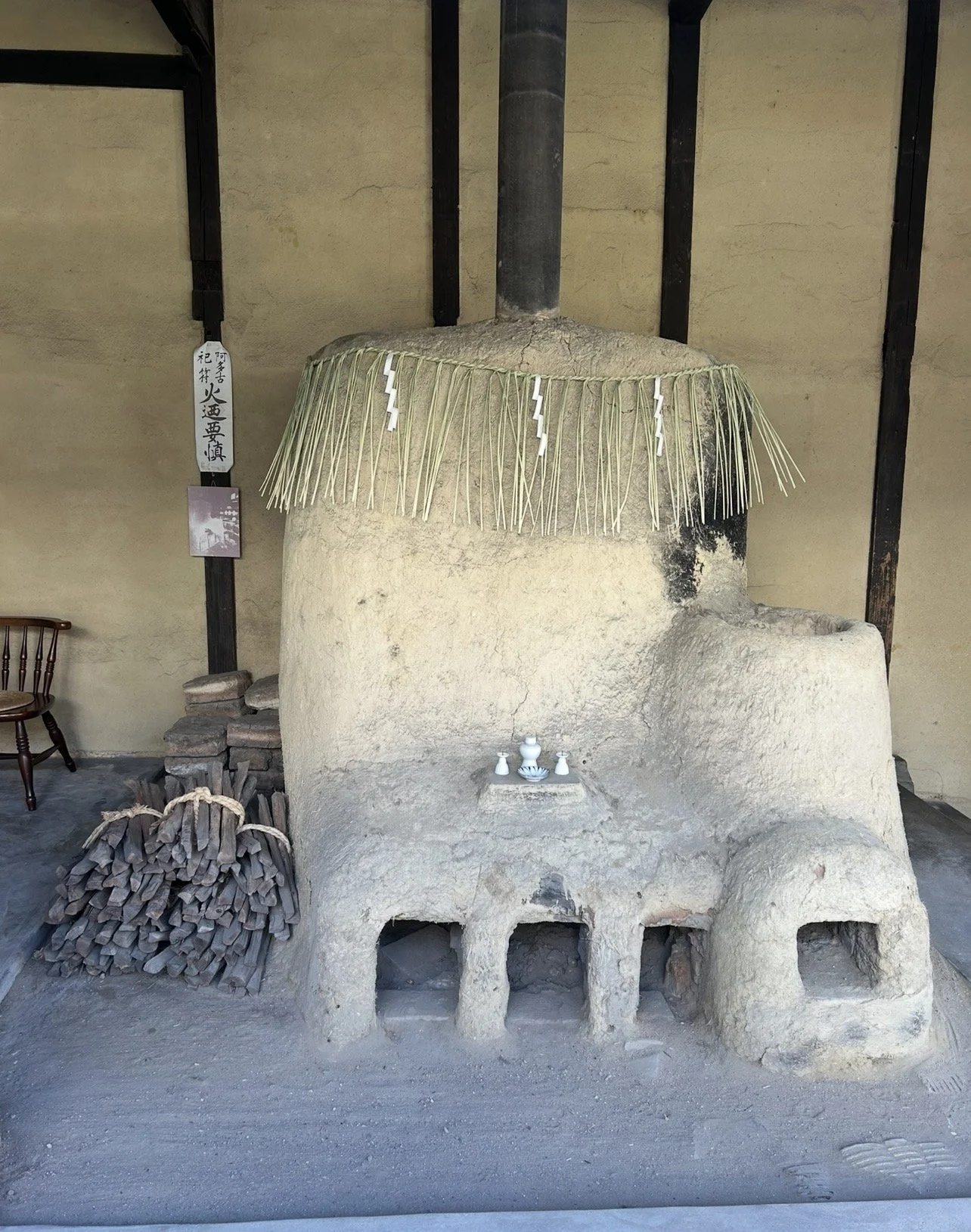
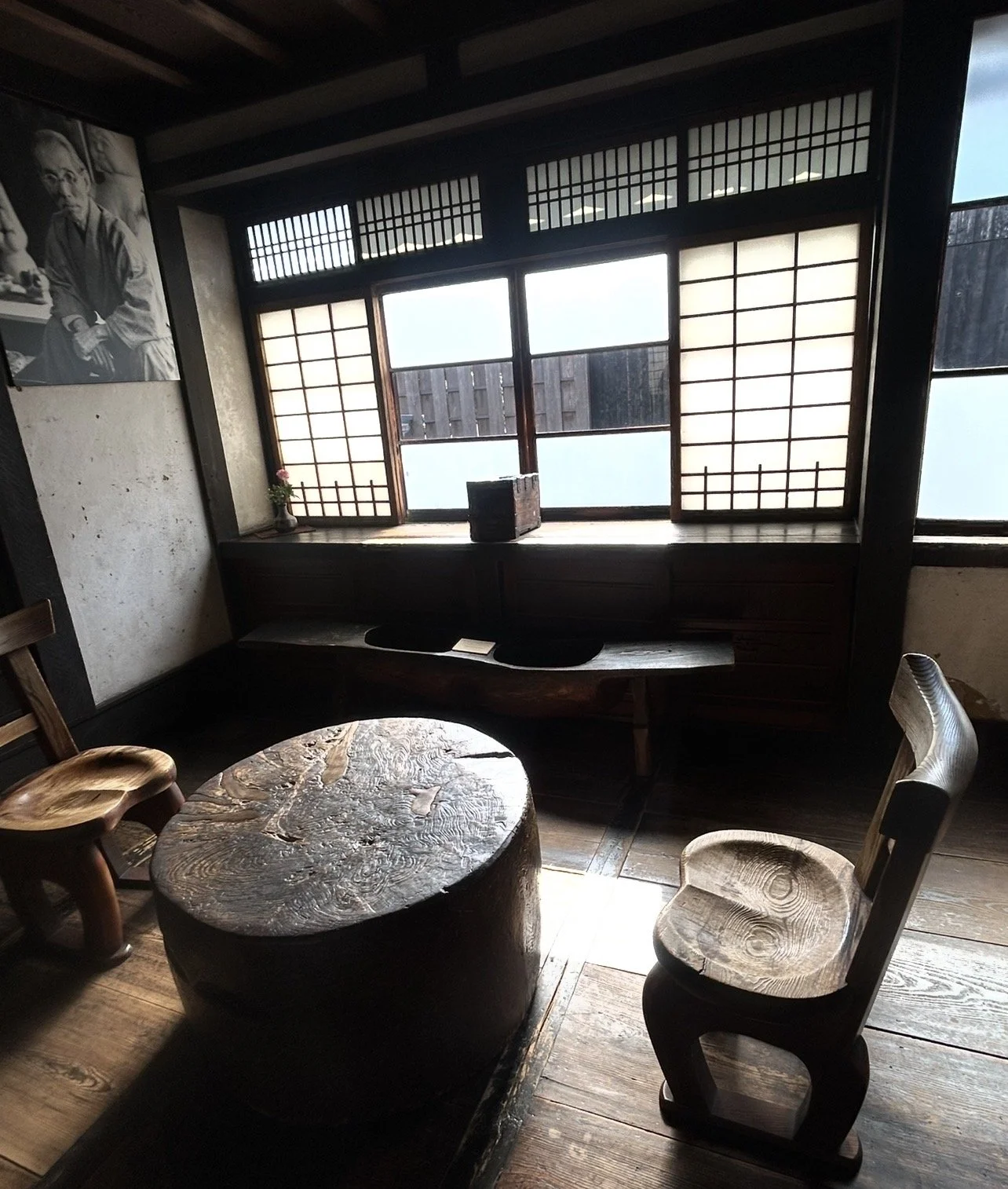
Another artist’s house-turned-museum I recently visited also came to mind during this visit… the home of Kawai Kanjiro in Kyoto. Kanjiro is such a fascinating character that I will have a whole post dedicated to his home and work coming soon (stay tuned) but I would be remiss to ignore the connection between these two lovers of natural synergy. Ceramic artist Kawai Kanjiro lived and worked quietly and purposefully from his Kyoto home studio until his death in 1966. A prominent voice in the mingei arts movement (mingei is often translated to ‘folk craft’) Kanjiro’s home is now a museum, and while smaller and aesthetically different, I couldn’t escape thinking of him while visiting Moore’s home. Both of these artists found unique ways to expand their practice until they effectively became their practice. The artist and the space they created work in became almost one and the same.
This continuous conversation between the artist, nature and the space they lived is reflected in every corner of both properties. Moore famously surrounded himself with bones, flints, shells, roots and fragments of weathered wood, arranging them throughout his studios as a kind of personal library of natural forms. Kanjiro did much the same in Kyoto, filling his home with ceramics, carvings, textiles, stones and objects gathered over a lifetime of attentive observation. Neither artist appeared interested in separating art from life. Inspiration isn’t something that happened in the studio before being left behind at the end of the day, it permeates every room, shelf, windowsill and garden.
Perhaps that is why both homes feel so alive today. They are not monuments to artistic achievement so much as records of artistic curiosity. The sculptures at Perry Green and the pottery in Kyoto are certainly remarkable, but it is the spaces themselves that reveal the deeper lesson. In both places, creativity emerges not as a profession but as a way of being in the world. Monuments to a lifelong practice of collecting, observing, making and living with intention.
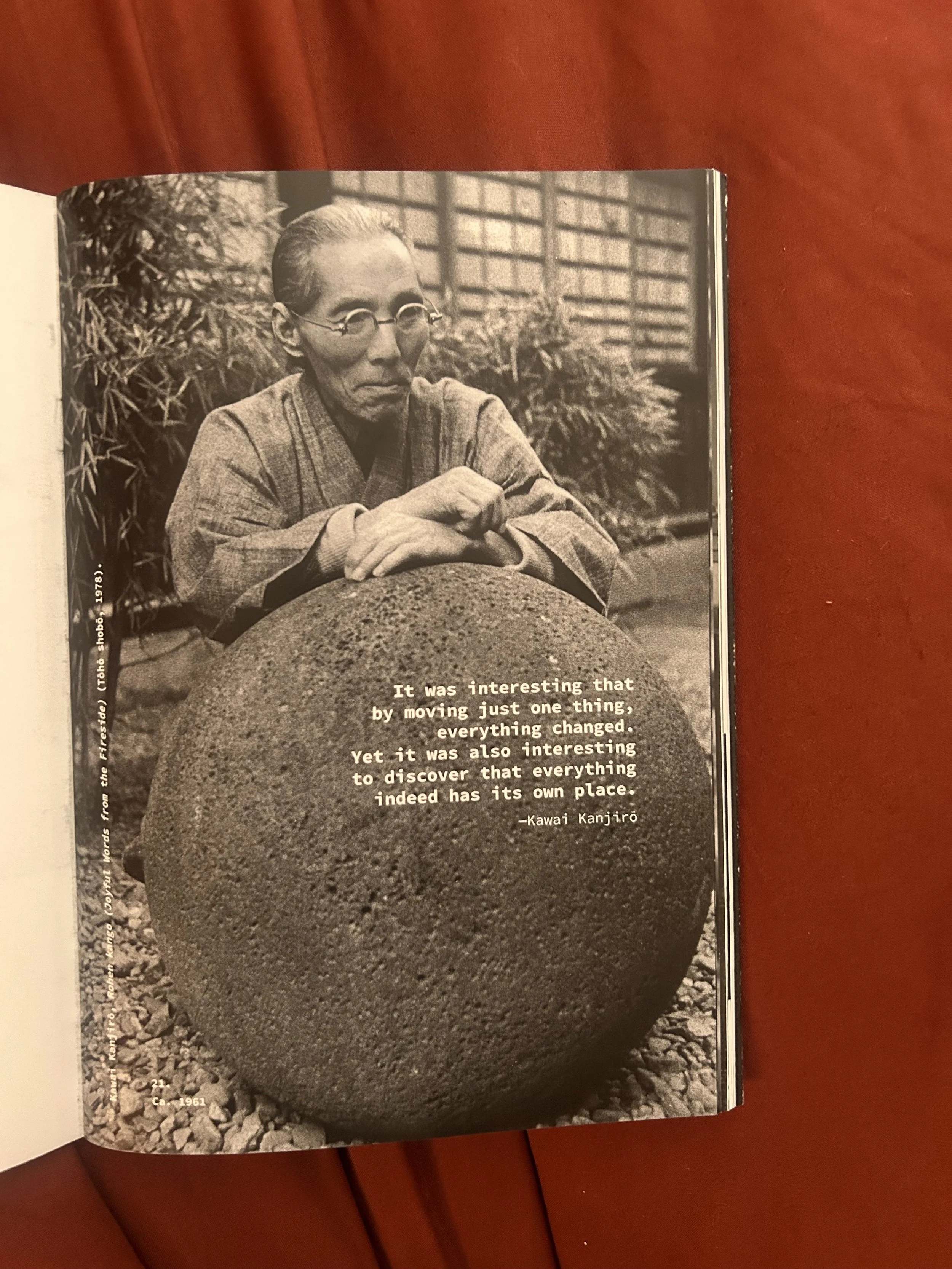
In Kawai Kanjiro’s garden there is a large, perfectly shaped stone sphere. He imagined this stone ball, almost 1/3 his height, and commissioned a friend to create it for him. For years, he amused himself by rolling the stone ball from one side of the garden to the other (we all have our things), until it finally came to rest in its current spot, and it has been there ever since. The surface of the stone is being quietly weathered by the elements. Small pockmarks are appearing on the surface, but the structure remains intact. Of the stone, Kanjiro said “It was interesting that by moving just one thing, everything changed.”
I think Henry would have loved him.