URUSHI JOURNEY
A brief historical deep dive into this enigmatic centuries old material
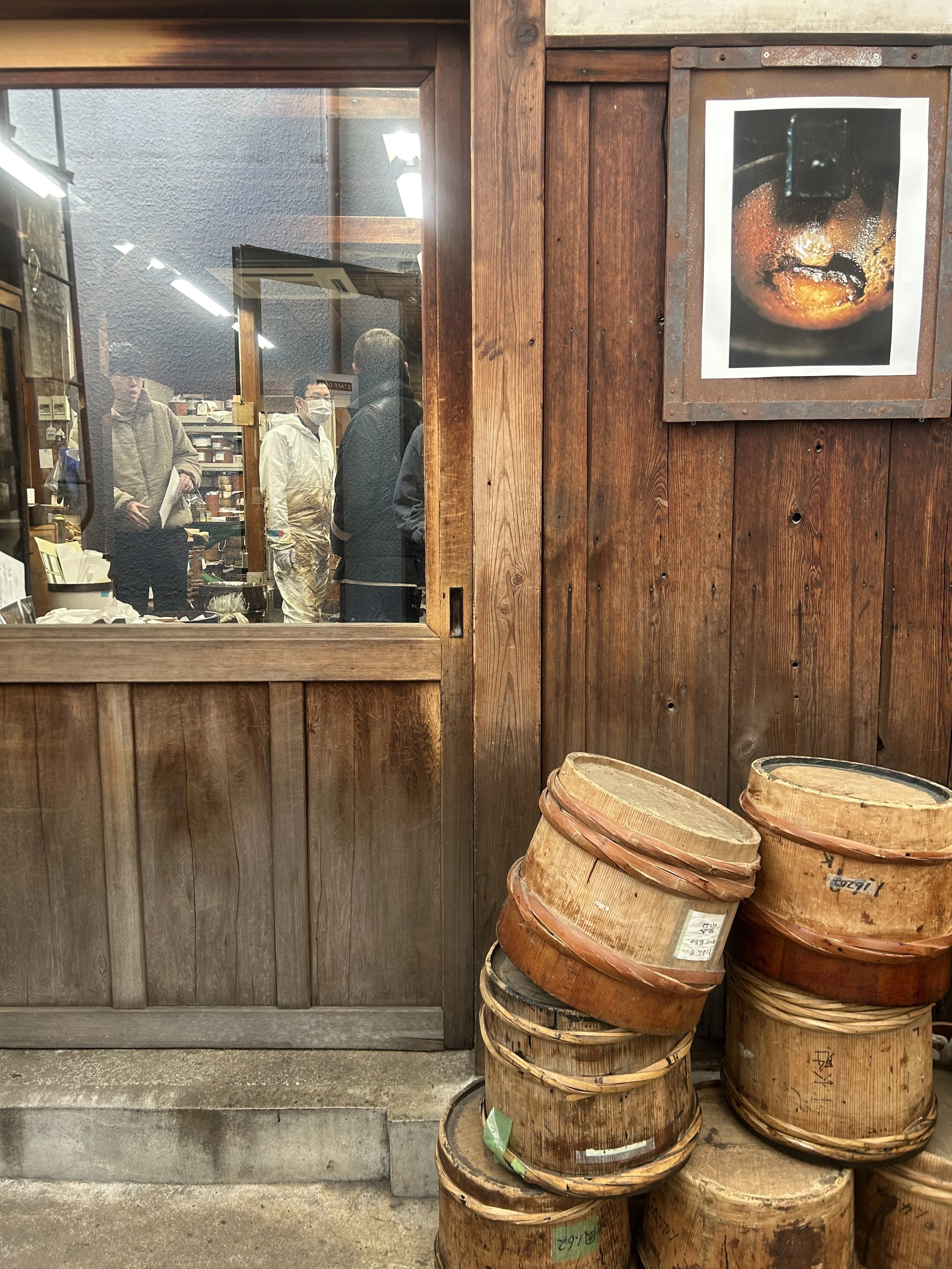
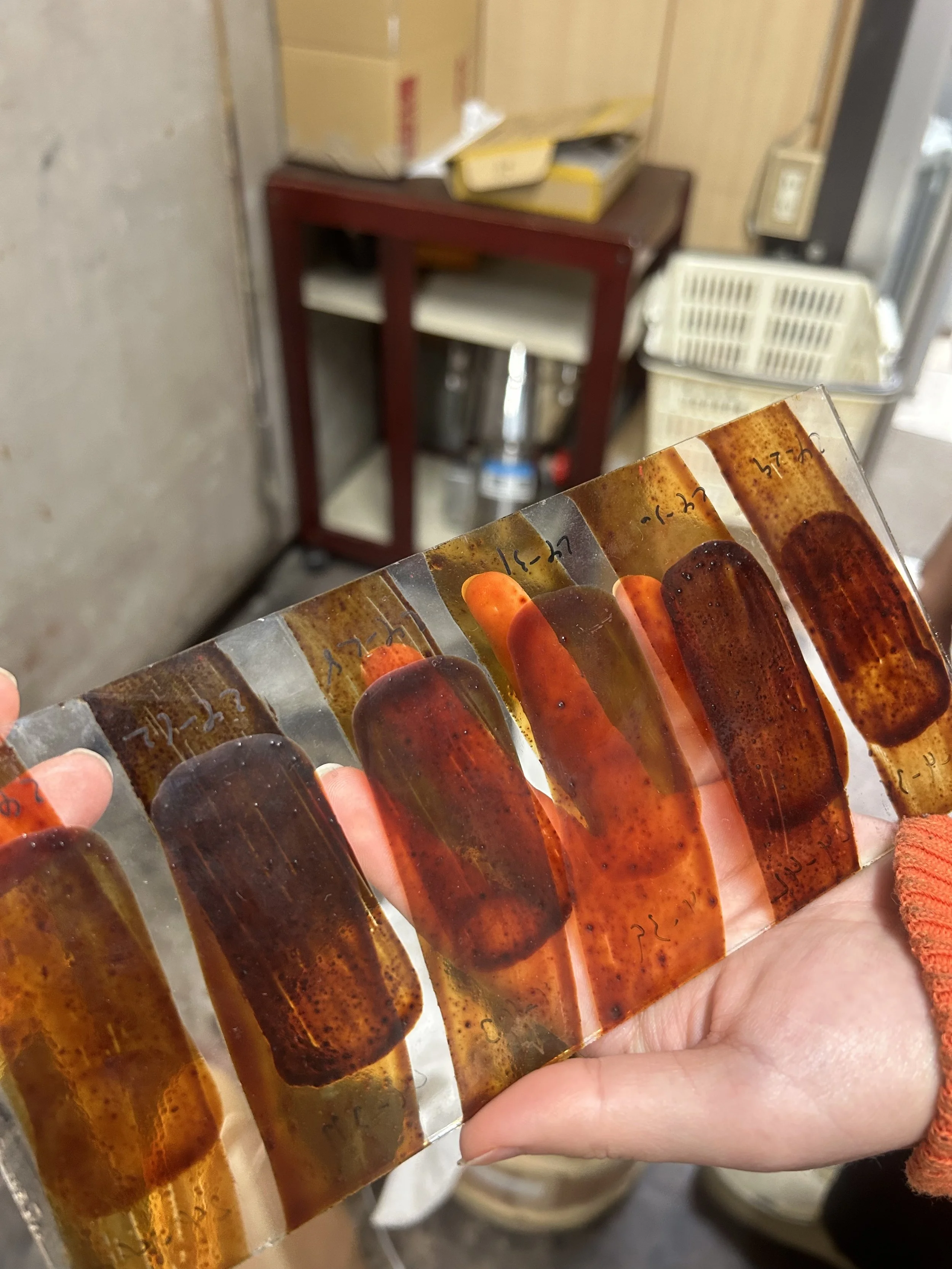
I arrived at Tsutsumi Asakichi on a freezing cold Kyoto morning in February. As I had already been in Kyoto several days scouring second hand shops, flea markets and art stores for all the repair materials I could get my paws on, it seemed appropriate that I would save the very best for last. Nestled in the residential streets of Shimogyō Ward, not far from the city centre, Tsutsumi Asakichi is a fifth-generation urushi refinery with a history stretching back to 1909. For over a century, they have specialised in the refining, blending and distribution of urushi lacquer, supplying everyone from contemporary craftspeople to the restorers of some of Japan’s most significant cultural treasures. Their lacquer has been used in the conservation of sites such as Nikkō Tōshō-gū Shrine and Himeji Castle, and today they are thought to handle a remarkable proportion of Japan’s domestic urushi supply.
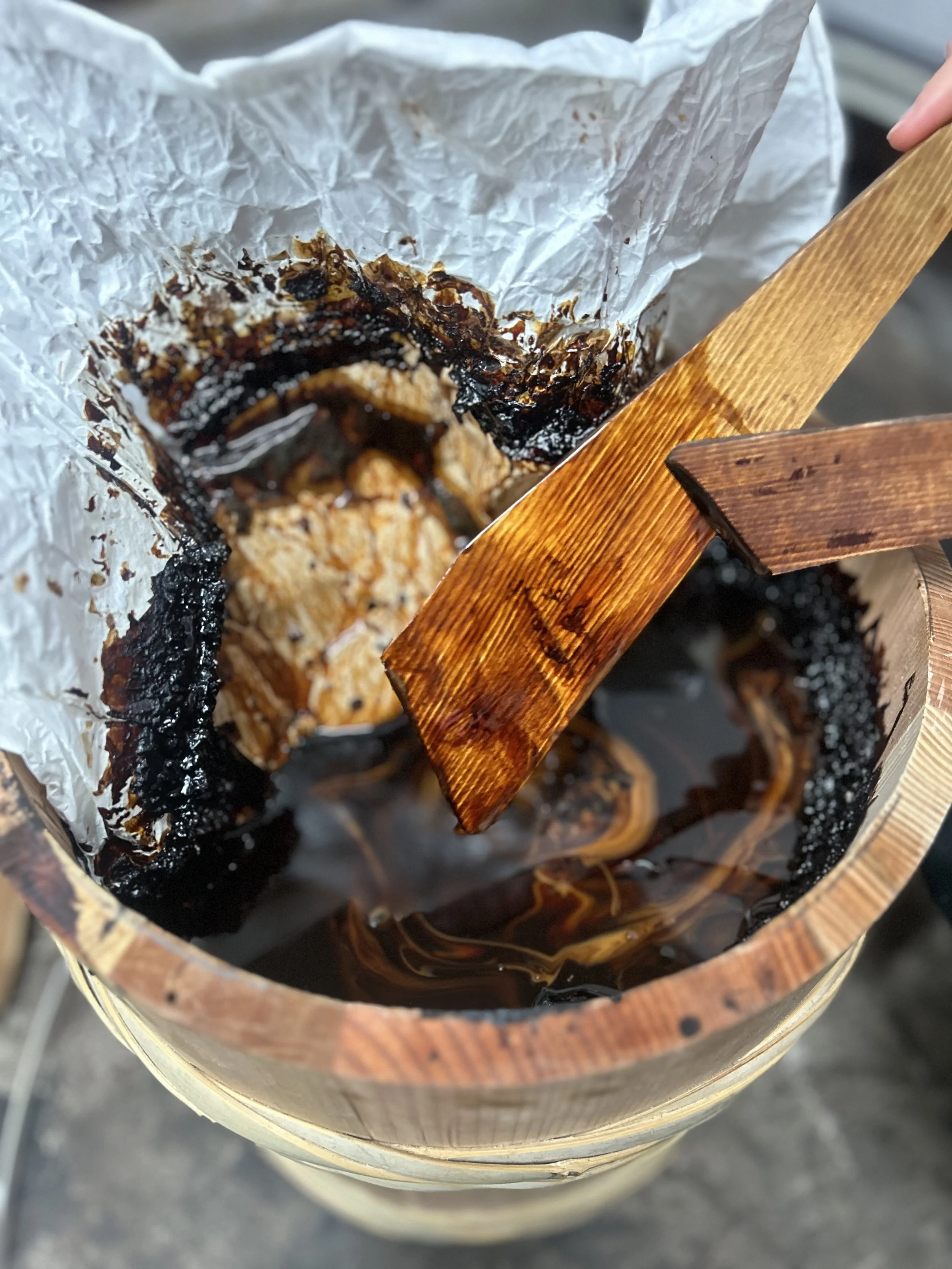
What struck me most during my visit was the balance they seem to hold between preservation and reinvention. As purveyors of urushi craft, Tsutsumi Asakichi is deeply rooted in tradition, yet there is very little sense of preciousness or gatekeeping. For instance, their incredible collaborative project with woodworker and surfboard designer Tom Wegener to finish custom made surfboards coated in urushi. Openness and enthusiasm for the craft is palpable when you first enter their Kyoto headquarters, built within the same home their grandfather settled into in 1909, which has expanded to include a refinery, a well-organised shop, production areas, and an airy studio space upstairs. Alongside barrels of raw lacquer and meticulously organised drawers of tools in their Kyoto shop and workspace, they run workshops, educational programmes and collaborative projects designed to bring urushi into contemporary life.
Their philosophy, inherited from founder Asakichi Tsutsumi, centres around the idea of ‘not wasting a single drop of urushi’, a phrase that speaks not only to the rarity of the material itself, but also to a wider respect for labour, nature and longevity. In a world increasingly built around disposability, the entire space feels quietly radical. A commitment to slowness, repair and stewardship that extends far beyond kintsugi alone.
You could definitely say this mottainai (waste not, want not) approach is key to the philosophy around repair and the use of urushi lacquer in general. A deep connection is formed between the craftsperson and the material, from sourcing and harvesting to the point when it reaches your workbench. The applications for this incredible material are limitless. Let’s talk about some of the extraordinary properties of this complex ‘diva material’…
CLOSE TO EXTINCTION
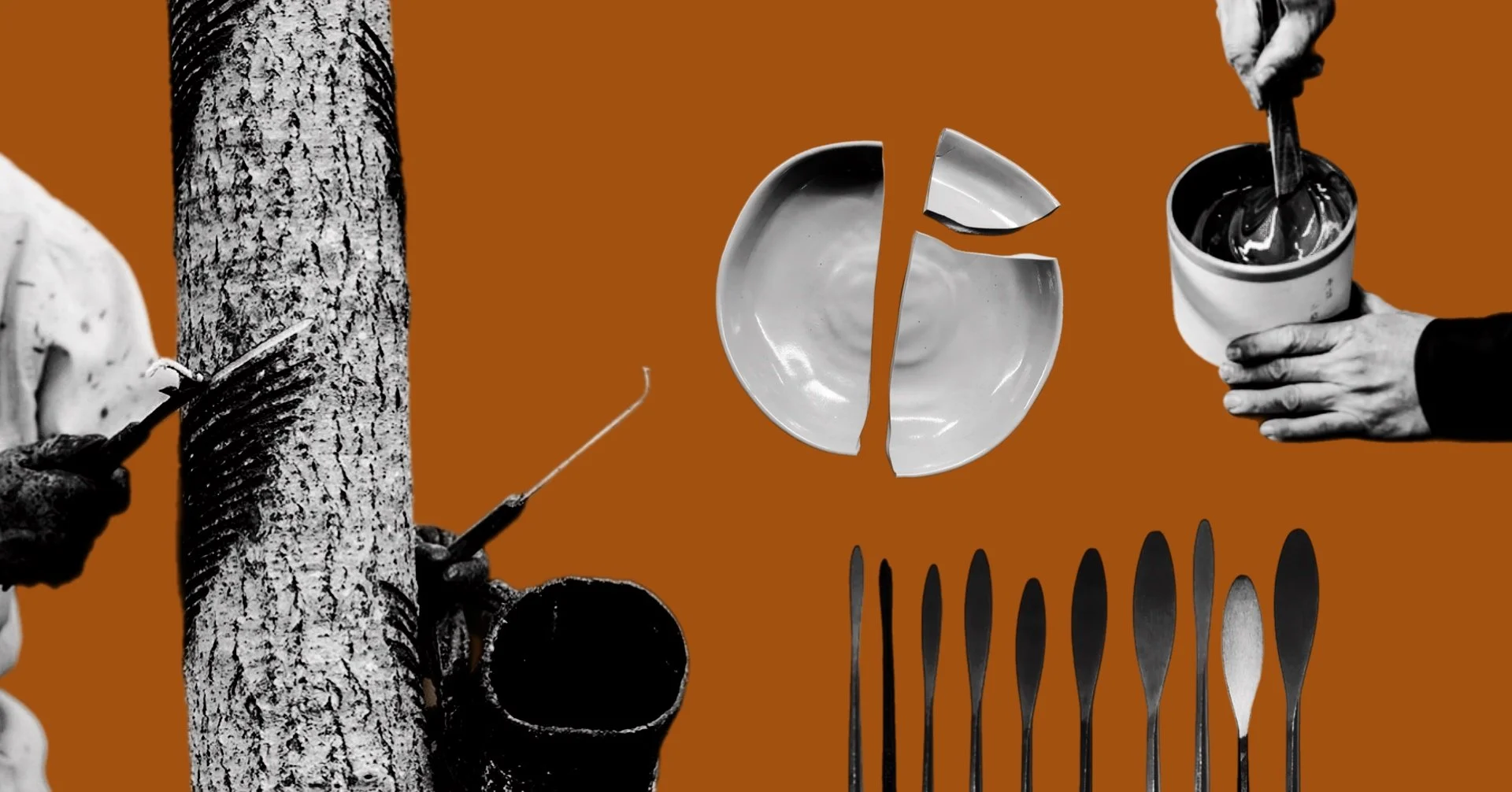
The harvesting of urushi lacquer has taken a steep nosedive over the past 80 years or so, resulting in a dwindling industry, particularly in Japan. Today, the majority of domestic urushi production comes from the northern prefectures of Iwate and Aomori Prefectures, with the town of Jōbōji particularly renowned for its high-quality lacquer and long harvesting tradition. Historical records dating back to the thirteenth century show the cultivation and harvesting of urushi in this area. Smaller-scale production also exists in regions such as Ibaraki Prefecture, Tochigi Prefecture, and Kyoto Prefecture. With an uptick in interest in lacquer craft like Kintsugi, and a 2015 mandate by Japan’s Agency for Cultural affairs agency to use only Japan-sourced urushi for the conservation of historic sites and objects, Japan’s urushi industry is maintaining its relavence. A particular interest in slow and endangered crafts from a western audience has helped in keep this industry relevant, making awareness and education key.
SUPERNATURAL PROPERTIES
Quite often practicioners and crafts specialists will refer to urushi as though it posesses supernatural properties. And to a certain extent this is true (sort of). It is a very cool material, with properties that have, to some extent, been replicated in modern materials, but are very rarely found in natural craft materials. Beyond its beauty, urushi is an extraordinarily sophisticated natural material. As it cures, the lacquer forms an increasingly dense cross-linked polymer network, contributing to the exceptional hardness and durability for which historic lacquerware is renowned. Unlike historic glues, like say animals glues which can create an extraordinarily strong bond yet are particularly vulnerable to water and solvent, urushi once cured is remarkably resistant to solvents and moisture. Modern research has also identified antibacterial properties in urushiol, the primary component of raw lacquer sap, with studies demonstrating activity against a range of bacteria. These qualities help explain why lacquer has remained a valued protective and decorative coating in East Asia for millennia, and why long-form traditional kintsugi repairs using urushi lacquer from start to finish are great for food-grade safe repairs.
HARVESTING PRACTICE
Harvesters of urushi are called urushi-kaki shokunin or urushi-kaki, and this endangered skillset is often grandfathered down to younger generations. Young urushi-kaki spend years of practice building up a tolerance to this material, because urusiol, the chemical component largely to credit for the strength of this material, is also cytotoxic, causing potential poison oak-like reactions when it comes in contact with the skin. There are only roughly 40 of these specialist craftspeople operating in Japan today, many stewarding their own urushi trees for harvesting. Each urushi tree has a harvest season which begins in the late spring, peaks in the summer (‘first harvest’ or Hatsu urushi), and finishes in late autum (‘late harvest’ or Urame urushi), making timing essential. Each tree will only yield about 1 cup, or 250 ml of raw arami-urushi, before entering a regeneration period of 10-15 YEARS (yes, YEARS) when it can be harvested from again. So if you are ever wondering why this material is sometimes referred to as ‘urushi blood’, this is the reason.
USES AND APPLICATIONS
Due to the complications in sourcing, and the risks associated with over harvesting trees before their regeneration cycle has completed, urushi has traditionally been regarded as a scarce and sacred material. Used in the finishing of temples, holy objects and revered ceremonial materials, the applications for urushi are being expanded and explored in recent decades. Combining natural urushi with synthetic resins can create stronger bonding coatings for industrial use. Urushi has been found to protect metal from rusting. Coating wooden objects in Urushi has for centuries been an effective way to water-proof objects such as tableware. Even glass can benefit from urushi, as E-Urushi often used in glass Kintsugi repair which contains a small percentage of synthetic resin, providing a much more adherent and resistant coating.
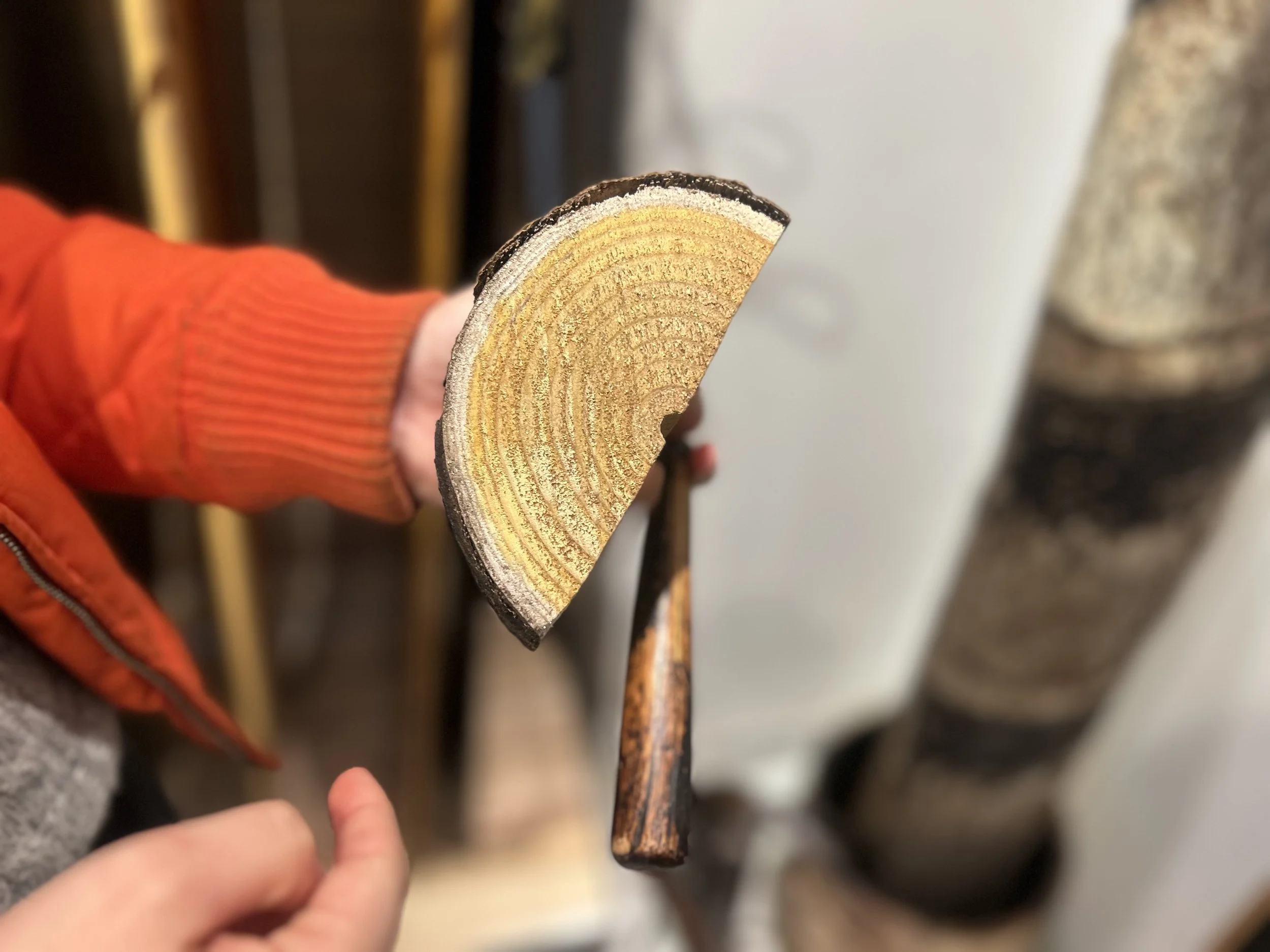
The vast scope of Asian lacquer uses and applications makes it worthy of a future blog post all its own (stay tuned), but in the context of my own specialties, it’s important to acknowledge the role of maki-e in the development of Kintsugi repair over the centuries. Key to the adhesion, filling, and finishing stages of traditional Kintsugi, urushi lacquer is responsible for both the structural integrity of the repair and the beautiful golden finish we associate with the craft today. What many people are less aware of is the influence of maki-e (蒔絵), which translates roughly as ‘sprinkled picture’. Developed during Japan's Heian period (794–1185) and reaching extraordinary levels of sophistication during the Muromachi and Edo periods, maki-e is the decorative art of sprinkling precious metal powders onto wet lacquer to create intricate designs.
CONTINUED TRADITION
In many ways, Kintsugi could be thought of as a highly specialised branch of the maki-e tradition that has taken on a life of its own. The final stages of a traditional repair employ many of the same materials, tools, and techniques used by maki-e practitioners for centuries: carefully applied urushi, finely powdered gold, silver, or bronze, and a patient understanding of how lacquer cures and develops over time. Historically, damaged tea bowls and treasured ceramics were often repaired by craftspeople already skilled in lacquer decoration, making the boundary between restoration and ornamentation remarkably fluid. Rather than concealing damage, Kintsugi borrowed the visual language of maki-e to elevate repair into an aesthetic statement, transforming a crack into something worthy of attention and admiration. The result is a craft that sits at the intersection of restoration, lacquer artistry, and philosophy, one that owes as much to the decorative traditions of Japanese lacquerware as it does to the practical need to mend a broken vessel.
If you are in London, and curious to know more, visit our Intermediate Kintsugi Repair page here for all upcoming dates. This day session is specially designed for those wanting to delve into traditional-hybrid kintsugi repair, learn to set up your own home repair station and get hands-on experience with urushi lacquer. Join our mailing list here to stay in the loop.